

A motorcycle isn’t just something you leave at the kerb and forget about. It might be your daily transport, your weekend escape, or the bike you spent months choosing, tweaking and making your own. So when you lock it up, you want the security you’ve invested in to work as effectively as possible.
A motorcycle disc lock is a strong form of motorcycle security, immobilising the wheel and creating a serious physical barrier to theft. But simply fitting one doesn’t mean you’re getting the maximum protection from it.
Where you position the lock, which wheel you secure and even how much movement you leave between the lock and the brake calliper can all make a difference. Some common motorcycle disc lock mistakes can give a thief more room to work or make the bike easier to move than it needs to be.
Here are the mistakes worth checking every time you park.
What are the most common motorcycle disc lock mistakes?

The biggest disc lock security mistakes usually come down to how and where the lock is fitted, as well as choosing a lock with the right level of attack resistance.
Common errors include:
-
Fitting the disc lock in a position that allows unnecessary wheel movement
-
Choosing a less effective locking position
-
Using a disc lock that offers limited resistance to modern attack methods
-
Failing to use a reminder cable or another visual reminder
-
Not adding further security when the parking situation calls for it
-
Not checking the lock regularly for wear, damage or contamination
None of these mistakes automatically means a motorcycle will be stolen. Security is about reducing opportunities and increasing the time, effort and noise required to attack or move a bike.
That’s why the details matter.
Mistake 1: Positioning your disc lock where the wheel can move too far
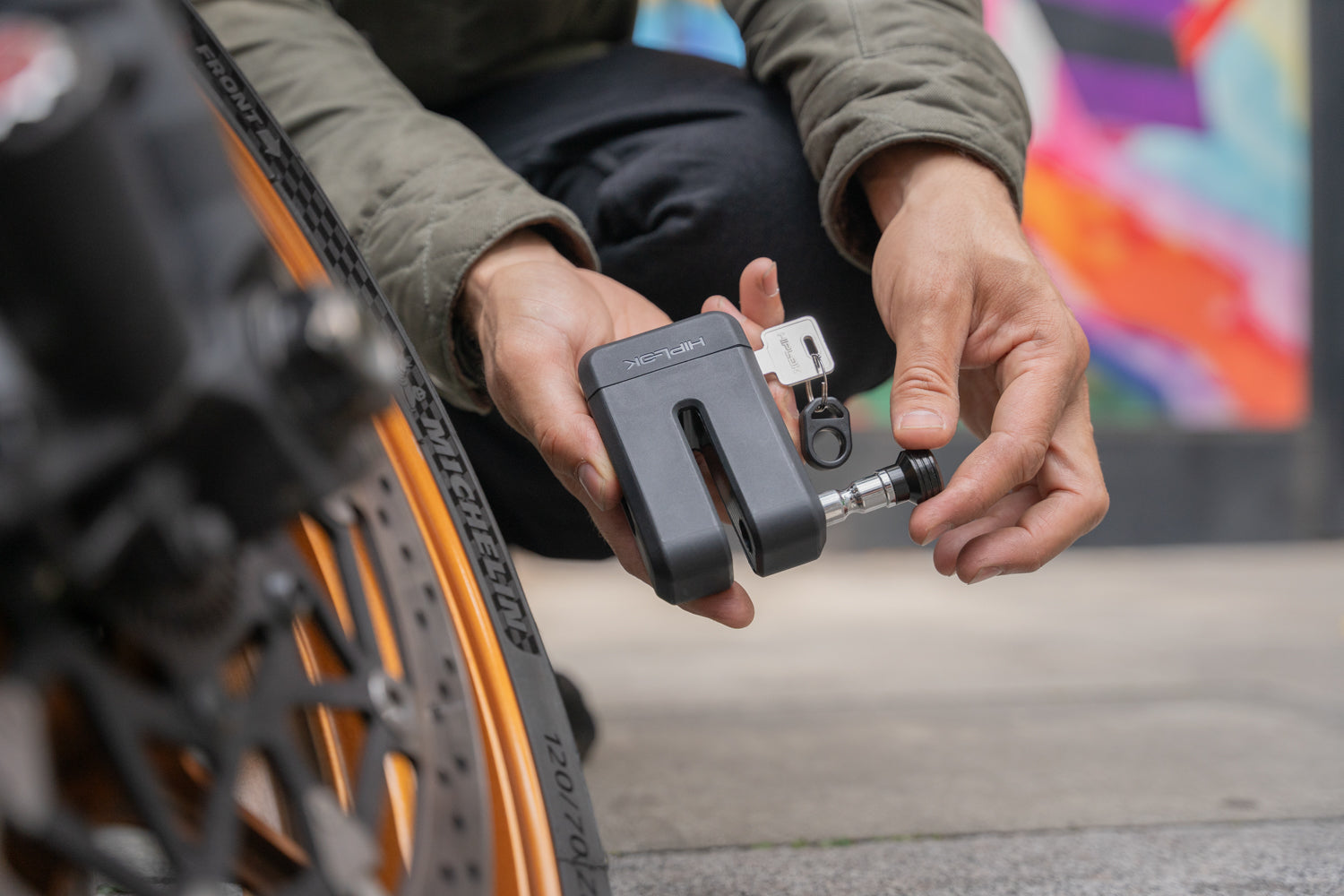
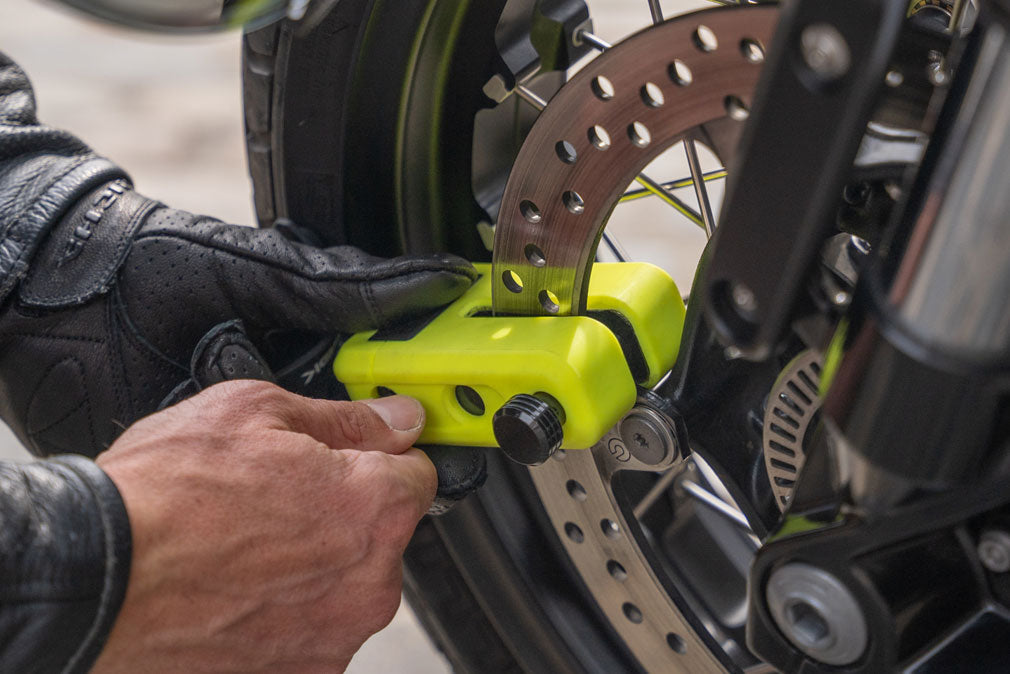
A disc lock works by passing through the brake disc and preventing the wheel from rotating freely.
The amount of movement available before the lock comes into contact with a fixed part of the motorcycle can vary depending on where you position it. For this reason, position the lock so there is as little movement as practical before it reaches the brake calliper, fork leg or another fixed component.
If there’s a large gap between the lock and the calliper, for example, the wheel can rotate further before the lock stops it. That unnecessary movement doesn’t help your security, and it can also result in the lock striking the calliper with greater force if you forget it’s fitted and try to ride away.
Positioning the disc lock close to a fixed part of the motorcycle, helps minimise that movement.
It’s a small habit, but good motorcycle security is often built from small habits repeated every time you park.
Mistake 2: Locking the wrong wheel
Which wheel you secure can affect how difficult the motorcycle is to move.
A disc lock immobilises the wheel it’s attached to, creating a substantial obstacle to anyone trying to roll the motorcycle away. Think about which locking position makes movement most difficult on your particular motorcycle and in the place you’ve parked it.
You can also consider how your disc lock works alongside any additional security you’re using. The aim isn’t simply to have several locks on the bike. It’s to make each one create another problem a thief has to overcome.
Mistake 3: Leaving unnecessary movement around the lock
With motorcycle security, giving an attacker less room to work is generally a good thing.
A poorly positioned disc lock may leave more movement around the wheel or more accessible space around the locking point. Positioning the lock carefully can reduce unnecessary movement and make the security setup less convenient to attack.
This is also why lock design matters.

Compact geometry can help reduce accessible attack space, while the materials and construction of the lock determine how it behaves when attacked.
When looking at motorcycle disc lock security, consider both how the lock resists attack and how effectively its design lets you position it on your motorcycle.
Mistake 4: Assuming any disc lock provides the same level of resistance
Not all motorcycle disc locks are designed to provide the same level of security.
For riders who want the highest levels of protection, particularly when parking valuable motorcycles or leaving a bike in higher-risk locations, we recommend looking for an anti-angle-grinder disc lock.
Portable angle grinders have changed the way high-security motorcycle locks need to be designed. Traditional materials can be attacked quickly with powerful cutting tools, so the best modern disc locks are designed specifically to increase resistance against them.
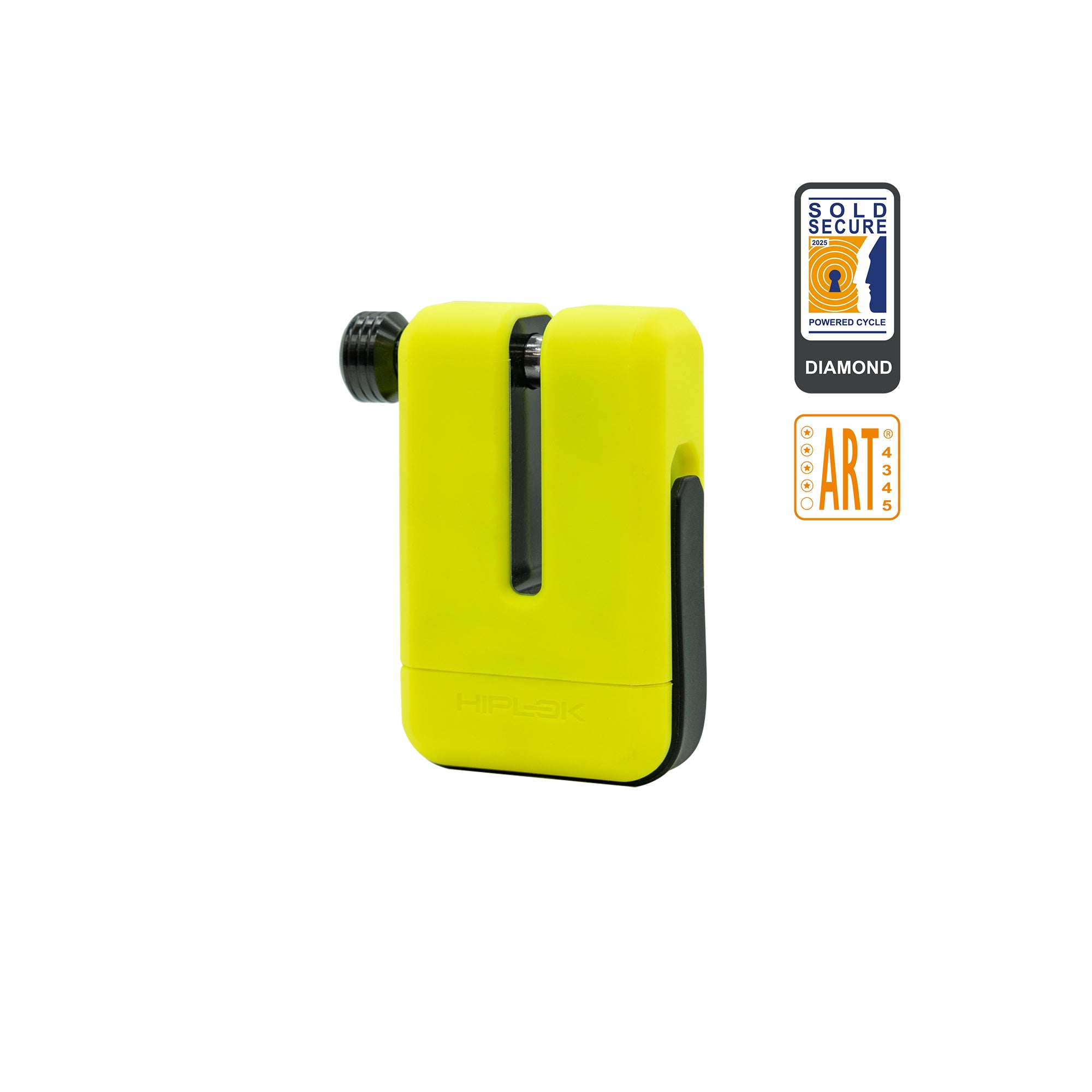
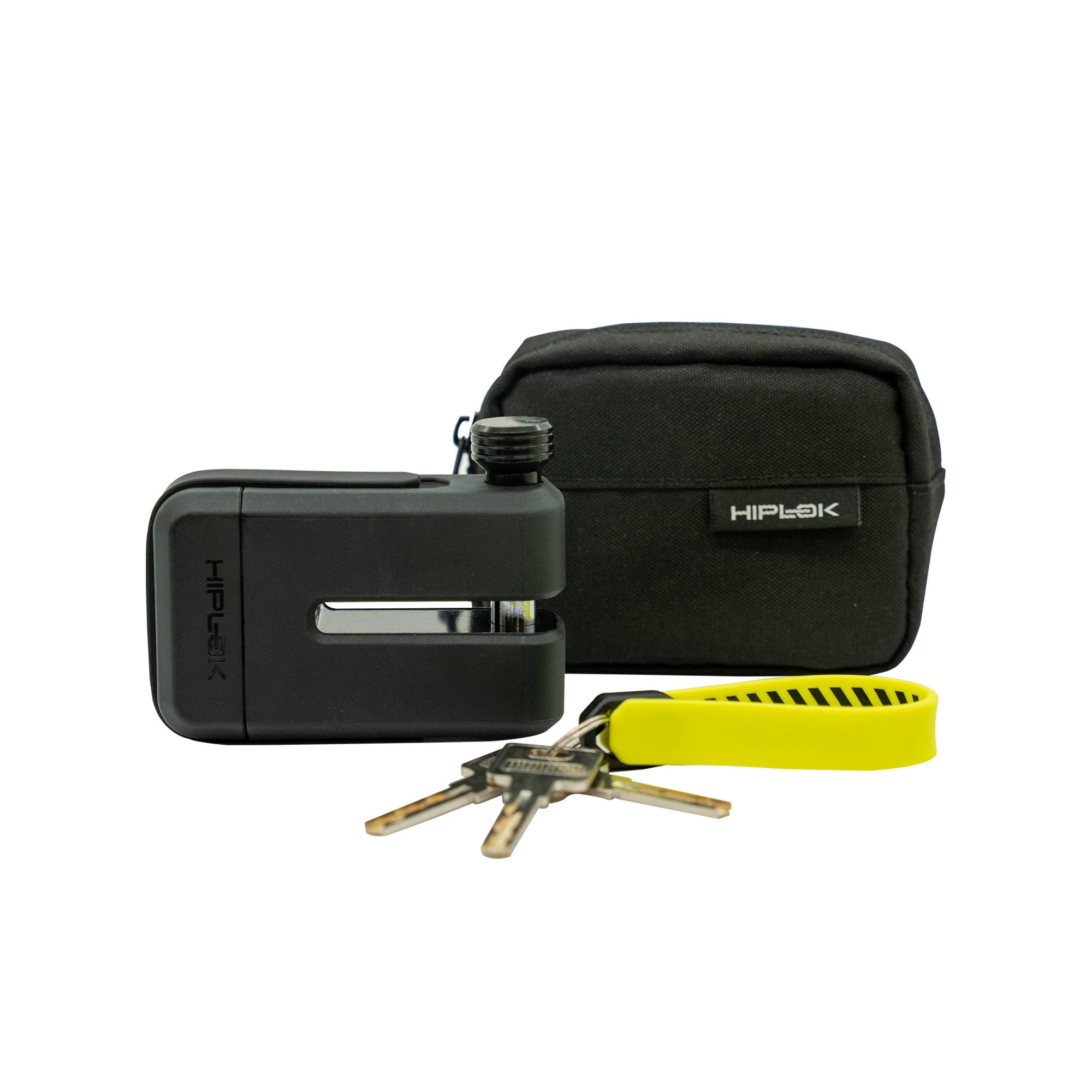
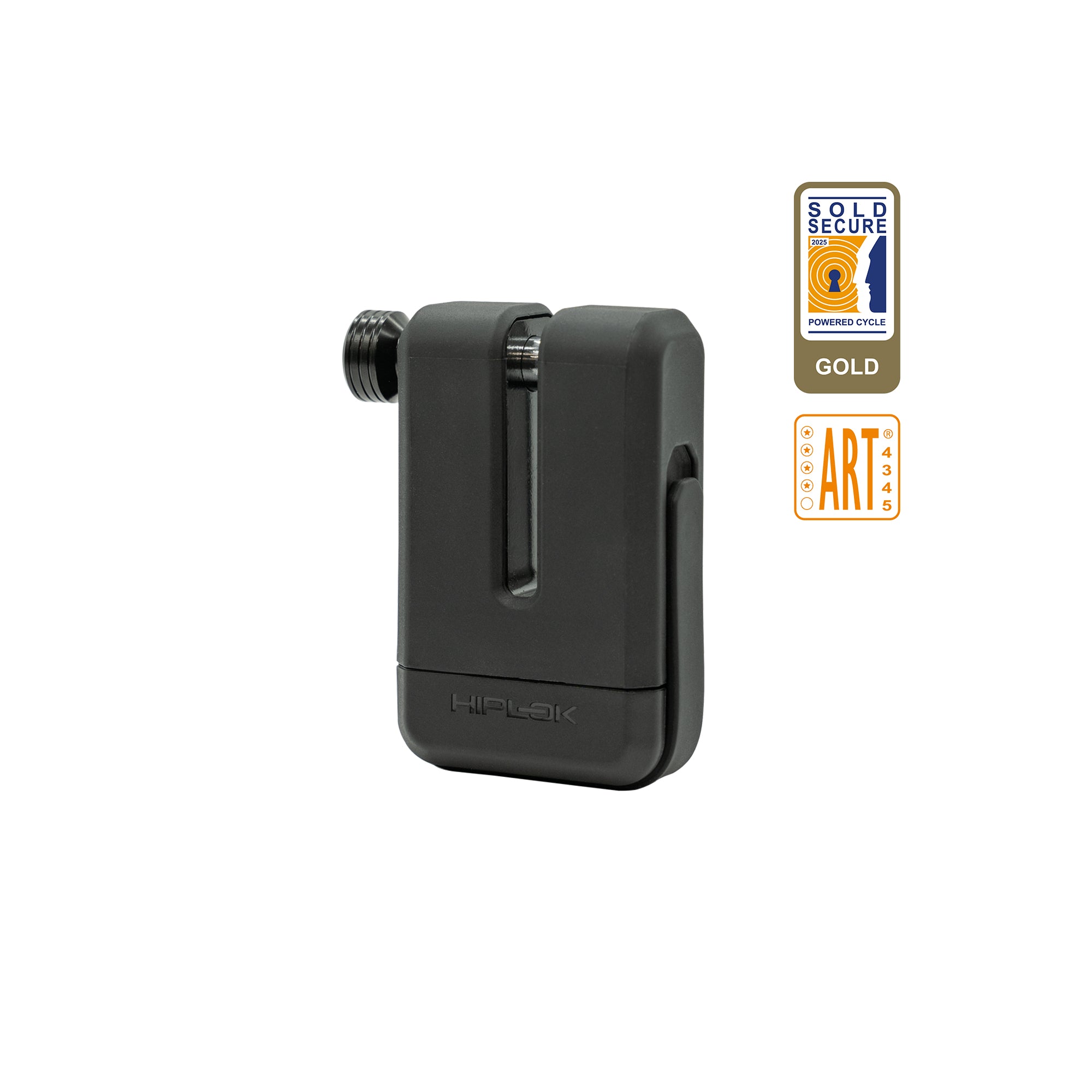
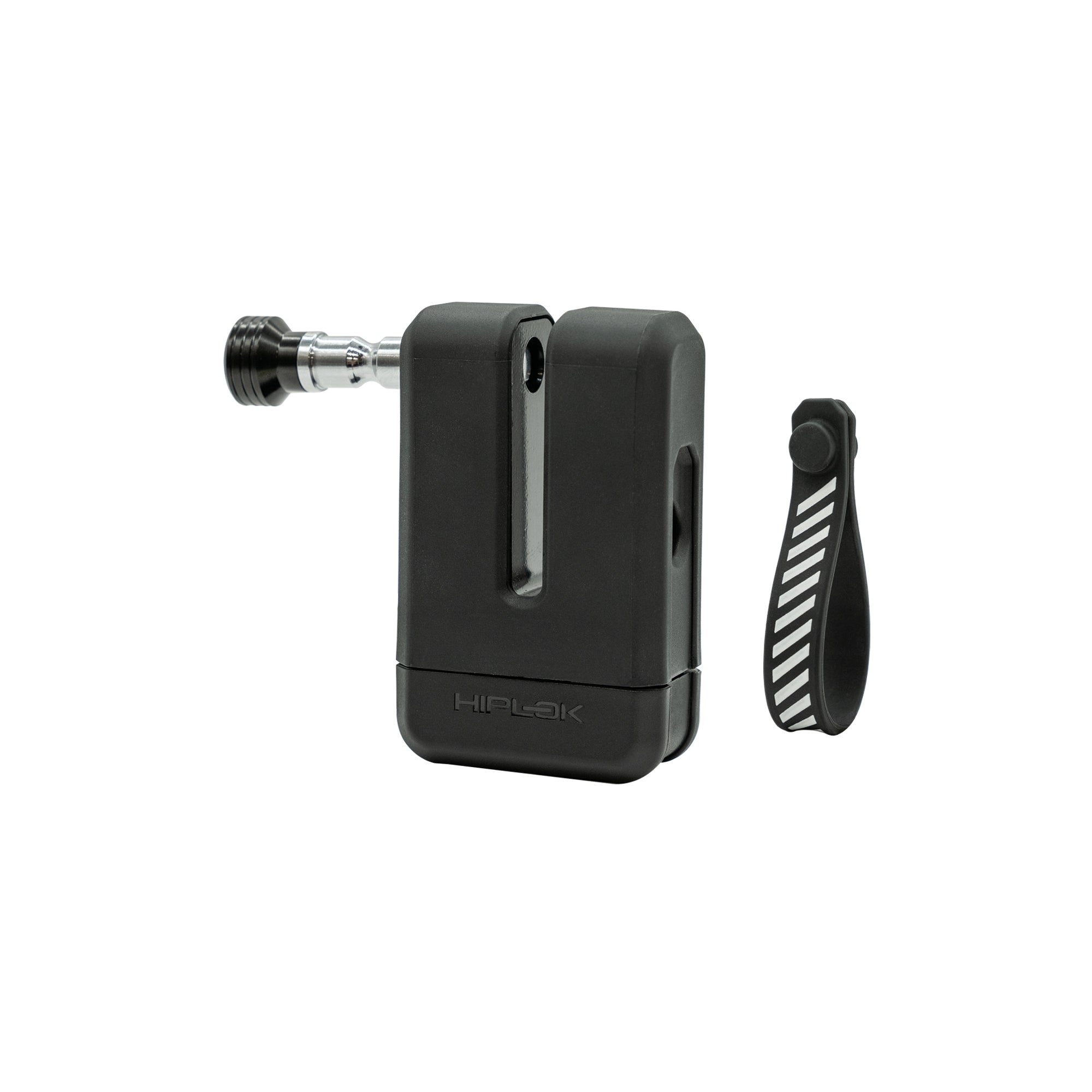
Our MD1000 is an anti-angle-grinder motorcycle disc lock and part of the Hiplok 1000 Series. The 1000 Series is designed around resistance to angle-grinder attack, using specialist materials and construction to increase the time and effort required to cut through the lock.

No lock is theft-proof. Given enough time and the right tools, any security device can eventually be defeated. What matters is how much time, effort and noise an attack requires.
Increasing attack time increases deterrence. A thief looking for a quick target has to decide whether attacking a lock designed specifically to resist an angle grinder is worth the additional time and effort.
When choosing a motorcycle disc lock, look beyond size or appearance and consider:
-
Resistance to angle-grinder attack
-
Independent security ratings or testing
-
Locking mechanism and construction
-
Materials and protective layers
-
Lock geometry
-
Fit with your motorcycle’s brake disc
-
Portability for the way you actually ride
The best lock is one that provides the level of resistance you need while still being practical enough to carry and use every time you park.
Mistake 5: Forgetting your disc lock is fitted

This mistake is less about theft and more about your motorcycle.
It’s surprisingly easy to return to a parked bike, start it and prepare to pull away without remembering there’s a lock attached to the brake disc.
That can result in the lock hitting the calliper or other components as the wheel turns.
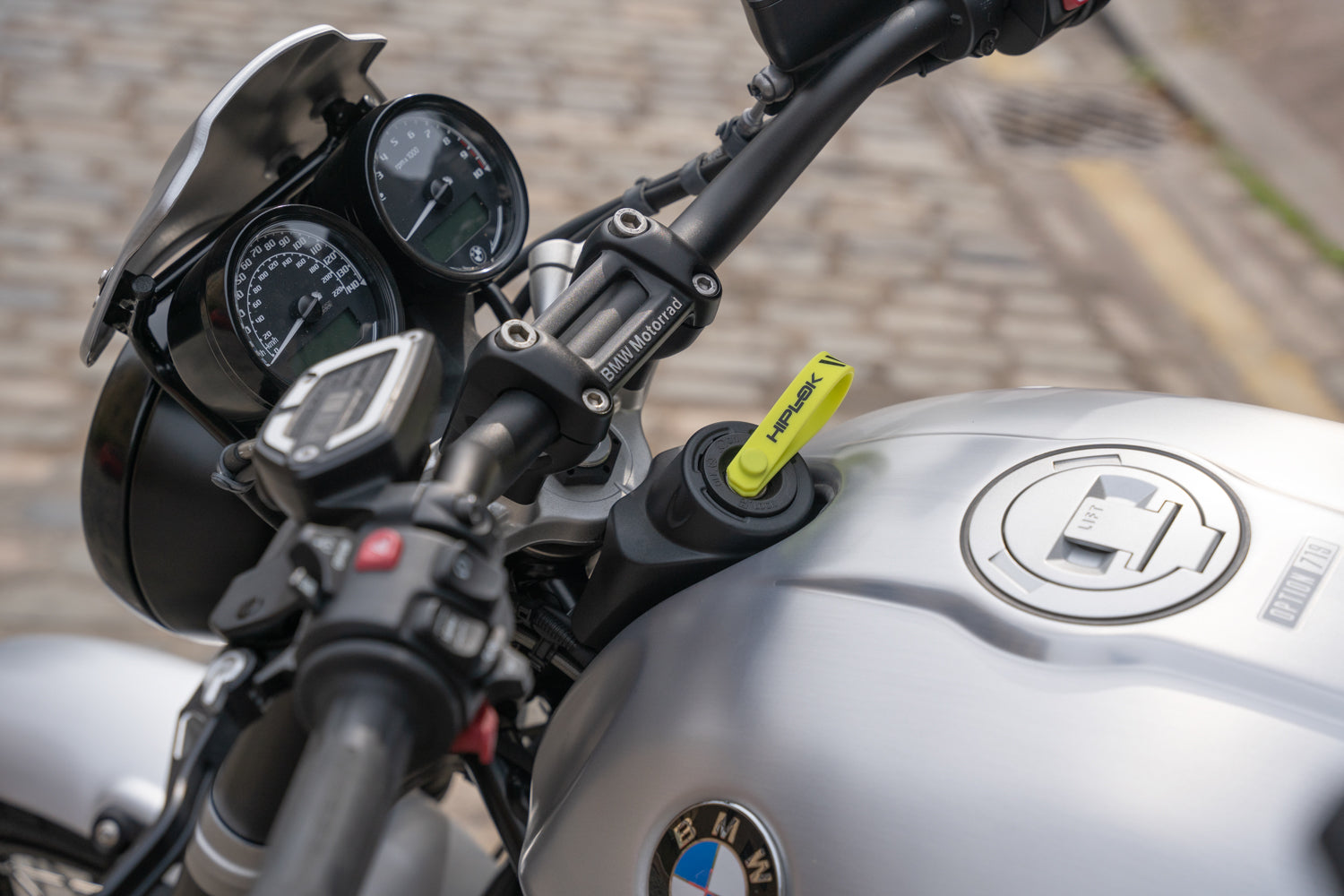
A motorcycle lock reminder cable gives you a simple visual cue. It typically runs from the disc lock to the handlebar, putting the reminder directly in front of you before you ride away. The Hiplok MD1000 comes with a magnetic Reminder Tag, that you can attach to your ignition key barrel or around your handlebar.
If your disc lock doesn’t have another obvious reminder system, using a reminder cable can be a useful habit.
Mistake 6: Not considering layered security when the situation calls for it

A good disc lock provides serious protection on its own, but there are situations where adding another high-security lock makes sense.
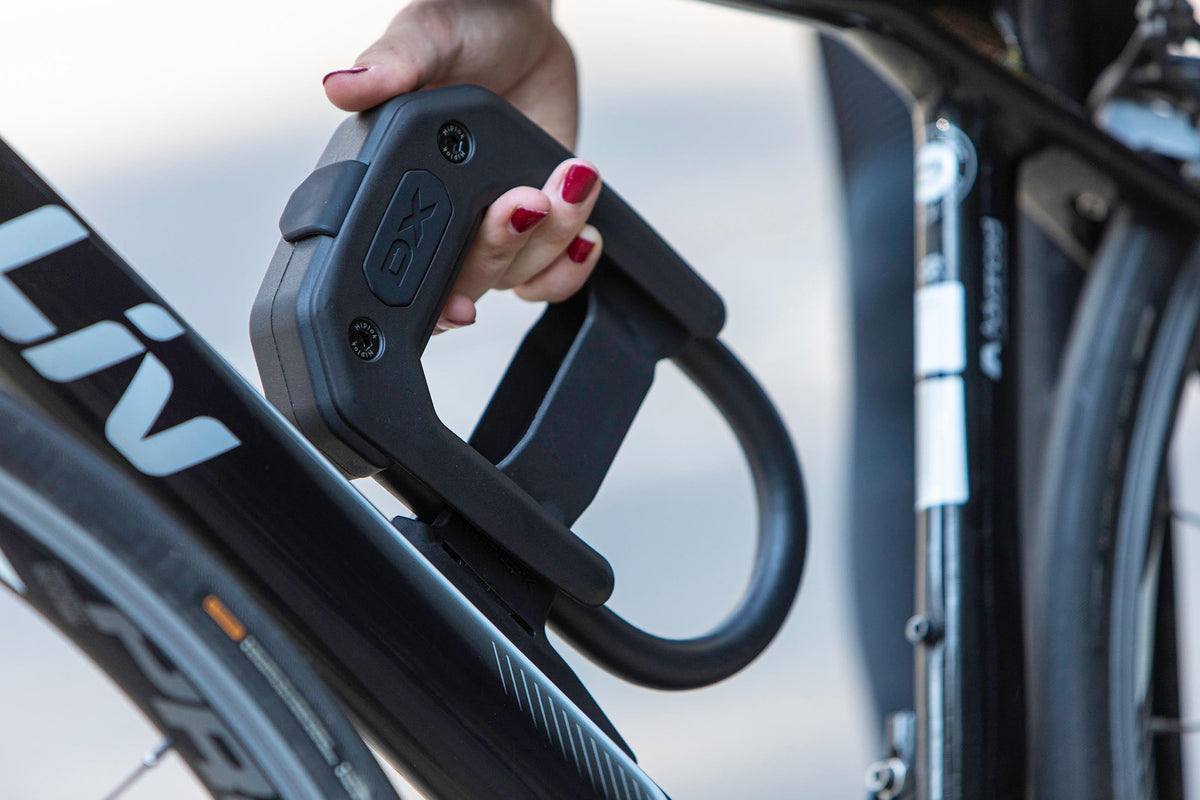
This is where a D lock can be particularly useful.
Like disc locks, D locks are available with anti-angle-grinder protection. That means you can add another highly resistant physical barrier while also gaining different locking options around the motorcycle.
If you need more reach to secure your motorcycle to a fixed anchor point, you don’t necessarily have to switch to a conventional chain.
Hiplok L1000 allows two D locks to be connected together. That gives you additional reach while retaining the advantages of using anti-angle-grinder D locks.
There are a couple of particularly useful ways to do this.
You can connect two D locks with L1000 to extend your locking setup towards a secure anchor point. Alternatively, when several motorcycles are parked together, L1000 and multiple D locks can connect the bikes so each motorcycle effectively becomes another substantial obstacle to moving the others.
That flexibility can be useful at home, when touring with other riders or anywhere you want additional reach without relying solely on a traditional chain.
Layered security isn’t about adding locks for the sake of it. It’s about creating multiple, meaningful barriers that require more time and effort to overcome.
Mistake 7: Using the same security setup everywhere
The way you secure your motorcycle at a busy café for 20 minutes doesn’t necessarily need to be identical to the way you secure it overnight.
Think about the situation.
How long will the motorcycle be unattended? Is the area busy or isolated? Can you attach the bike to something secure? Are you parking there regularly? What level of security can you realistically carry?
An anti-angle-grinder disc lock gives you serious security in a compact format that’s practical to take with you. When you’re parking for longer, particularly at home or somewhere you visit regularly, you have more opportunity to add another anti-angle-grinder lock.
A D lock can give you another strong physical barrier. If you need more reach to get to a secure anchor point, connecting two D locks with L1000 can expand the ways you secure the motorcycle without sacrificing the angle-grinder resistance you chose those locks for in the first place.
Matching your security to the situation means you can build on the protection of your disc lock when you need to.
Mistake 8: Making your security easy to access and attack
Where possible, think about the position of the lock from a thief’s perspective.
A locking point that provides lots of open space around it can potentially make tools easier to position. A tighter, more awkward location may make the same attack more difficult.
You don’t need to turn every parking stop into an engineering exercise. Just get into the habit of looking at how exposed the lock is before walking away.
A few seconds spent choosing a better position can make your security setup less convenient to attack.
Mistake 9: Never checking your disc lock
Motorcycle locks live a fairly tough life.
They’re carried around, exposed to rain and road dirt, fitted close to brake components and sometimes knocked about in luggage. Like the rest of your riding kit, they’re worth checking occasionally.
Look for obvious damage, unusual movement, corrosion or problems with the locking mechanism. Keep the mechanism maintained according to the manufacturer’s instructions and deal with anything that doesn’t feel right.

A good disc lock should also be built for years of regular use. Both Hiplok motorcycle disc locks come with our lifetime warranty, which covers the product for 10 years from the date of purchase. It’s part of our commitment to designing security you can rely on ride after ride, rather than something you expect to replace regularly.
You should still inspect your motorcycle’s brake disc and make sure the lock continues to fit and operate correctly.
Security equipment is something you rely on. Looking after it helps make sure it’s ready to do its job every time you park.
How thieves can take advantage of disc lock mistakes
A thief generally wants fewer problems, not more of them.
Poor lock positioning, lower levels of attack resistance and choosing security that isn’t suited to modern tools can all make life a lot easier for motorcycle thief.
The opposite is also true.
A well-positioned anti-angle-grinder disc lock creates a serious physical barrier. Adding another resistant lock where the situation calls for it creates another problem to solve.
More resistance can mean more time, more noise and more exposure.
That’s the principle behind effective motorcycle theft prevention. You’re not trying to make an impossible promise that the bike can never be stolen. You’re trying to make attacking or moving it a much less attractive proposition.
A quick disc lock security checklist
Before you walk away from your motorcycle, take a few seconds to check your setup.
-
Make sure the disc lock is fully engaged.
-
Position it to minimise unnecessary wheel movement.
-
Check that the locking position doesn’t give an attacker more working space than necessary.
-
Use a reminder cable or another clear reminder if appropriate.
-
Consider the level of attack resistance offered by your disc lock.
-
For greater protection against modern cutting tools, consider an anti-angle-grinder disc lock such as the MD1000.
-
Where the situation calls for layered security, consider adding an anti-angle-grinder D lock.
-
If you need additional reach, consider connecting two D locks with L1000 to reach an anchor point or secure motorcycles together.
-
Check your locks regularly for damage or problems with their mechanisms.
It quickly becomes routine, just like checking your mirrors or fastening your helmet.
Choosing a motorcycle disc lock for modern theft risks
If you’re upgrading your security, start with the attack methods you want the lock to resist and the way you actually use your motorcycle.
For riders looking for the highest level of disc lock security, anti-angle-grinder protection should be high on the list.

Our MD1000 is part of the Hiplok 1000 Series, which is designed specifically to resist angle-grinder attacks. It brings that protection into a motorcycle disc lock format that you can take with you when you ride.
That matters because an angle grinder is a very different challenge from traditional hand tools. Rather than relying on a conventional lock and hoping it’s enough, an anti-angle-grinder design is engineered specifically to increase resistance time against that type of powered attack.
Angle-grinder resistance still isn’t absolute. No lock can guarantee unlimited resistance. The important questions are how the construction increases attack time, how much effort is required and whether that extra resistance helps deter a thief looking for a quick target.
If you want to build your security further, you can then add an anti-angle-grinder D lock. For situations where you need greater locking reach, L1000 gives you the option of connecting two D locks together rather than immediately moving to a conventional chain.
That gives you a flexible way to build a security setup around your motorcycle, your parking environment and the way you ride.
Better security starts with how you use it
Buying a high-quality motorcycle disc lock is only part of the job.
Using it carefully helps you get the security it was designed to provide. Position it well, minimise unnecessary movement and choose a lock designed to resist the attack methods you’re concerned about.
For riders looking for serious resistance against modern powered tools, that means considering an anti-angle-grinder disc lock such as the MD1000. And when the situation calls for more, an anti-angle-grinder D lock can add a further meaningful barrier.
Your motorcycle deserves more thought than simply clicking a lock into place and hoping for the best. A few good habits, combined with security designed for the way motorcycles are stolen today, can make your bike a much harder and less appealing target.
FAQs
What are common mistakes motorcycle owners make when using disc locks?
Common mistakes include poor lock positioning, leaving unnecessary wheel movement, forgetting to use a reminder cable and choosing a disc lock without enough resistance for the attack methods you’re concerned about. Riders can also miss opportunities to add another high-security lock when parking conditions call for layered protection.
How can locking the wrong wheel make a motorcycle easier to steal?
A disc lock immobilises the wheel it’s attached to and creates a substantial obstacle to moving the motorcycle. Choosing your locking position carefully can make the bike more awkward to move, particularly when the disc lock is combined with another high-security locking point.
Why is leaving movement around a disc lock a problem?
Unnecessary movement can reduce how effectively the lock immobilises the wheel and may give an attacker more room to work. Positioning the lock close to the brake calliper can help minimise wheel movement.
What should I look for in a high-security motorcycle disc lock?
Look at the lock’s attack resistance, construction, security testing, geometry and fit with your motorcycle. For riders concerned about modern powered cutting tools, an anti-angle-grinder disc lock such as Hiplok MD1000 is designed specifically to increase resistance to angle-grinder attack.
Can I combine a motorcycle disc lock with other locks?
Yes. Adding an anti-angle-grinder D lock can create another strong physical barrier. If you need additional reach, Hiplok L1000 can connect two D locks together, allowing you to reach a secure anchor point or connect multiple motorcycles so they create additional obstacles to being moved.


Share:
Protect Your Helmet: Common Theft Hotspots and How to Secure Your Gear
D Locks vs U Locks: Are They the Same?