

If you’re comparing D locks vs U locks, there’s one useful thing to know straight away: they’re the same type of bike lock. The two names describe the familiar rigid-shackle lock used by riders around the world.
Is a D lock the same as a U lock?

Yes. A D lock and a U lock are different names for the same basic bike lock design.
Both use a rigid, curved shackle that connects to a locking crossbar. Depending on which way you look at it, that shape resembles either a D or a U.
In the UK, D lock is the more common term. U lock is more commonly used in American English, where you may also see it written as U-lock.
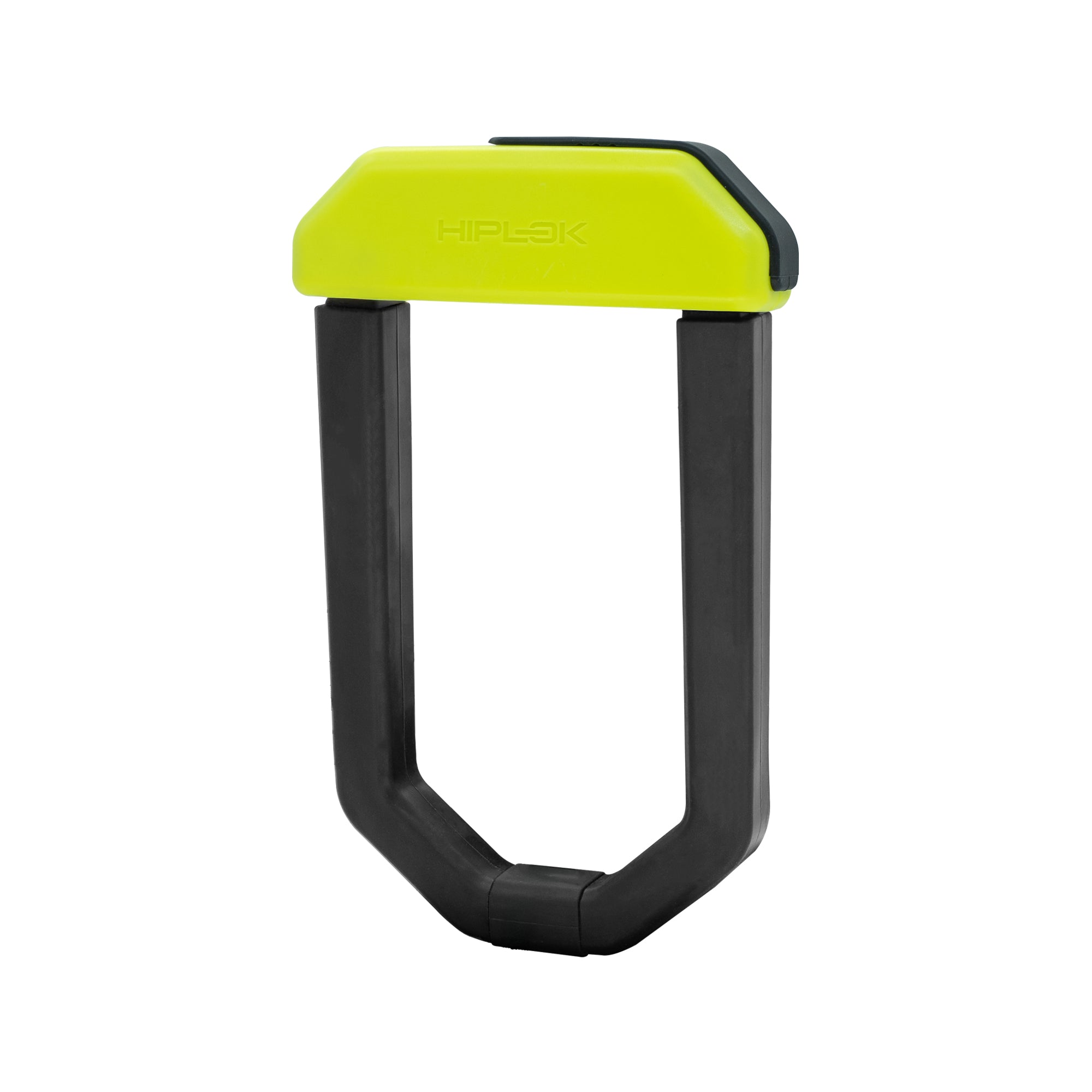
At Hiplok, we generally use the term D lock. You can explore our range of U lock (D lock) options to see the different designs available.
So, when you’re choosing one, the name isn’t what matters. What matters is how that particular lock is built, the level of security it offers, its size and weight, and how practical it is to carry and use.
That matters when your bike is part of your everyday life. Whether you’ve spent years tweaking it, rely on it for the commute or simply love riding it, you want a lock that suits the bike and the way you actually use it.
D locks vs U locks: what’s the difference?

The only real difference is the naming convention.
D lock is the term you’re more likely to encounter in the UK, while U lock or U-lock is more common in the US. All three terms refer to the same category of bike lock.
So a lock described as a U lock isn’t inherently stronger, lighter or more secure than one described as a D lock.
The meaningful differences are between individual locks, not between D locks and U locks as categories.
What makes one D lock different from another?
 Once you get past the terminology, there can be significant differences between individual D locks.
The main things to compare are:
-
Security rating
-
Shackle construction and thickness
-
Locking mechanism
-
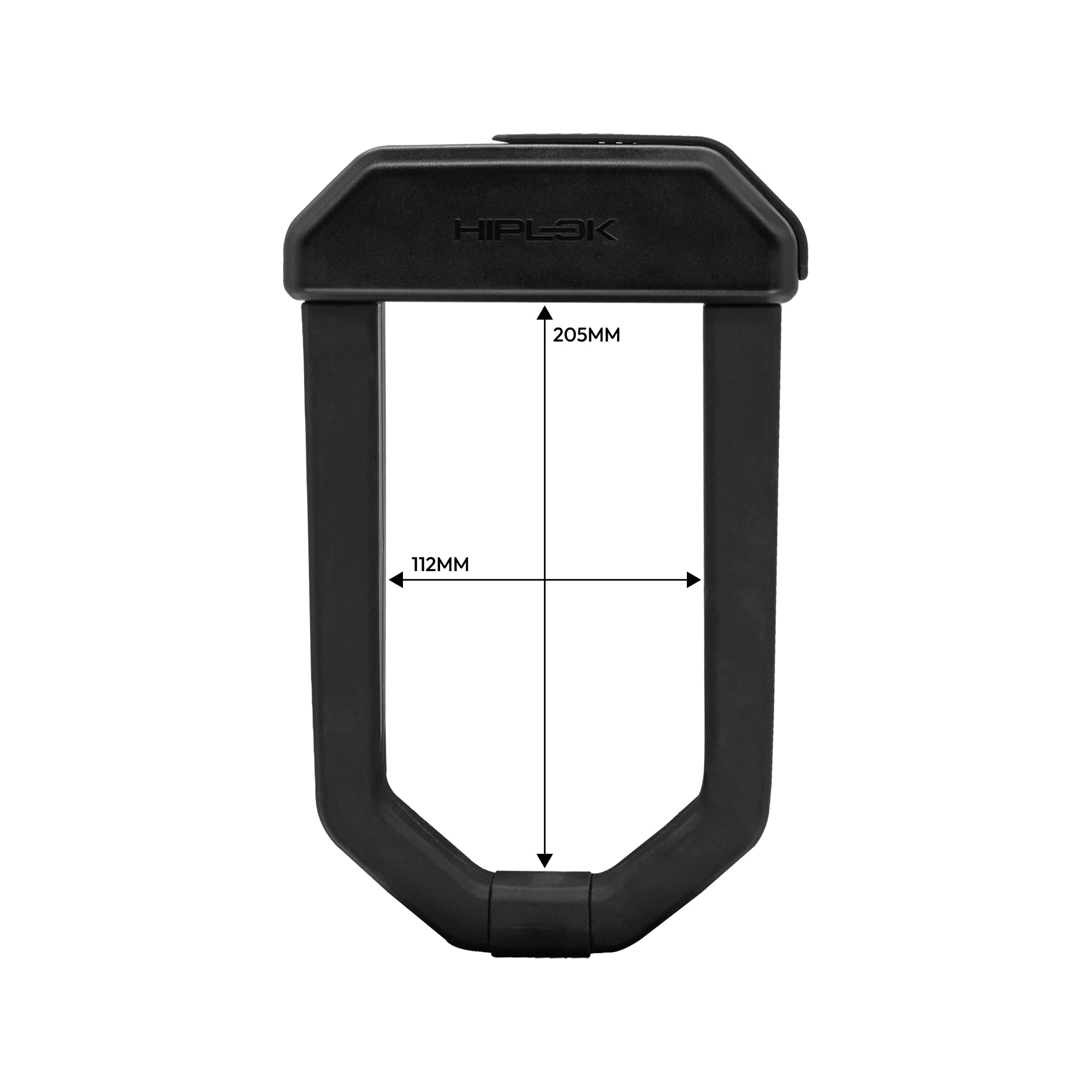
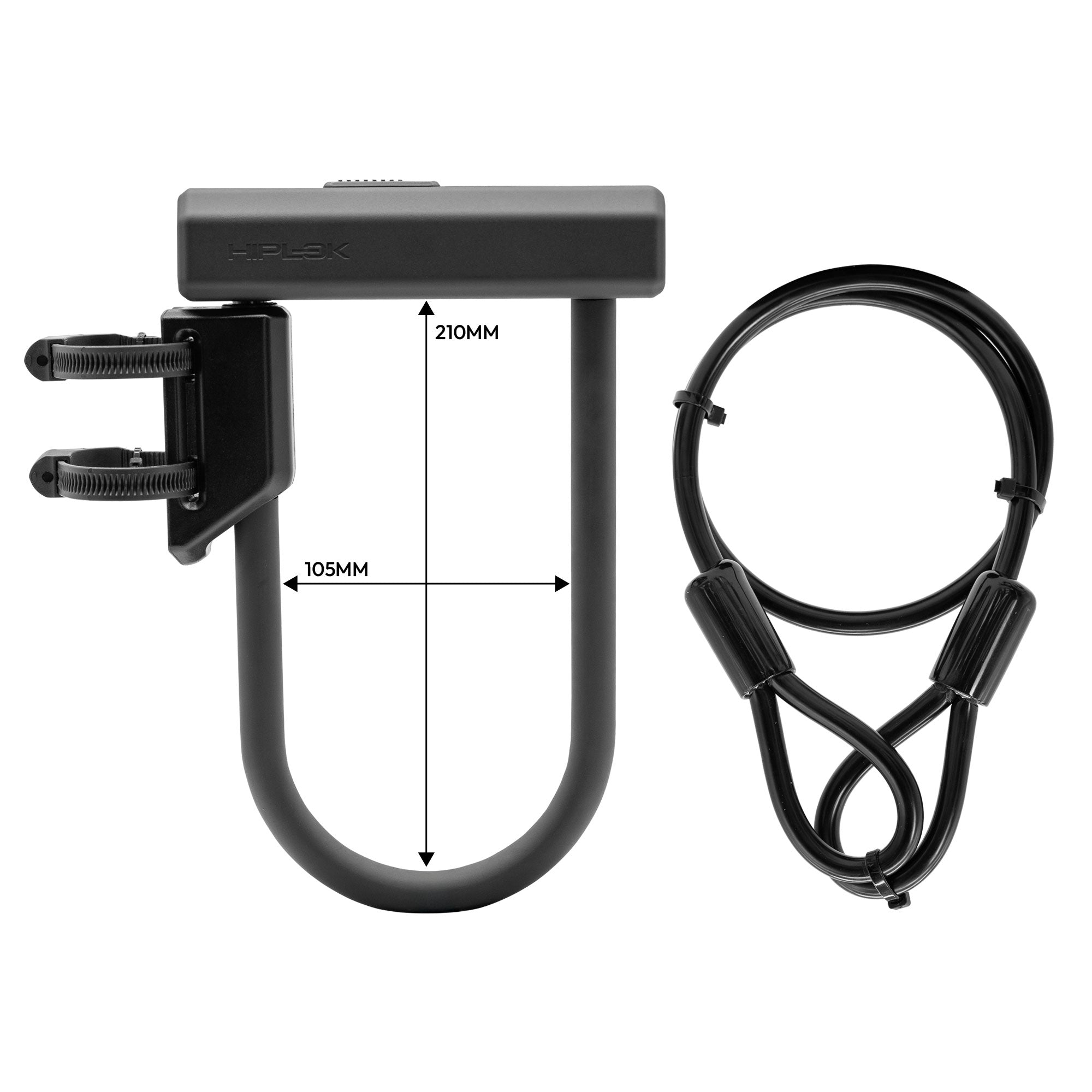
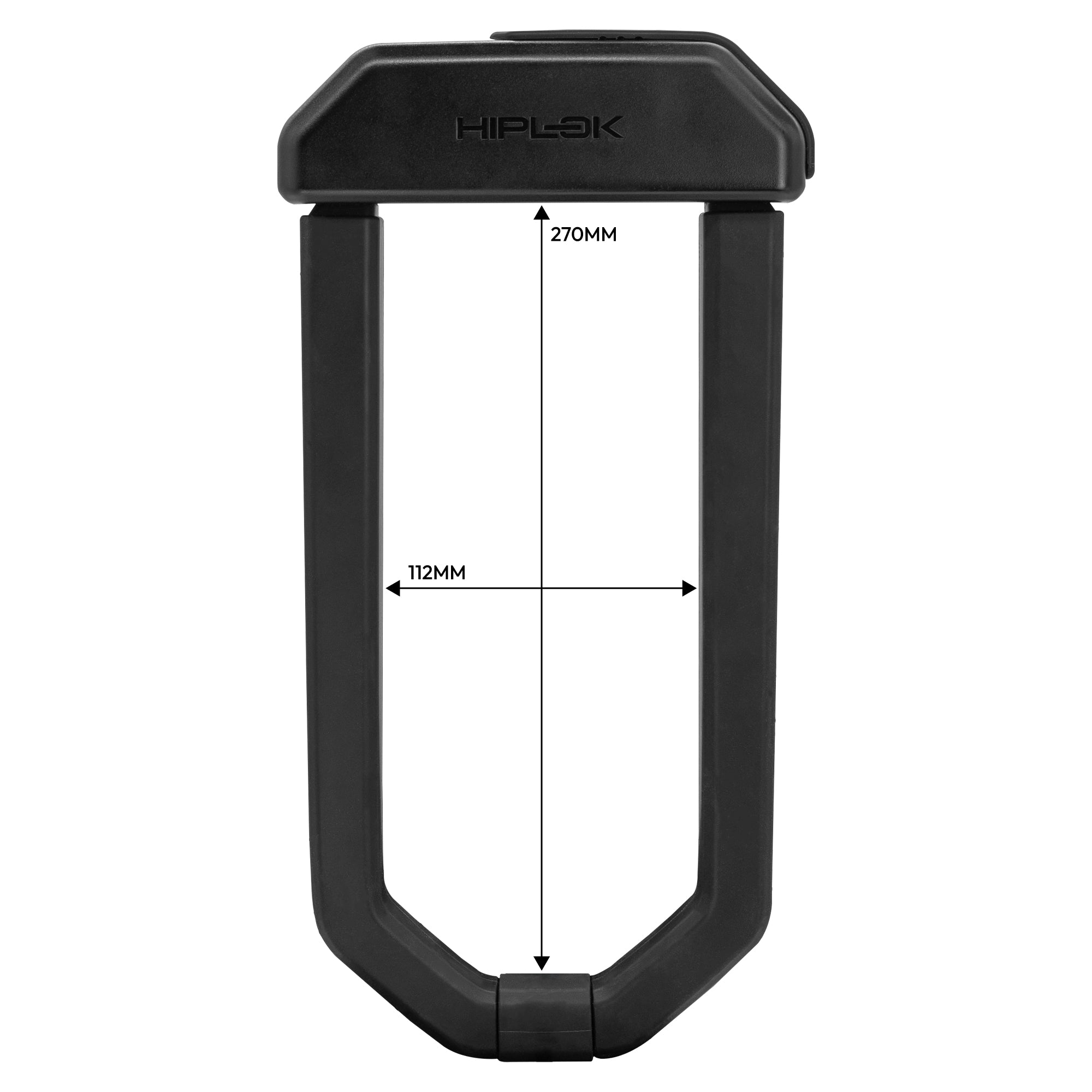
Internal locking dimensions
-
Weight and portability
-
Resistance to different attack methods
-
Ease of use
Two D locks can share the same basic shape while being designed for very different uses. A compact lock designed to come with you on every ride, for example, has different practical demands from an anti-angle grinder lock designed to provide much greater resistance against powered tools.
This is where the details of the individual design become important.
Across our Hiplok D lock range, we use hardened construction and anti-rotation double locking tabs, meaning both sides of the shackle need to be cut to release the lock. This adds another obstacle during an attack.
Most Hiplok D locks also feature an anti-scratch design, helping protect your bike’s frame and finish during everyday locking and carrying.
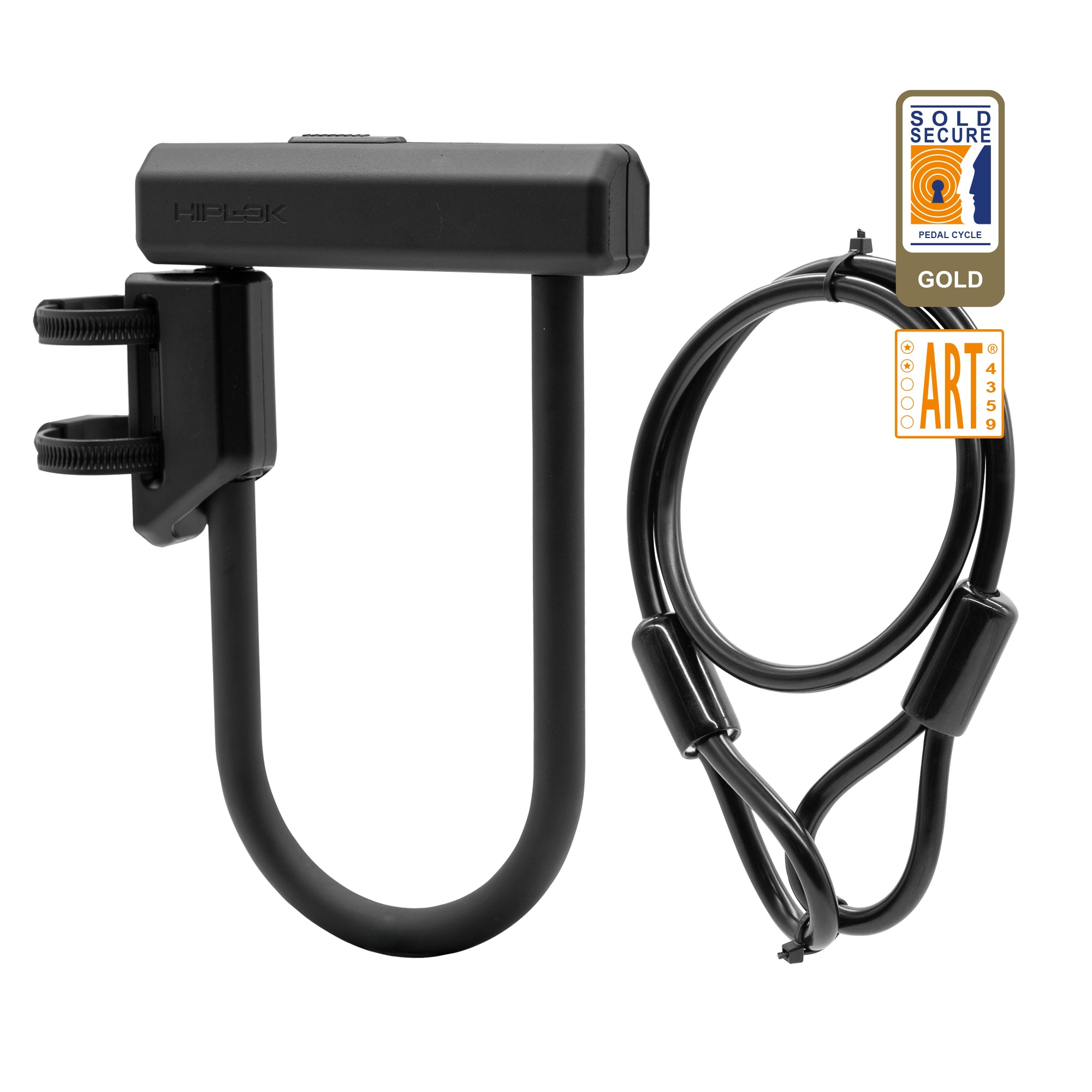
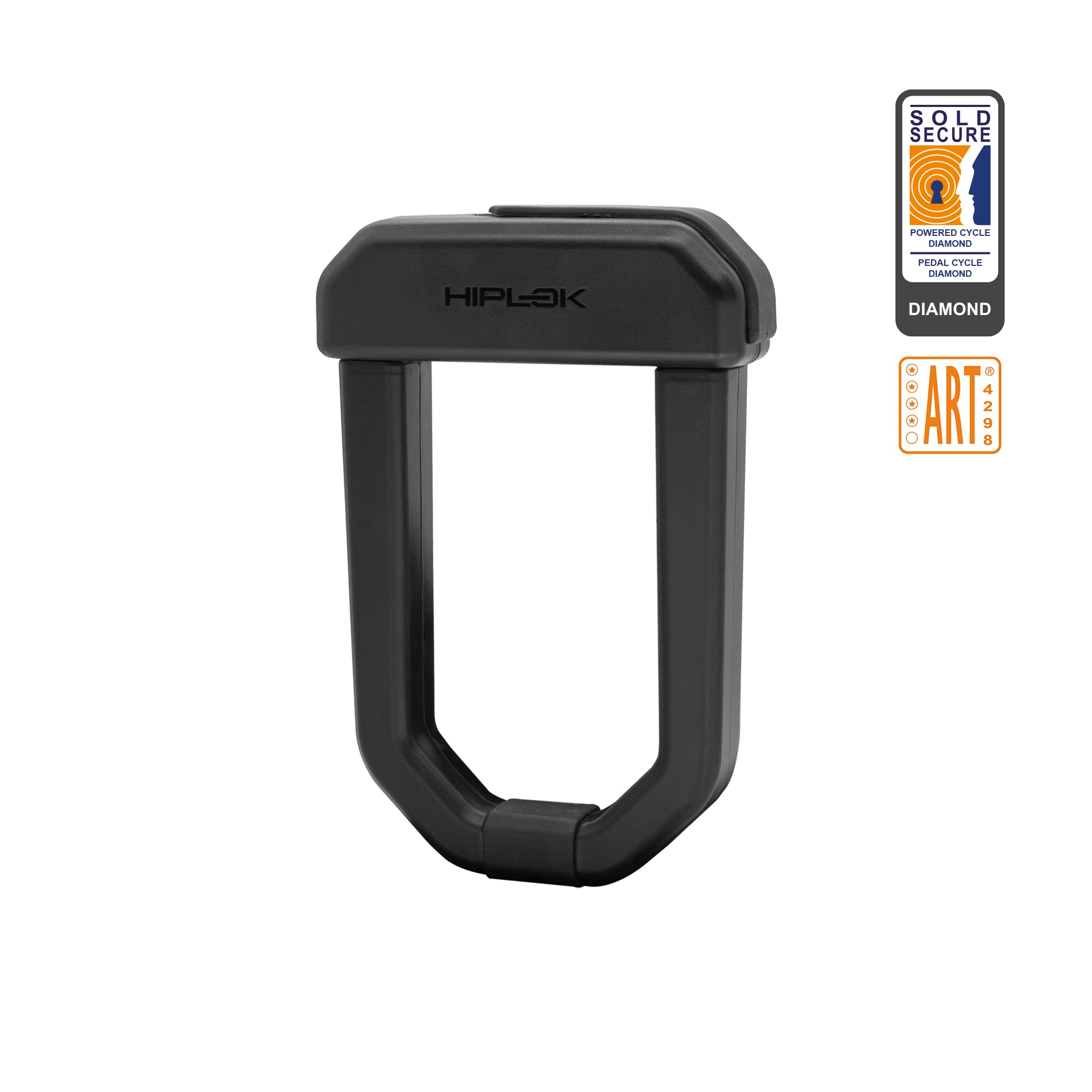
Our bike D locks are independently Sold Secure rated, with security levels ranging from Gold through to Diamond. Hiplok D locks also come with three coded replaceable keys, so losing or breaking a key doesn’t have to mean replacing the lock.
Rather than getting caught up in whether something is described as a D lock or U lock, it’s much more useful to compare these kinds of features and what the individual lock has been designed to do.
Why D locks work well

There’s a reason the D lock has become such a familiar piece of bike security.
Its rigid construction gives you a strong connection between your bike and something secure and immovable. The relatively simple shape also makes it straightforward to use once you’ve found the right size for your bike.
For everyday riding, that combination of security and usability can be particularly useful. If you’re commuting across a city and locking up several times during the day, for example, you need security that works without turning every stop into a hassle.
There are three things in particular worth considering.
Security
No lock is theft-proof. Given enough time and the right tools, anything can be attacked.
Good bike security is about increasing the time, effort and difficulty involved in an attack. The longer and harder a lock is to defeat, the greater the deterrent.
Not all D locks provide the same level of resistance, which is why construction and independent security ratings matter.
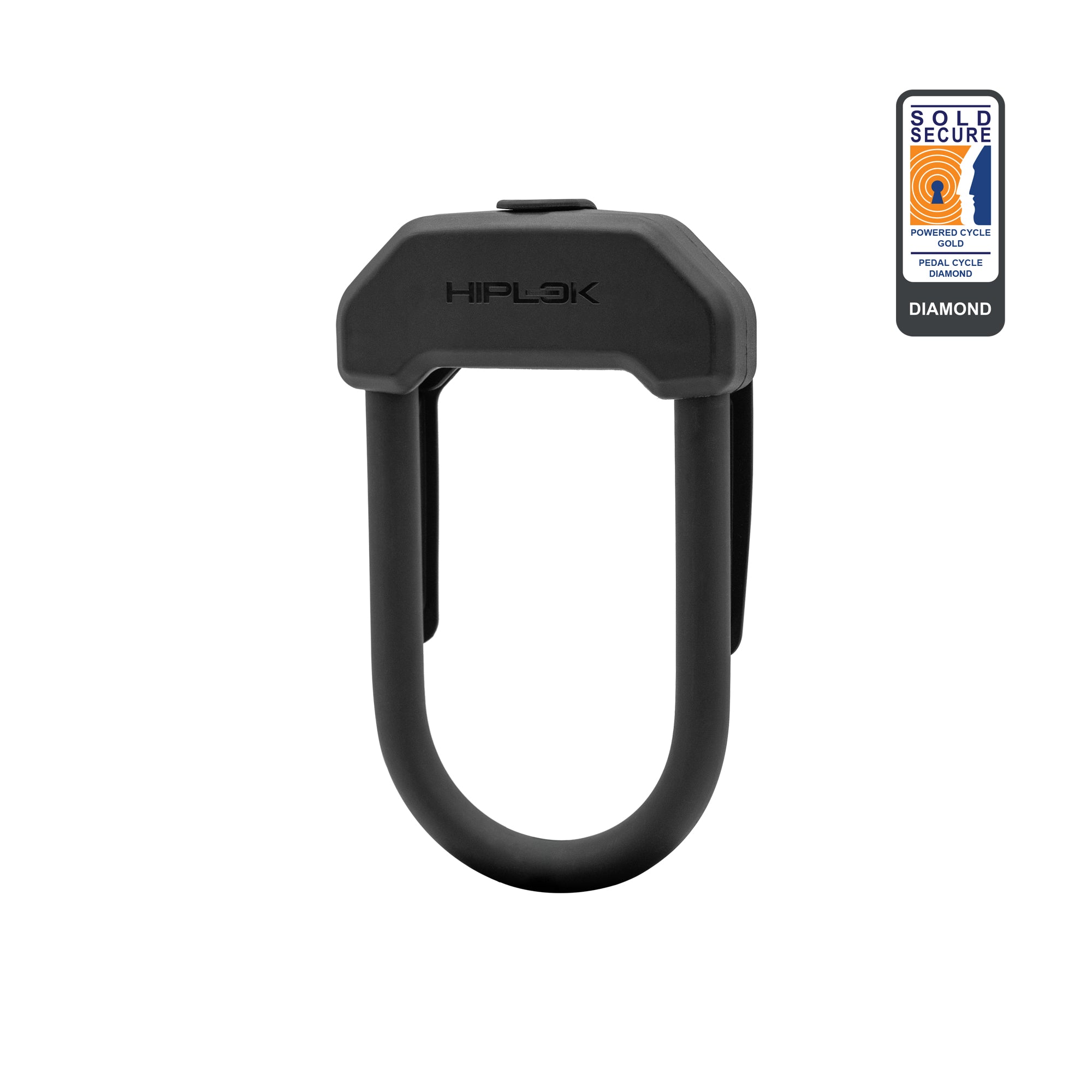
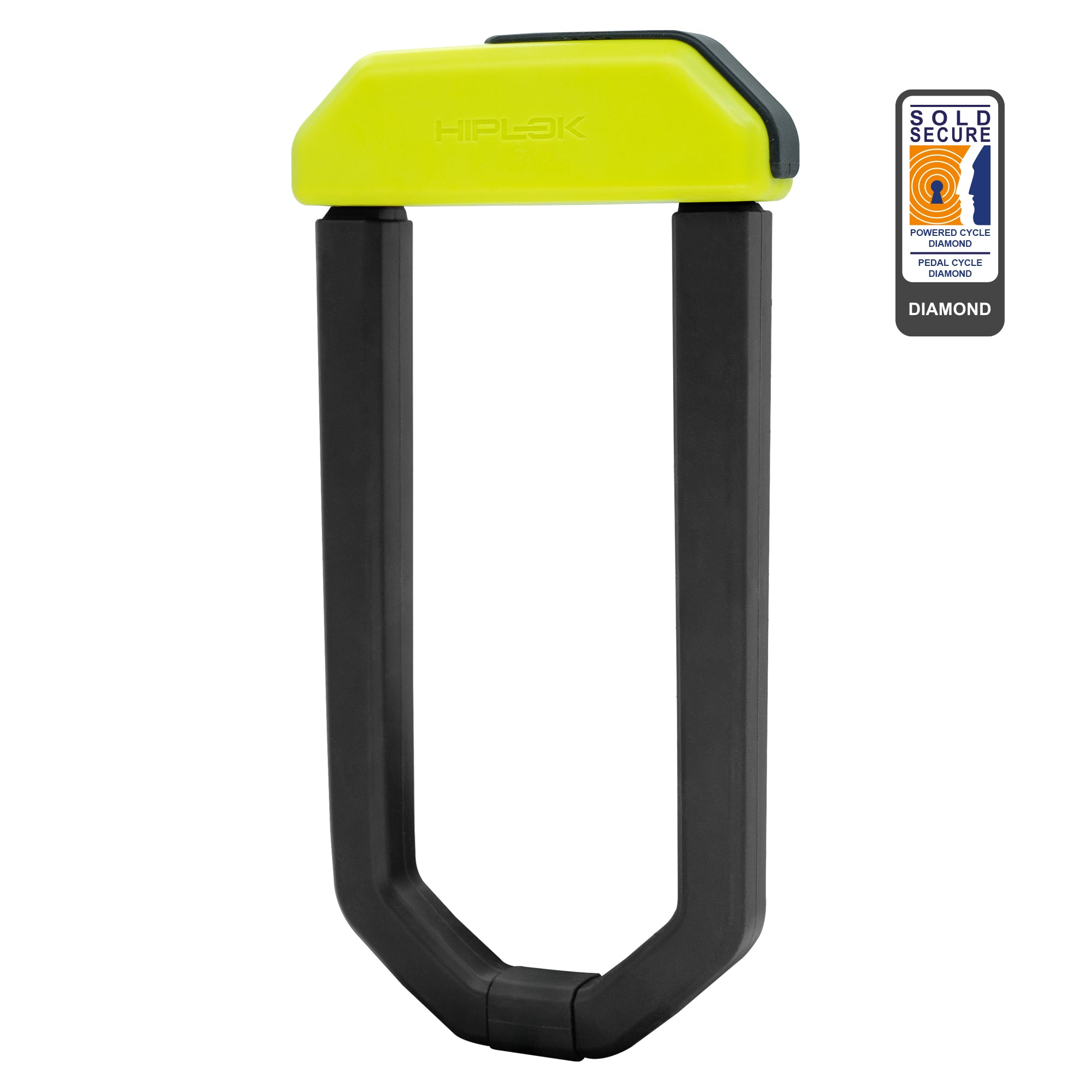
At the highest-security end of the category, you’ll also find anti-angle grinder D locks. Our 1000 Series uses a specialist composite material designed to resist angle-grinder attacks, with D1000, DX1000 and DXL1000 providing different locking dimensions for different bikes and uses. The range carries the Sold Secure Powered Cycle Diamond rating, Sold Secure’s highest security level for this category.
No D lock is impossible to cut with an angle grinder. The difference is resistance time. Our approach with the 1000 Series is to make a powered-tool attack take considerably more time, effort and equipment, increasing the deterrent.
Portability
Security is only useful if the lock is practical enough to take with you.
D locks vary considerably in size and weight. A compact design can be easier to carry, while a larger lock can give you more flexibility when choosing where to secure your bike.
This is something we’ve focused on throughout the Hiplok range. Depending on the model, that can mean lightweight construction, a compact locking area, a frame bracket or our CLIP + RIDE system for carrying the lock on a belt or bag strap.
The important thing is finding an option you’ll be comfortable taking with you regularly.
Ease of use
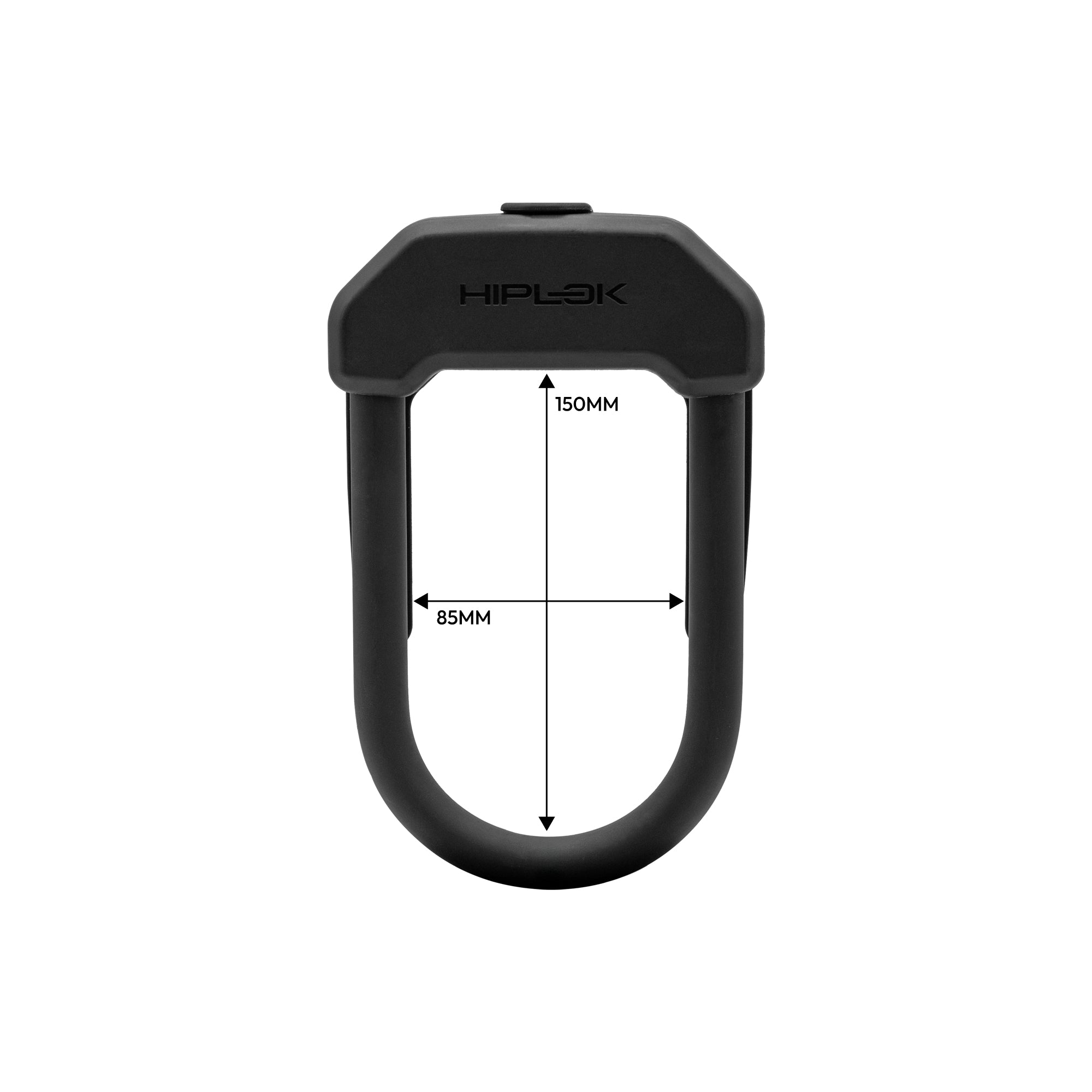
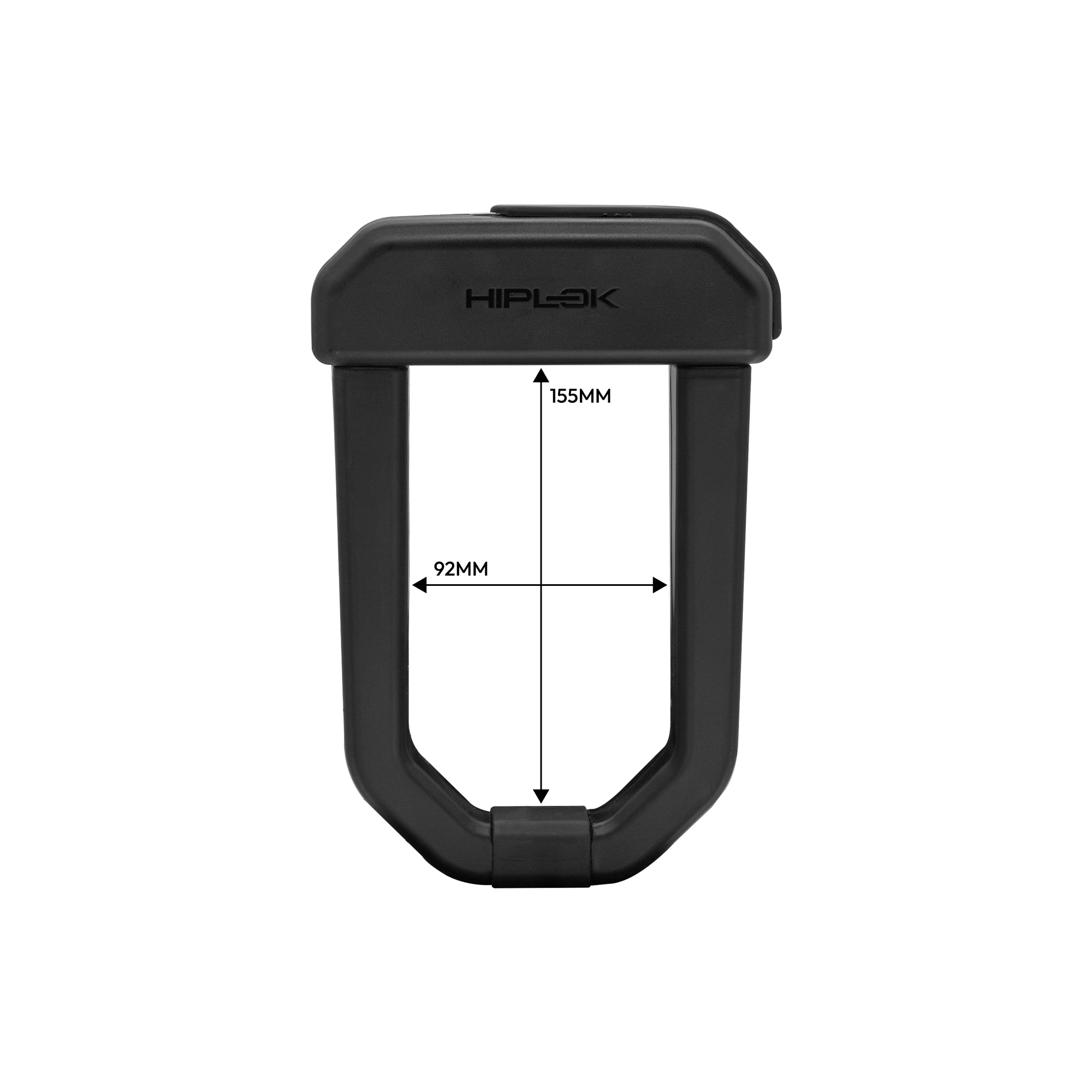
A D lock needs to fit around the part of your bike you want to secure and the fixed object you’re locking it to.
More internal space can make this easier, but bigger isn’t automatically better. A more compact fit can reduce the room available for an attacker to position tools inside the lock.
The right dimensions depend on your bike and the kinds of stands or locking points you regularly use.
Most Hiplok D locks also incorporate an anti-scratch design, a small but useful detail when the lock is regularly coming into contact with a frame you care about.
How to choose the right D lock

There isn’t one D lock that’s right for every rider.
Choosing one is about balancing the level of security you need with size, weight and everyday usability. When comparing Hiplok D locks, there are a few design features that can help you narrow that choice down.
Think about where you park
Where and how long you leave your bike should influence the level of security you choose.
A bike regularly left for several hours in a busy public location has different security needs from one used for quick stops in lower-risk locations.
Think about the bike itself too. A high-value e-bike may justify a higher level of security, but price isn’t the only consideration. If you’ve built a bike around exactly how you like to ride, replacing it can mean much more than simply buying another one.
For higher-risk parking, you may want to look towards a higher security rating or an anti-angle grinder D lock from our 1000 Series.
Check the security rating
Independent security testing gives you a useful way to compare locks that may otherwise look quite similar.
All Hiplok bike D locks carry a Sold Secure rating, ranging from Gold to Diamond depending on the model and its intended security level.
It’s also worth checking your insurance policy if your bike is insured. Your insurer may require a particular security rating or specify how the bike needs to be locked.
Look at the locking design
Shackle thickness is useful information, but it doesn’t tell you everything about a D lock.
All Hiplok D locks use anti-rotation double locking tabs, designed so that both sides of the shackle need to be cut before the lock can be released.
Materials matter too. Hardened steel is used across our standard D lock designs, while the anti-angle grinder 1000 Series adds specialist composite material engineered to resist powered-tool attacks.
Choose the right dimensions
A larger D lock gives you more room to work with, which can be useful when you encounter awkward bike stands, larger frames or less-than-ideal locking points.
The trade-off is extra bulk and potentially more unused space inside the lock.
Ideally, you want enough room to secure your bike properly without carrying a much larger lock than you actually need.
Think about how you’ll carry it
This is easy to overlook when you’re comparing security specifications.
If you ride regularly, carrying your lock is part of the experience. A lock that works brilliantly once you arrive but is awkward for the whole journey may not be the right design for you.
That’s why lightweight and compact design are more than convenience features. They can determine whether a lock actually works with the way you ride.
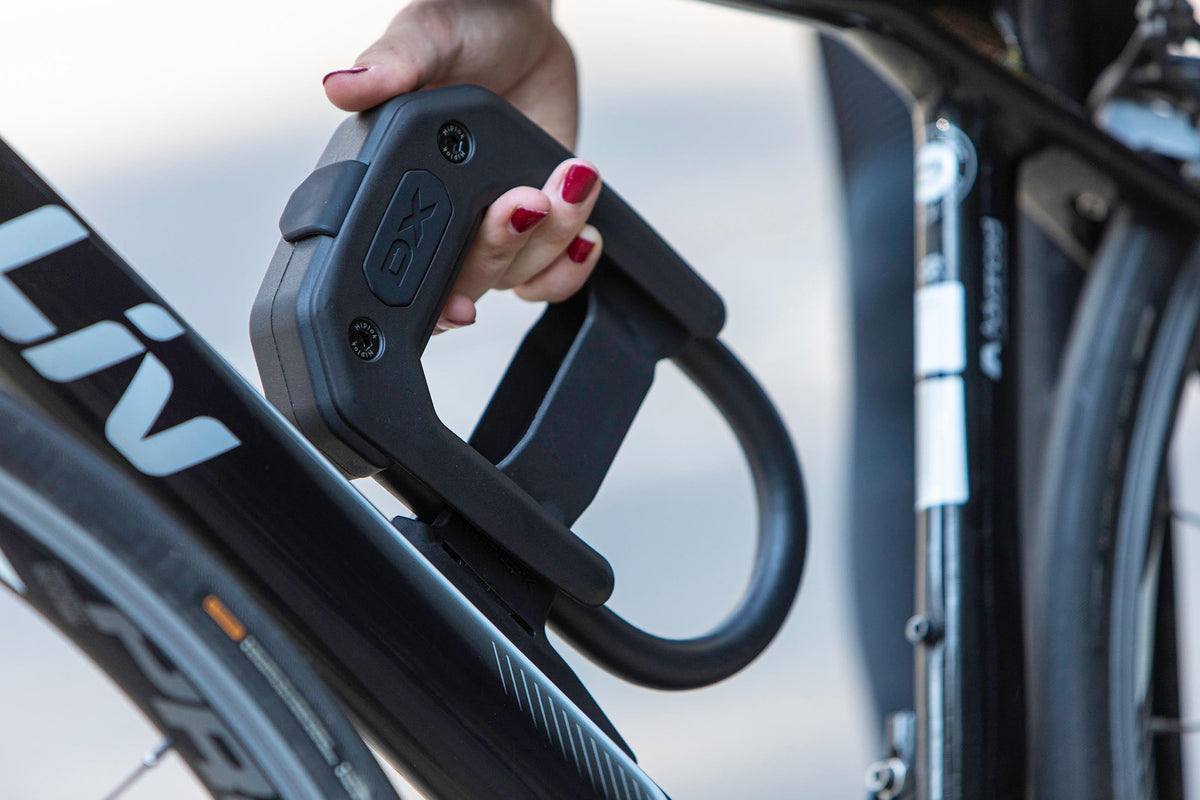
Frame mounts, bags and wearable designs solve the problem in different ways. Portability has been part of our thinking at Hiplok from the start. Designing the DX gives you a closer look at how we approached the relationship between security, size and carrying a D lock on the bike.
Think about the details you’ll live with
The smaller features matter too, especially on a lock you use every day.
Hiplok D locks come with three coded replaceable keys. If you lose or break one, replacements can be ordered using the key code rather than having to replace the whole lock.
Most also feature an anti-scratch design to help protect your bike’s finish through regular use.
Our D locks are also eligible for our 10-year Lifetime Warranty when registered within 30 days of purchase. These details might not be the first things you compare when buying a lock, but they can make a real difference over years of use.
How to use a D lock effectively

Even a well-designed lock needs to be used properly.
Start with something solid and immovable. A strong D lock can’t compensate for locking your bike to something that can easily be cut, broken or removed.
Where possible, secure the frame rather than relying on a removable component such as a wheel.
It’s also worth keeping the fit relatively tight. Reducing unnecessary space inside the shackle can make it harder to position some attack tools effectively.
For higher-risk locations or longer stops, adding a second lock can create another obstacle. Using a different type of lock alongside your D lock can also mean an attacker needs different tools and more time.
How secure are D locks?

The basic shape alone doesn’t tell you how secure a D lock is.
A lightweight, lower-security D lock and a high-security D lock may look broadly similar, but their materials, construction and locking mechanisms can be very different.
This is why it’s worth looking at how an individual lock has been designed and independently tested rather than assuming every D lock provides the same level of protection.
For riders looking for greater resistance to powered-tool attacks, anti-angle grinder D locks take that principle further. Hiplok’s 1000 Series is independently rated Sold Secure Powered Cycle Diamond and uses specialist composite material designed to wear down angle-grinder cutting discs during an attack.
It’s still important to be realistic about what that means. No lock is completely resistant to an angle grinder. What matters is resistance time and the amount of effort and equipment required to continue an attack.
Finding the right balance between security and convenience

Choosing bike security usually involves a few practical trade-offs.
Higher-security construction can affect weight and size. A smaller lock may be easier to carry but give you fewer options when you arrive somewhere with awkward cycle parking.
The right balance depends on where you ride, where you park and what you’re comfortable carrying.
| Consideration | What to look for |
|---|---|
| Security | An independent security rating appropriate to your bike and how you use it |
| Construction | Hardened materials, double locking and resistance appropriate to the attacks you want to protect against |
| Size | Enough internal space for your frame and usual locking points |
| Weight | A lock you’re comfortable carrying regularly |
| Portability | Compact, wearable or frame-mounted options that work with how you ride |
| Bike protection | Anti-scratch features that help protect the frame during regular use |
| Everyday ownership | Replaceable keys, warranty cover and a lock designed for regular use |
Different riders will naturally put more weight on different parts of that list.
If you make several short stops on an urban commute, easy carrying and quick locking may be particularly important. If your bike spends longer periods locked in higher-risk locations, you may prioritise greater attack resistance instead.
The important thing is to choose around how you actually ride and park.
How to look after a D lock

D locks don’t need complicated maintenance, but a little care can help keep the mechanism working smoothly.
Try to keep the locking mechanism reasonably clean, particularly if you ride throughout the year. Water, road grime and dirt can build up with regular use.
Follow the manufacturer’s guidance on cleaning and lubrication, and occasionally inspect the lock for damage or unusual wear.
If your lock has been attacked or seriously damaged, replace it rather than continuing to rely on it.
Hiplok D locks are also covered by our 10-year Lifetime Warranty when you register the lock within 30 days of purchase. It covers the hardware under the terms of the warranty, giving you long-term support for a lock that’s likely to see plenty of everyday use. Register for Hiplok’s Lifetime Warranty.
Choosing a D lock that works for you

Once you know that D lock and U lock mean the same thing, choosing a lock becomes a much more useful comparison.
Focus on the differences that genuinely change from one model to another: its security rating, materials, dimensions, weight, portability and resistance to different attacks.
Across our D lock range, anti-rotation double locking tabs mean both sides of the shackle need to be cut to release the lock. Depending on the model, you can then choose features such as compact or lightweight construction, anti-scratch protection and the anti-angle grinder technology used in our 1000 Series.
And don’t overlook the ownership details. Hiplok D locks come with three coded replaceable keys and are eligible for our 10-year Lifetime Warranty when registered within 30 days of purchase.
The right D lock is one that gives you an appropriate level of resistance for your bike and where you park it, while still being practical enough to become a normal part of every ride.
Find the right lock for your bike.
FAQs
Are U locks safer than D locks?
No. U lock and D lock are different names for the same type of lock, so neither is inherently safer. Security depends on the design, construction and security rating of the individual lock.
Are D locks easy to break?
That depends on the individual lock. Materials, shackle construction, locking mechanism and security rating all affect how resistant a D lock is to attack.
Can bolt cutters cut through a U lock?
It depends on the lock. Shackle thickness, hardness and construction all affect resistance to cutting attacks, so you can’t judge this from the D lock or U lock name alone.
What features should I look for in a D lock or U lock?
Look at the independent security rating, construction, locking mechanism, internal dimensions, weight and carrying options. Features such as double locking and anti-angle grinder technology can provide additional resistance, while anti-scratch protection and practical carrying options can make a lock easier to live with.
How do I choose the right lock for my e-bike?
Consider the value of the e-bike, where and for how long you usually leave it, the level of security you need and how you’ll carry the lock. If the e-bike is insured, check whether your policy specifies a particular security rating.
Share:
Avoid These Motorcycle Disc Lock Mistakes to Secure Your Bike