

When you’re on a motorcycle tour, your bike is much more than transport. It’s the machine you chose for the trip, spent time setting up and probably loaded with kit you’ve carefully picked for the miles ahead.
That makes leaving it outside a hotel, café or overnight stop in an unfamiliar place something you want to get right.
A good D lock gives you a simple, robust way to add physical security to your motorcycle. But where and how you fit it matters. The aim is to make the bike harder to move and give a thief as little room as possible to attack the lock.
In this step-by-step motorcycle locking guide, we’ll explain how to use a D lock for motorcycle security, where to position it and what to do when fairings, forks or wheel designs limit your options.
How do you lock a motorcycle with a D lock?

The basic principle is simple: pass the D lock through a strong, secure part of the motorcycle, such as the frame or wheel, where the design of the bike allows. Ideally, you want to close the lock with as little spare space inside the shackle as practical.
The best locking point will depend on your motorcycle’s design, including the frame, wheels, forks, brake components and bodywork. Always choose a point that cannot be easily removed or bypassed.
For a quick overview:
-
Park in the best location available.
-
Identify a strong, accessible locking point on the motorcycle, such as the frame or wheel.
-
Position the D lock with minimal empty space inside it.
-
Keep the lock away from delicate components and bodywork.
-
Close and check the lock before walking away.
It only takes a little time, but getting those details right can make your security setup considerably harder to attack.
Step 1: Choose your parking position first

Before the D lock comes out, look at where you’re leaving the motorcycle.
Touring often means parking somewhere you’ve never visited before. You might be outside a hotel on a motorbike trip, stopping for food on a long route or leaving the motorcycle overnight while touring Europe on a motorcycle.
Where you can, choose a well-used, visible parking area rather than automatically looking for the most secluded corner.
Think about how easily someone could approach the motorcycle, work around it or move it without attracting attention. A strong bike security lock is important, but the environment around your motorcycle is part of the overall setup too.
Step 2: Find the strongest practical lock-up point
Next, look at your motorcycle and work out where the D lock can actually go.
Motorcycles vary enormously. On one bike, part of the frame might be easy to reach. On another, fairings, exhaust routing or other components may leave very little space. Touring bikes can be particularly busy around the frame once bodywork and other equipment are taken into account.
If the frame isn't realistically accessible, don't force it. Motorcycle designs differ, and a secure setup needs to work with the bike in front of you.
For most motorcycles, the wheel provides the most practical place to fit a D lock.

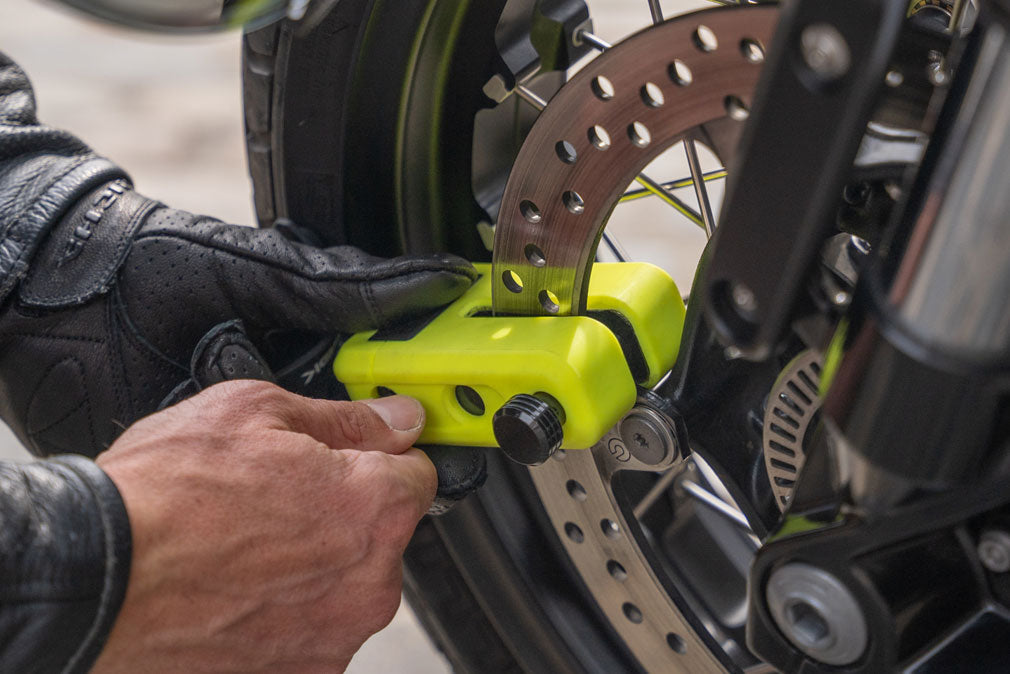
The aim is to position the lock so that it prevents the wheel from rotating freely, ideally around the wheel, rather than through the spokes, making the motorcycle more difficult to move.
Look carefully at the available openings and nearby components before inserting the shackle. You don't want the lock resting against a brake disc, valve, brake line or other part that could be damaged if the motorcycle moves.
Wheel designs vary, so there's no single position that works for every motorcycle. Take a few seconds to check the fit rather than assuming the same locking technique will work on every bike you ride.
Step 3: Keep empty space inside the D lock to a minimum

Once you've chosen your locking point, think about the position of the lock itself.
As a general rule, you don't want a large amount of unused space inside the shackle. A tighter fit can reduce the room available to position tools around the lock.
That doesn't mean forcing the smallest possible lock into a gap where it doesn't comfortably fit. You still need enough clearance to install and remove the D lock without damaging the motorcycle.
It's about finding a good fit between accessibility and security.
Step 4: Think about the position of the lock

How the lock sits matters as well as what it passes through.
Try to position your D lock so that it isn't easy to manipulate and doesn't leave unnecessary room around the shackle. At the same time, check that it won't swing into paintwork, fairings, brake components or other vulnerable parts.
Before you leave the motorcycle, give the lock a gentle movement with your hand. That simple check can tell you whether it's likely to knock against the bike or shift into an awkward position.
When you're several days into a motorcycle tour, small routines like this become second nature.
Step 5: Close the D lock and check it

It sounds obvious, but make the final check part of your routine.
Once the lock is closed, pull gently on the shackle and check that the mechanism has fully engaged. Make sure the lock is sitting where you intended and that nothing has moved while you were closing it.
Before walking away, check:
-
The D lock is completely closed.
-
The shackle passes through your intended locking point.
-
There's no unnecessary space inside the lock.
-
The lock isn't resting against vulnerable motorcycle components.
-
The motorcycle can't simply be rolled away normally.
A few seconds spent checking the setup is worthwhile, especially when you're tired after a long day's riding.
Frame or wheel: where should you put a D lock?

If your motorcycle gives you a practical and secure way to lock through its frame, that's a good place to start.
The problem is that motorcycles aren't designed around locks. Fairings, engine layout and other components can make parts of the frame inaccessible.
That's why wheel locking is often the practical alternative.
The important thing is to understand what your chosen setup achieves. A D lock positioned through a wheel can restrict movement. A suitable frame locking point connects the lock directly to the motorcycle's main structure.
Rather than forcing one method to work on every motorcycle, look for the strongest practical option available on your particular bike.
Connecting your motorcycle to a fixed object with L1000

Sometimes the strongest locking point on your motorcycle and the fixed object you want to secure it to simply aren't close enough for one D lock.
That's where Hiplok L1000 gives you another option.
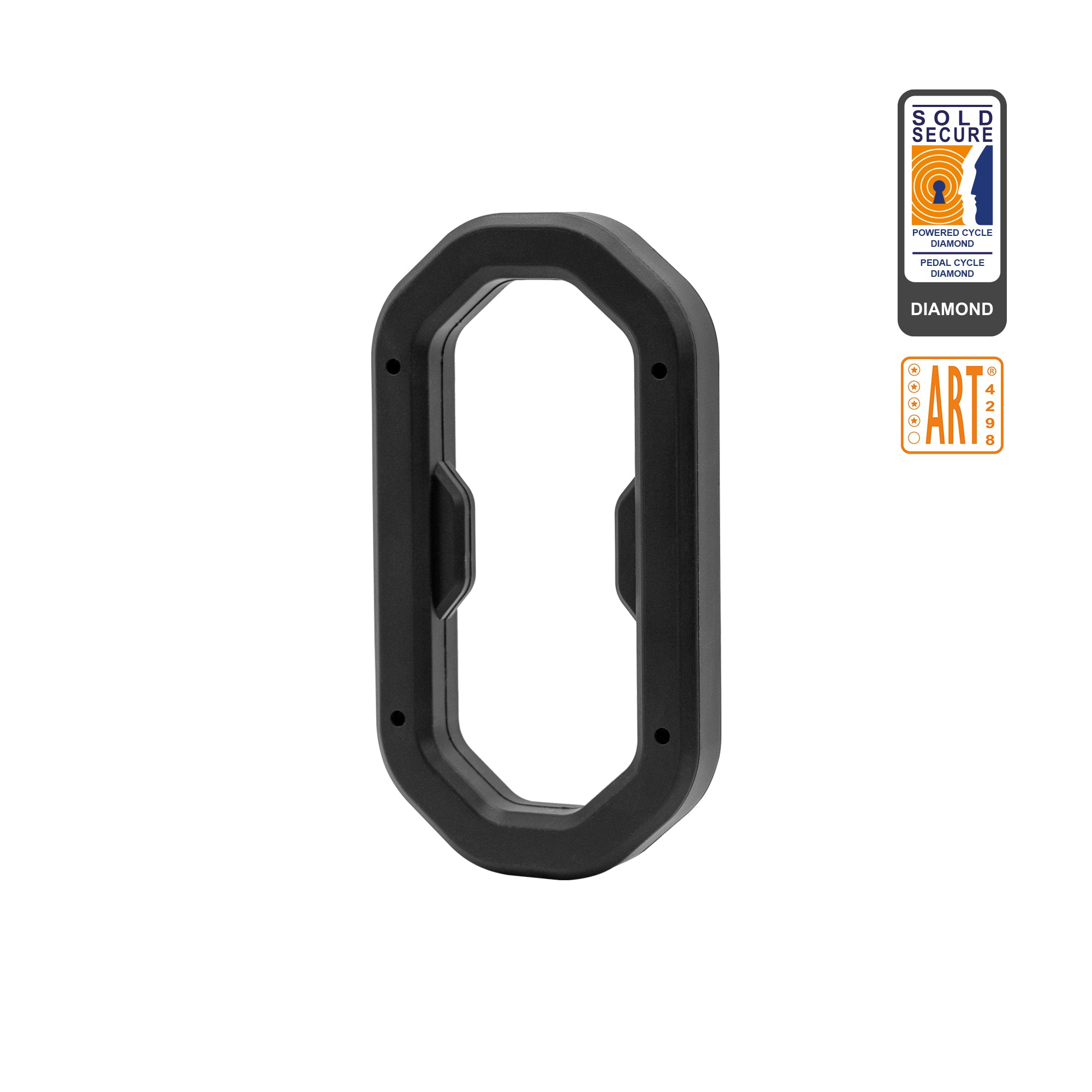
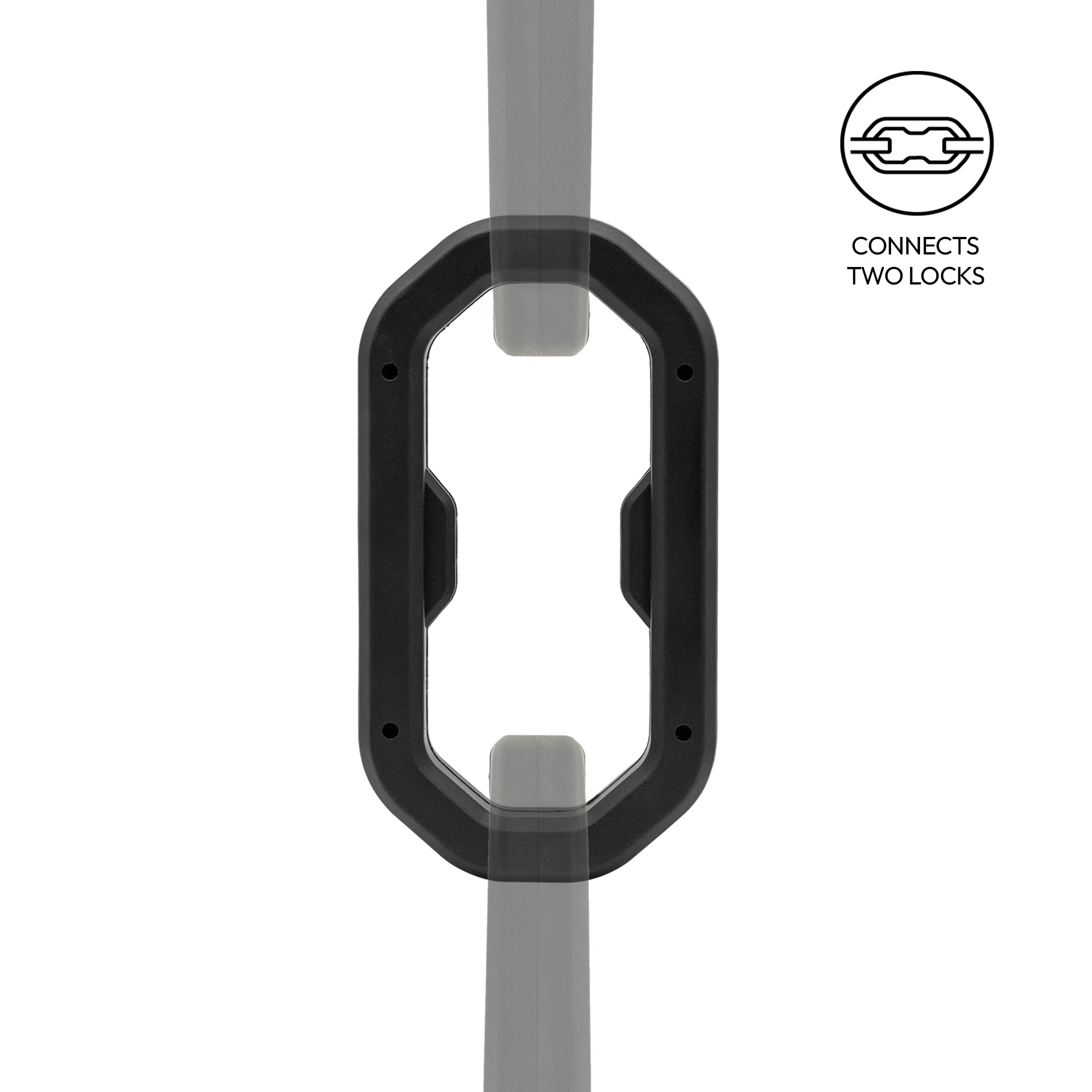
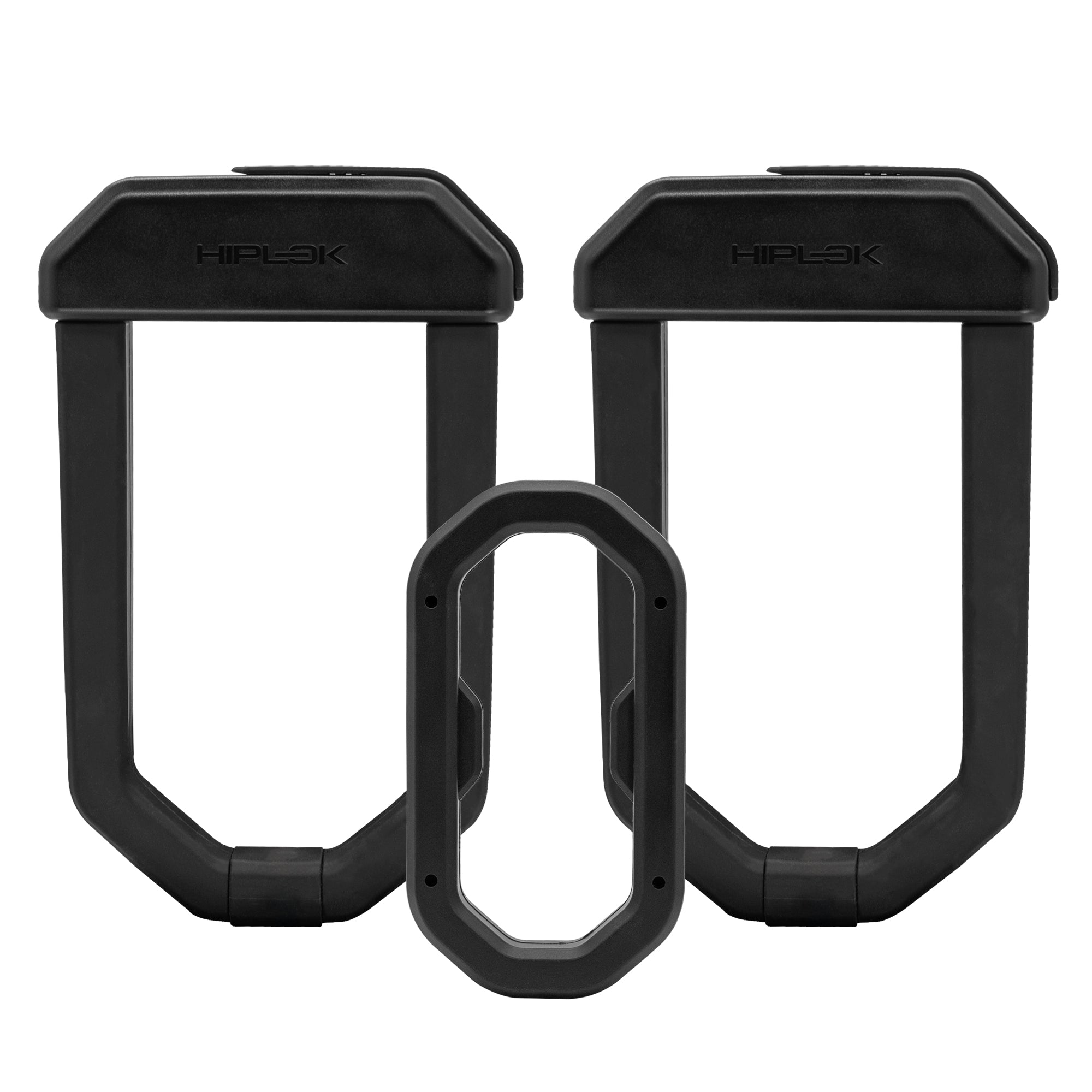
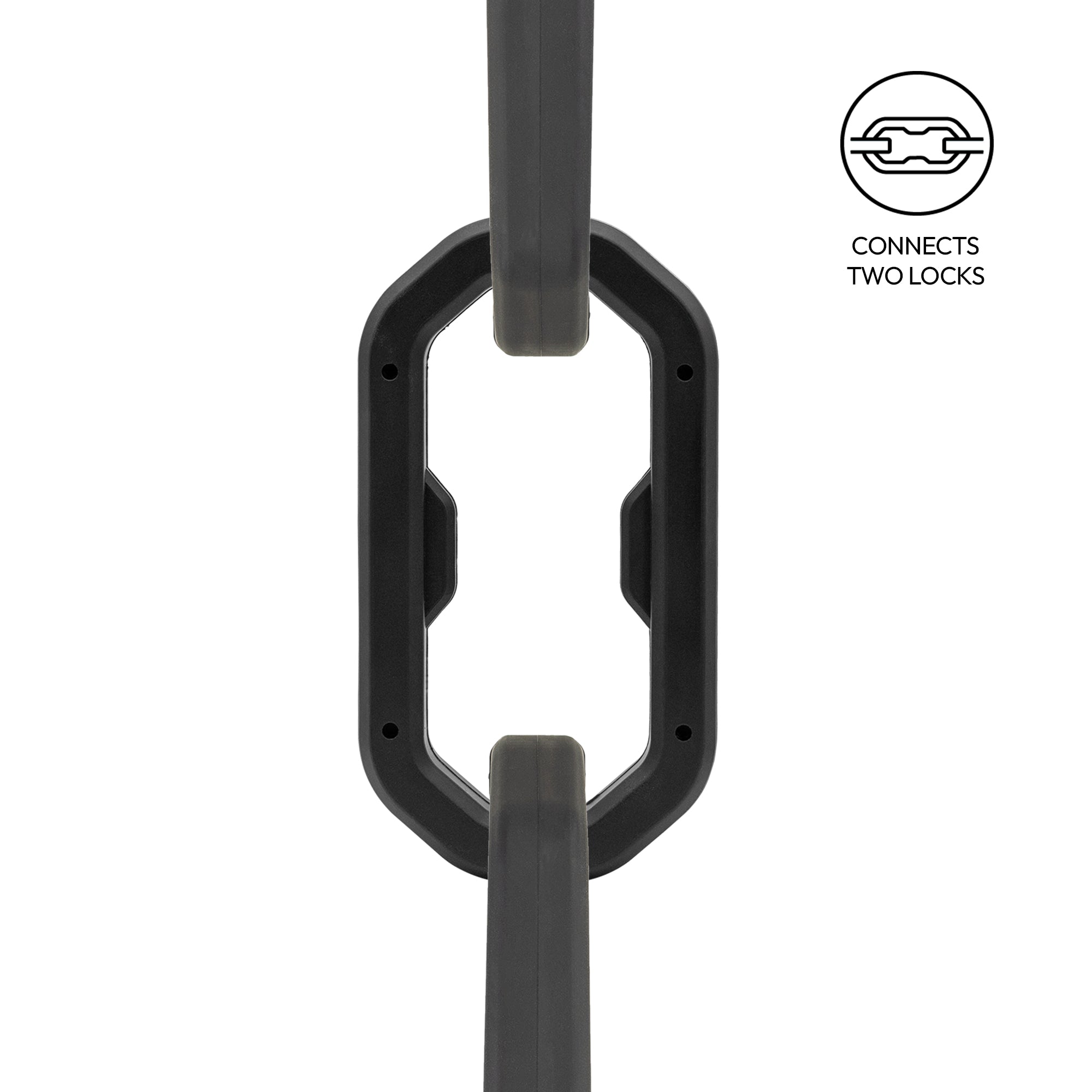
L1000 is a closed security loop designed to link two D locks. Instead of trying to stretch one D lock between your motorcycle and a fixed object, you can secure one D lock to the motorcycle, connect it through L1000, then use the second D lock to secure the other end to a suitable fixed object.
That gives you a setup like this:
Motorcycle → D lock → L1000 → D lock → fixed object
It can be particularly useful with motorcycles because frame design, fairings and the size of the bike can make it difficult to get a D lock around both the motorcycle and an immovable object.
L1000 also gives groups of riders another useful option. If you're travelling together, you can use the same principle to connect multiple motorcycles, creating a larger physical security setup when you're parked at a hotel, campsite or overnight stop.
As with the D locks themselves, positioning still matters. Keep the setup as tight as practical, choose strong locking points and avoid placing locks or L1000 against delicate bodywork or components.
For higher-risk motorcycle parking, we'd also prioritise D locks and security components designed specifically to resist angle-grinder attacks. No lock is angle-grinder proof, but greater resistance means an attacker may need more time, more effort and potentially multiple cutting discs or batteries to defeat the setup. That additional attack time is an important part of deterrence.
For a touring rider, the real advantage of a setup like this is flexibility. You don't always know what the parking situation will look like at the end of the day. Having L1000 and two compatible D locks gives you more options when the strongest point on your motorcycle isn't conveniently next to something solid.
How fairings and fork designs affect D lock placement
This is one of the areas where motorcycle security differs from locking a bicycle.
Motorcycle fairings can cover much of the frame, leaving very few openings large enough for a D lock. Adventure, touring and sports motorcycles can all present different challenges.
Fork design can also affect the amount of space available around the front wheel.
Don't force a D lock through a space just because it almost fits. Apart from making the lock difficult to operate, you risk damaging paint, bodywork, hoses or other components.
Instead, look at the motorcycle from both sides and consider the available frame and wheel openings. Sometimes the most obvious locking point from one side isn't the best option once you look at the whole bike.
Why D lock fit matters

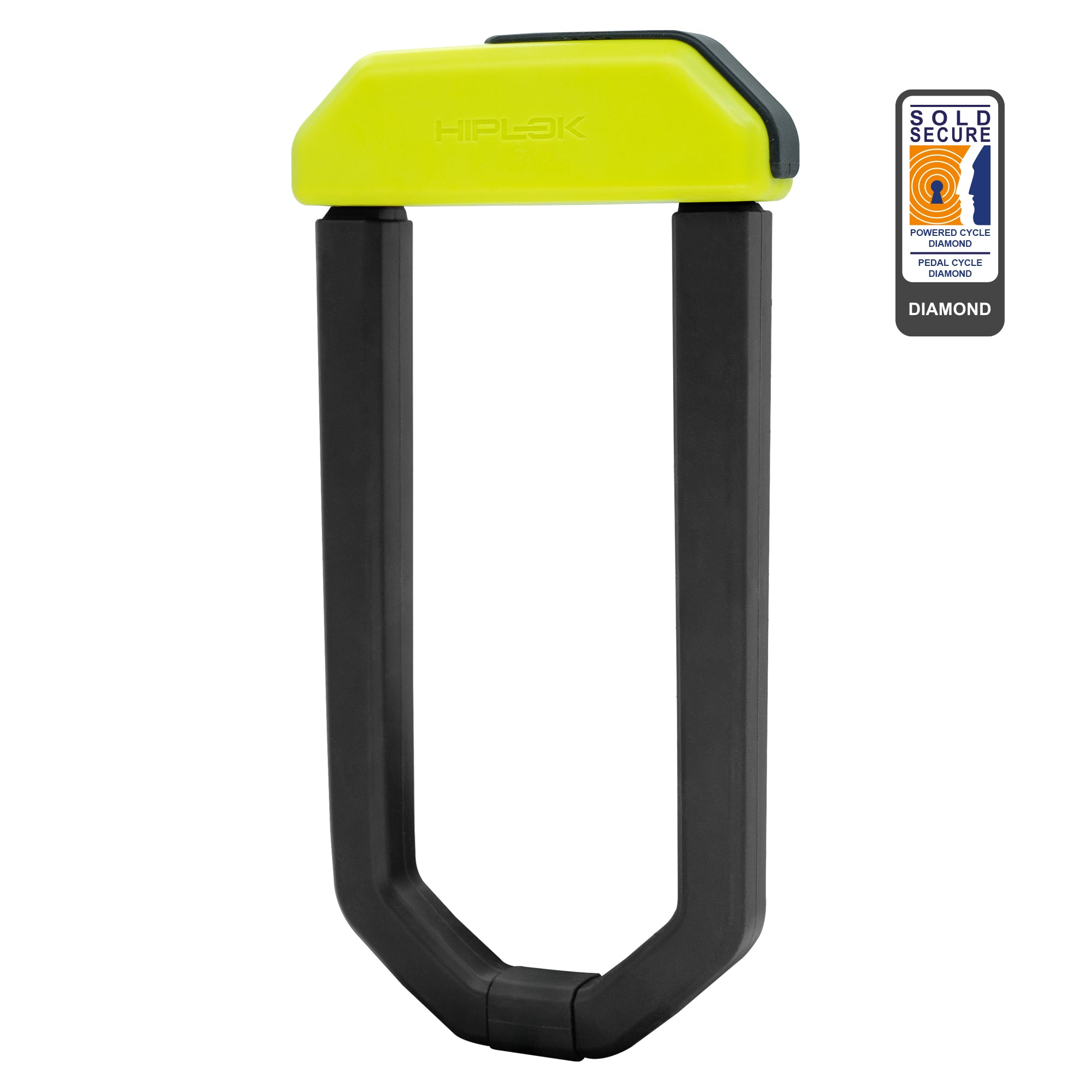
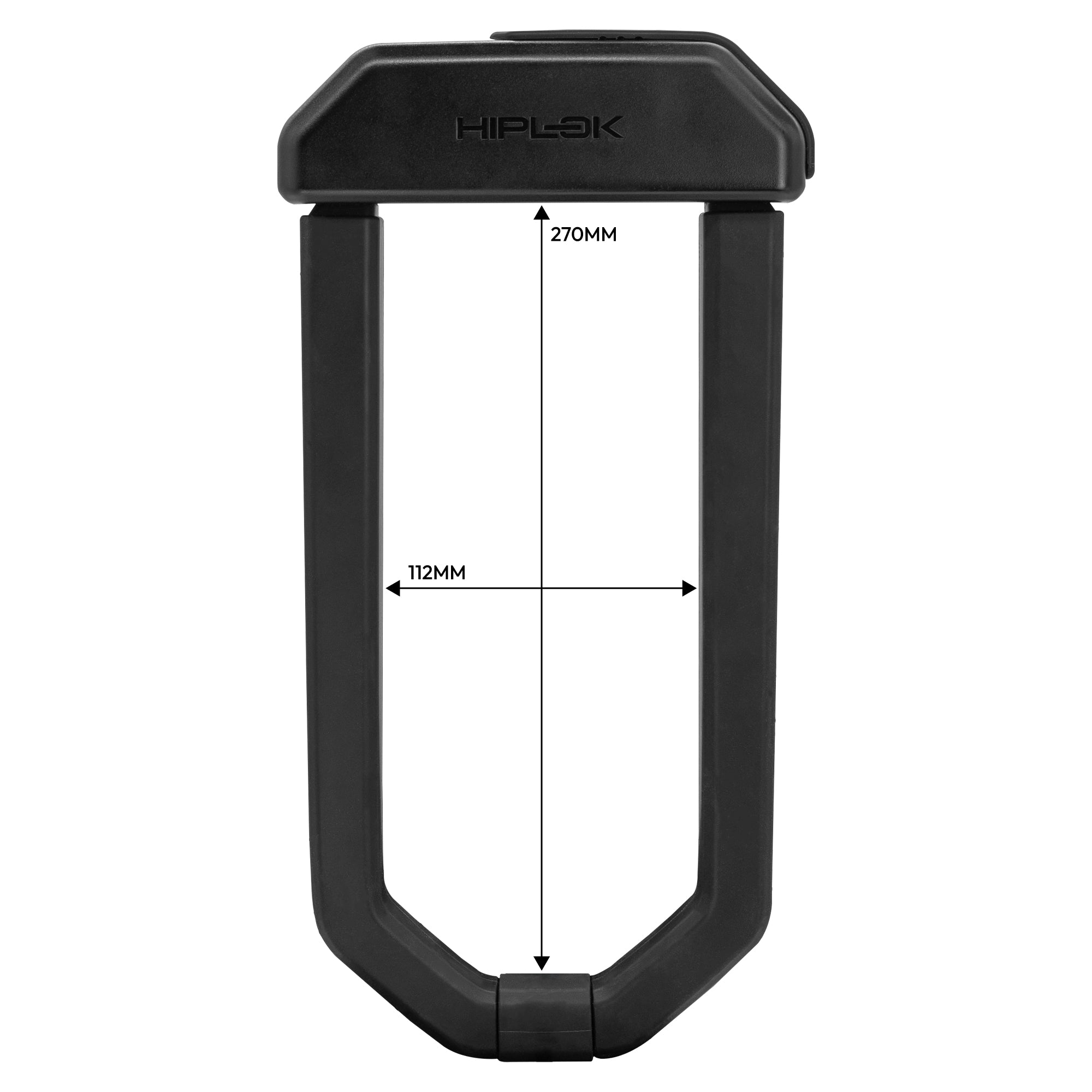
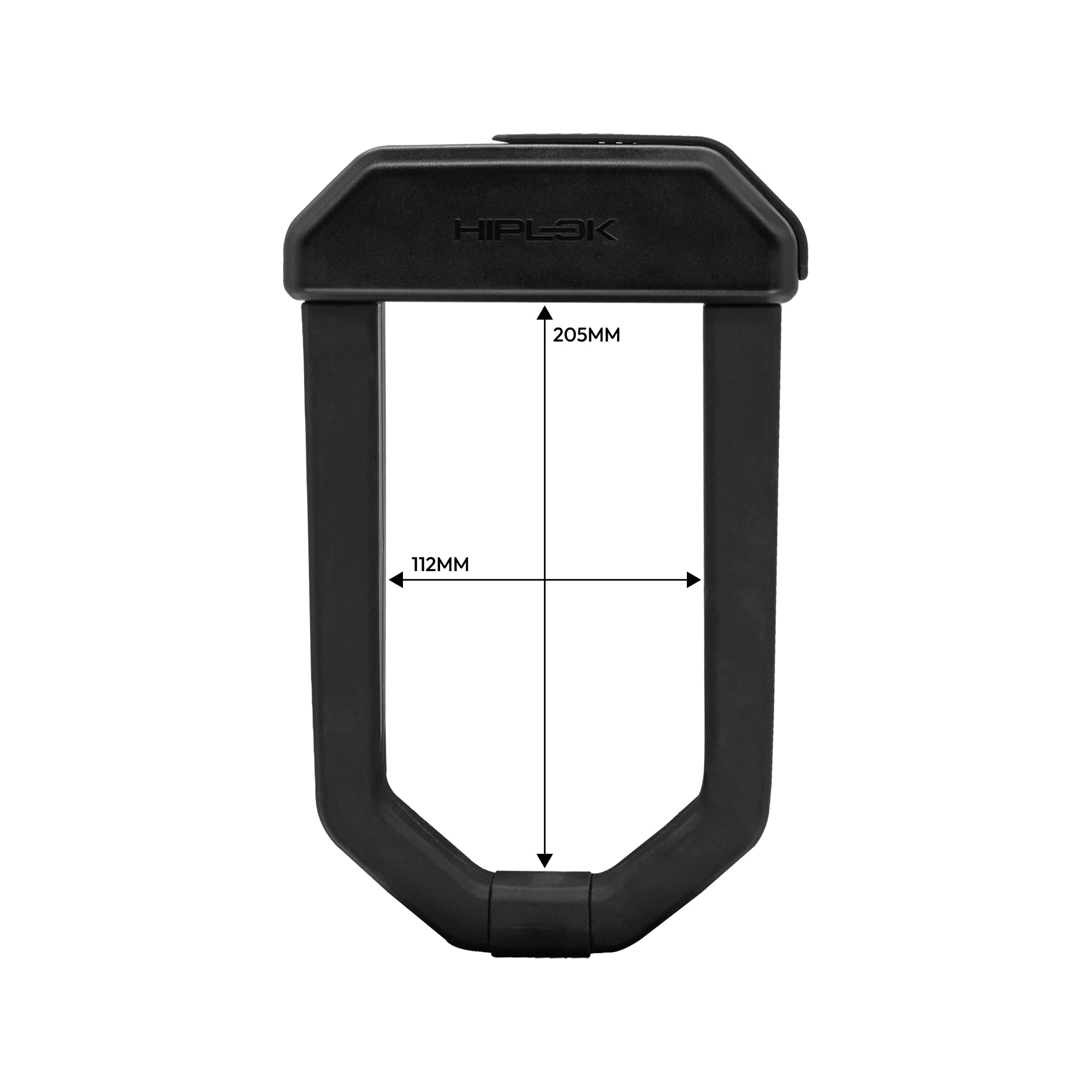
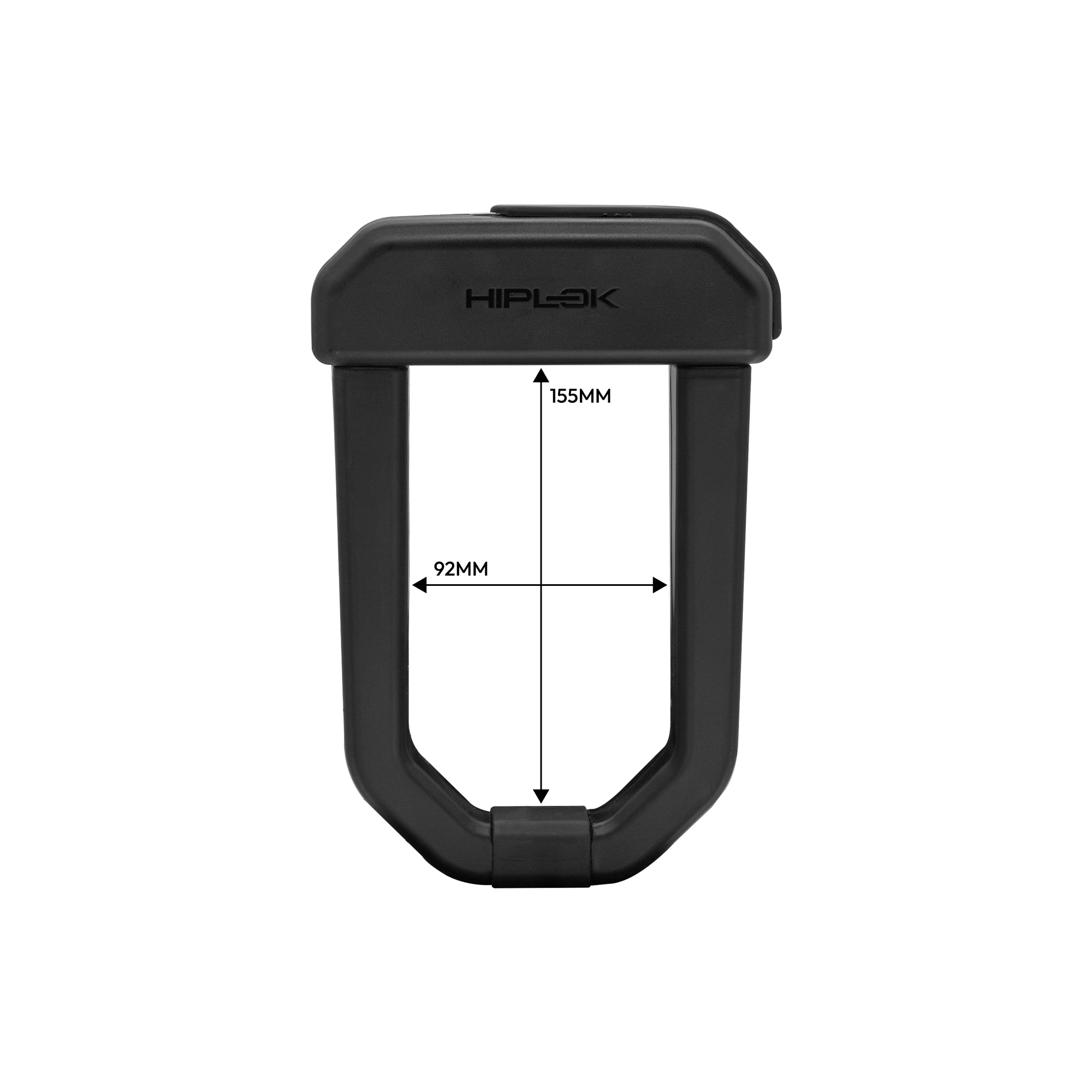
A D lock needs to be large enough to fit the locking points you intend to use, but bigger isn't automatically better.
A large shackle can give you more options on motorcycles with bulky frames or awkward wheel designs. The trade-off is additional unused space once the lock is fitted.
A more compact fit reduces that space, but only if the lock can still be installed easily without catching on the motorcycle.
If you're deciding which motorcycle D lock is appropriate, check the dimensions against the parts of your motorcycle you intend to secure rather than judging the lock on size alone.
For broader considerations before choosing motorcycle security, our guide to 5 Things to Know Before You Buy a Motorcycle Lock covers the basics.
What makes a good D lock for motorcycle touring?
 The most secure bike locks are anti-angle grinder, like the Hiplok 1000 Series. These locks are built to withstand prolonged angle-grinder attacks. However, there are other things to consider.
Touring puts security equipment through real use.
A lock may spend days travelling with you before being used in rain, road grime and changing weather conditions. That makes durable construction and weather resistance particularly relevant when you're choosing security for longer trips.
Fit matters too. The best D lock for your motorcycle is one that works with the actual locking points available on your bike and suits the security demands of the places you're likely to stop.
Security level and portability also need to make sense for the way you ride. Higher-security D locks can be heavier because they're designed for greater resistance, but weight alone doesn't tell you how secure a lock is.
Common D lock mistakes to avoid
A good lock can only do its job properly when it's used well. Most of the basics come down to positioning and taking a few extra seconds before you walk away.
Common mistakes include:
-
Choosing the easiest locking point without checking whether it's strong or suitable.
-
Leaving excessive empty space inside the D lock.
-
Letting the lock rest against paintwork or delicate components.
-
Forcing the lock through tight fairings or around cables and hoses.
-
Assuming the same locking position will work on every motorcycle.
-
Failing to check that the lock has fully closed.
-
Using a wheel locking position without checking what happens if the motorcycle is moved.
The more often you use your D lock, the easier the routine becomes. That's particularly useful when you're travelling and parking somewhere different every day.
Check your D lock during a longer motorcycle tour

A motorcycle tour can expose your security equipment to rain, dirt and plenty of handling, so it's worth giving your D lock a quick check as you travel.
Keep the locking mechanism clean and check that the shackle and locking action are operating normally. Follow the care instructions supplied with your particular lock if cleaning or lubrication is required.
This doesn't need to become another maintenance job on the trip. You're simply checking that the lock you've brought with you is working as intended before you depend on it at the next stop.
Getting your motorcycle locking routine right

Good motorcycle security isn't about finding a magic lock or a single perfect locking position.
No lock is theft-proof. Given enough time and tools, physical security can be defeated. The job of a good D lock is to increase resistance, require more effort and make your motorcycle a less straightforward target.
For touring riders, the best routine is also one you'll actually use every time you stop. Know where the D lock fits your motorcycle, keep the setup tight and check it before you walk away.
That means less time working out your security at the end of a long day's ride and more time thinking about tomorrow's road.
Find the right lock for your bike
FAQs
How do you lock a motorcycle with a D lock?
Choose a strong, accessible part of the motorcycle and pass the D lock through it. If frame access isn't practical, a wheel can provide an alternative locking position. Keep unnecessary space inside the lock to a minimum and check that it has fully closed before leaving the motorcycle.
What are the best practices for using a D lock on a motorcycle?
Choose a strong locking point, minimise empty space inside the shackle and keep the lock clear of vulnerable parts such as bodywork, hoses and brake components. Check the lock is fully engaged and consider how its position affects the motorcycle's ability to move.
What are the ideal lock-up points for securing a motorcycle with a D lock?
A suitable frame point is a strong option where the motorcycle's design gives you safe access. If fairings or other components prevent frame access, look for a suitable position through a wheel. The exact point depends on your motorcycle's construction and the dimensions of your D lock.
What challenges do fairings and fork designs pose when using a D lock?
Fairings can restrict access to the frame, while different fork and wheel designs can limit where a D lock will fit. Don't force a lock through a tight gap. Check both sides of the motorcycle and choose a position that secures the bike without putting pressure on delicate components.
How can you keep a D lock reliable when motorcycle touring?
Check the lock regularly for dirt or damage and make sure the locking mechanism continues to operate smoothly. Touring can expose a lock to rain, grime and frequent use, so choose a lock designed for the conditions you'll encounter and follow its specific care instructions.
Share:
How to Organise a Multi-Bike Garage for Motorcycles, Bicycles, and Scooters
Protect Your Helmet: Common Theft Hotspots and How to Secure Your Gear