

If your e-bike gets you to work, across town and through the weekly errands, it quickly becomes more than something sitting in the hallway between rides. You chose it because it works for the way you travel, and you may have spent plenty of time getting the setup just right.
That makes choosing the right lock part of everyday riding, not an afterthought.
For urban commuters, a folding lock can make a lot of sense. It packs down neatly, can be mounted to your bicycle frame and gives you useful flexibility when you’re locking to different stands and secure fixed points around town.
But there’s a balance to get right. Security, weight, locking length and portability vary between folding locks, and the best folding bike lock for an e-bike is the one that fits where you ride, where you park and how long you leave your bicycle.
In this guide, we’ll look at what makes a good folding lock for commuting, how folding locks compare with other lock types and what to consider when protecting an e-bike in busy urban environments.
What is a folding bike lock?
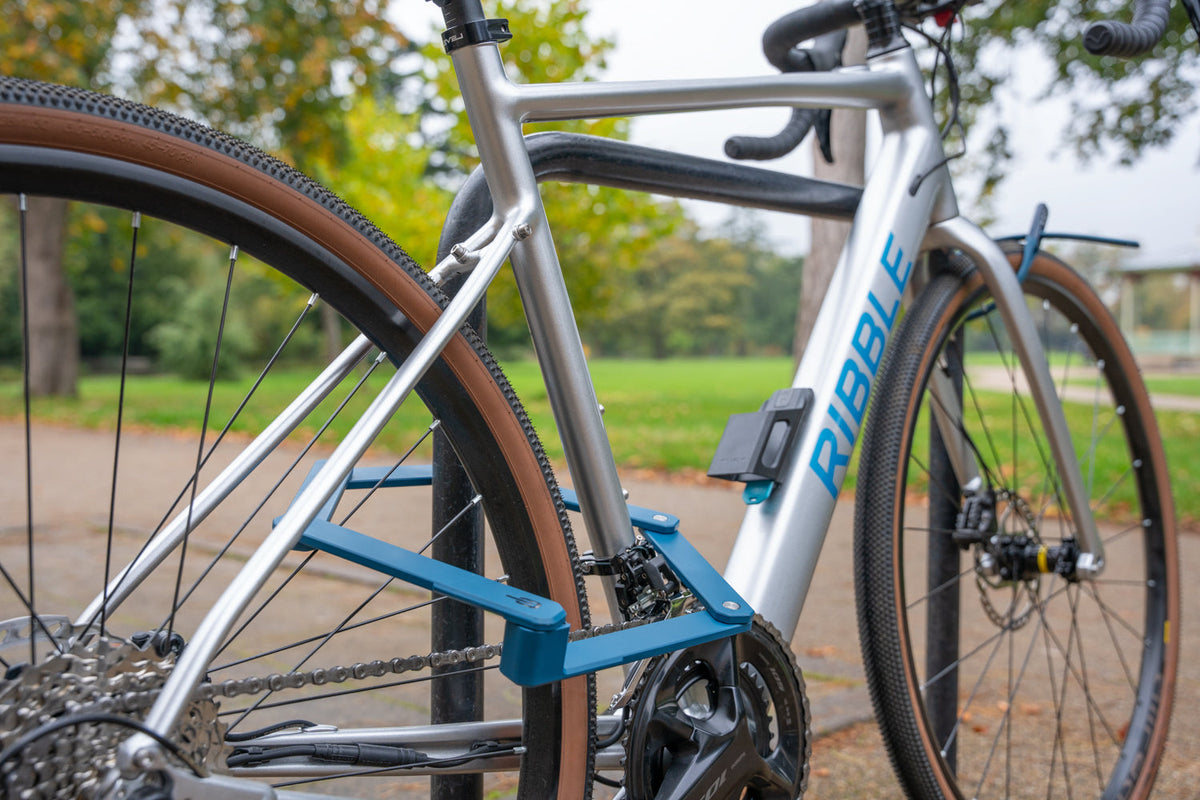
A folding bike lock uses a series of rigid linked sections that open out when you need to secure your bicycle and fold together into a compact package when you’re riding.
That folding design is what makes this type of lock particularly useful for commuting.
You get more flexibility around different locking points than you would with some rigid lock designs, while the lock can fold down neatly for carrying between stops.
For riders making several journeys or stops in a day, that convenience matters. You don’t want your lock to become something you resent carrying every time you get on your bike.
Why folding locks work well for urban commuters and e-bikes

Commuting puts a lock through a very particular kind of use.
You might unlock your bicycle first thing in the morning, secure it outside work, use it again at lunch and then stop somewhere on the way home. That means your lock needs to be practical enough to use repeatedly without making security feel like a chore.
A good compact bike lock for urban commuting can offer several advantages:
-
Compact storage: Folding designs pack down into a relatively small footprint.
-
Frame-mounted carrying: A suitable mount lets you carry the lock on your bicycle rather than putting it in a bag.
-
Flexible locking: Articulated sections can make different bicycle stands and fixed objects easier to work around.
-
Quick everyday use: Once you’re familiar with the lock and mount, securing your bicycle becomes part of your normal routine.
-
Useful as a secondary lock: Their compact size makes folding locks practical to carry alongside a primary lock, giving you another way to secure a wheel or add a second locking point when you want an extra layer of security.
For e-bike riders, weight can be less of an issue than it is for someone trying to build the lightest possible bicycle setup.
That doesn’t mean heavier is automatically better. It means it’s worth thinking about security and portability together rather than simply looking for the lightest lock you can find.
What should you look for in the best folding bike lock for an e-bike?

There isn’t one folding lock that will be right for every rider.
Someone locking an e-bike outside a busy railway station for most of the day has different security needs from someone making short stops at a café or shop.
Start with the way you actually ride and park, then look at the following factors.
Security rating and insurance requirements
If your bicycle insurer specifies a particular independent security rating, that should be one of the first things you check.
Make sure the exact lock you’re considering meets the conditions of your policy. It’s also worth checking how your insurer expects the bicycle to be secured, because using an approved lock doesn’t automatically mean every locking situation meets the policy requirements.
For a higher-value e-bike, this can be particularly important.
Locking length
Think about the bicycle stands and other secure fixed points you use regularly.
A longer lock can give you more options when the perfect stand isn’t available, but additional locking length can also affect the size and weight of the lock.
The best option is one that gives you enough usable space for your normal parking without carrying unnecessary bulk.
Frame mounting
One of the biggest everyday advantages of a folding lock is the ability to carry it neatly on the bicycle. A good mounting system keeps the lock secure while you ride while making it quick to grab when you stop.
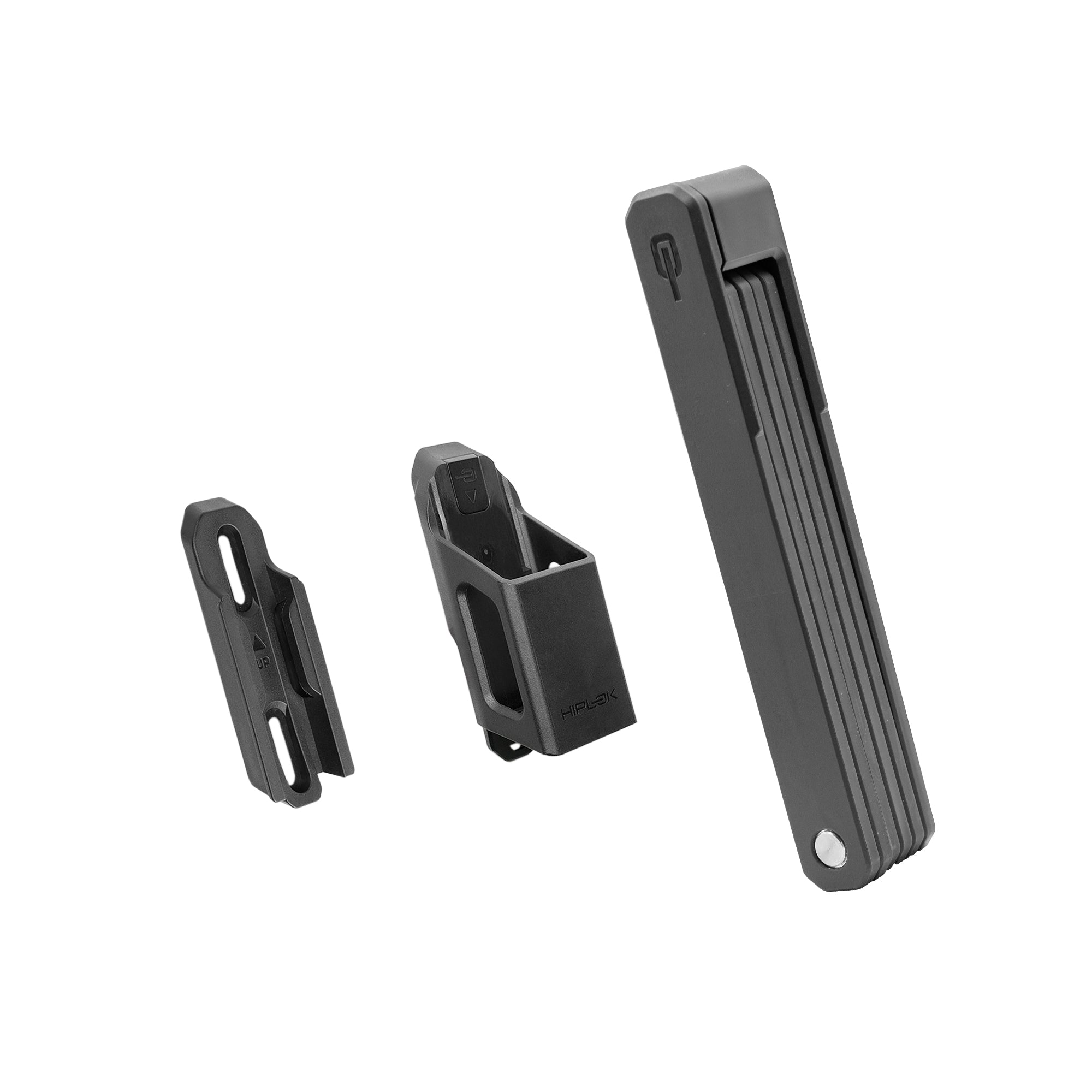
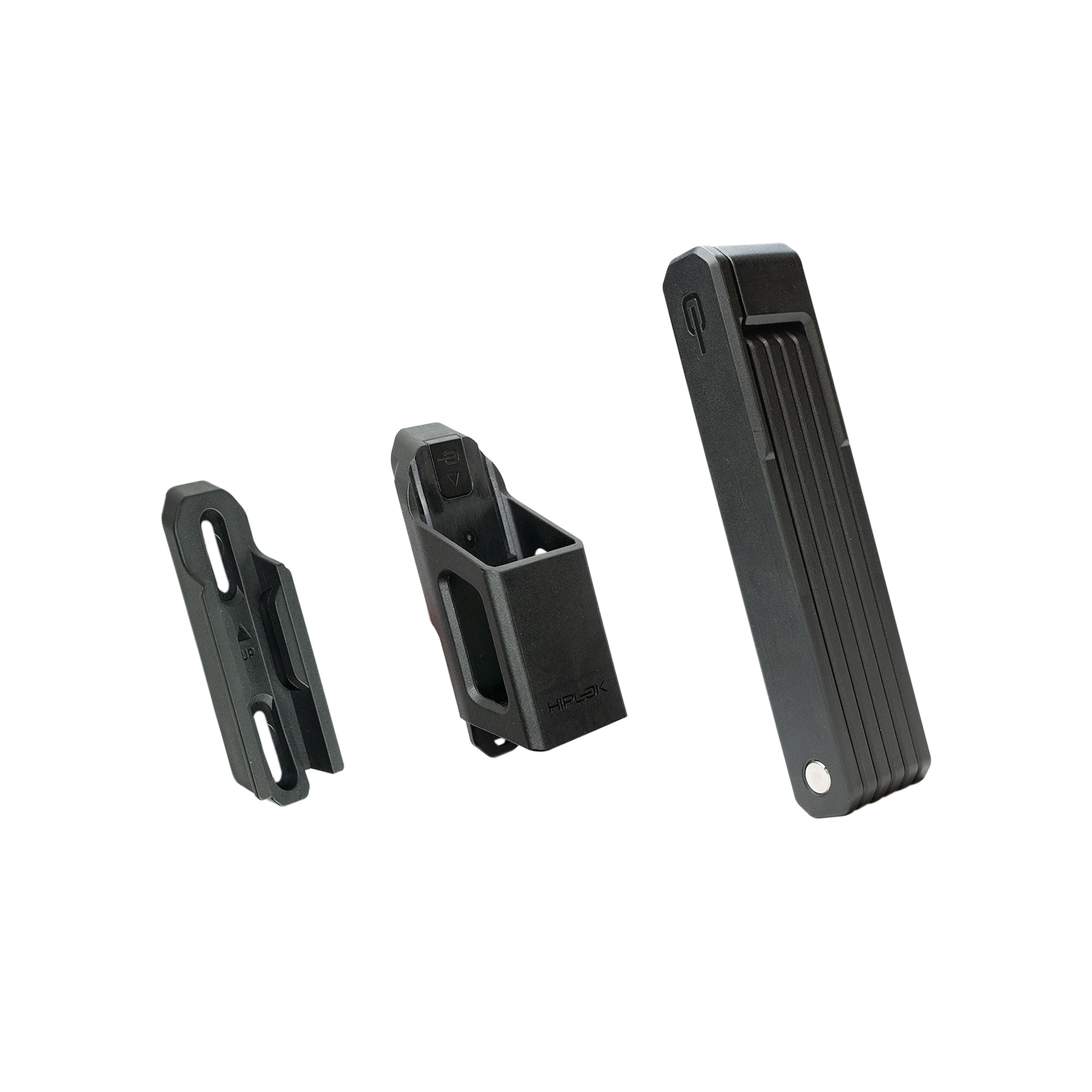
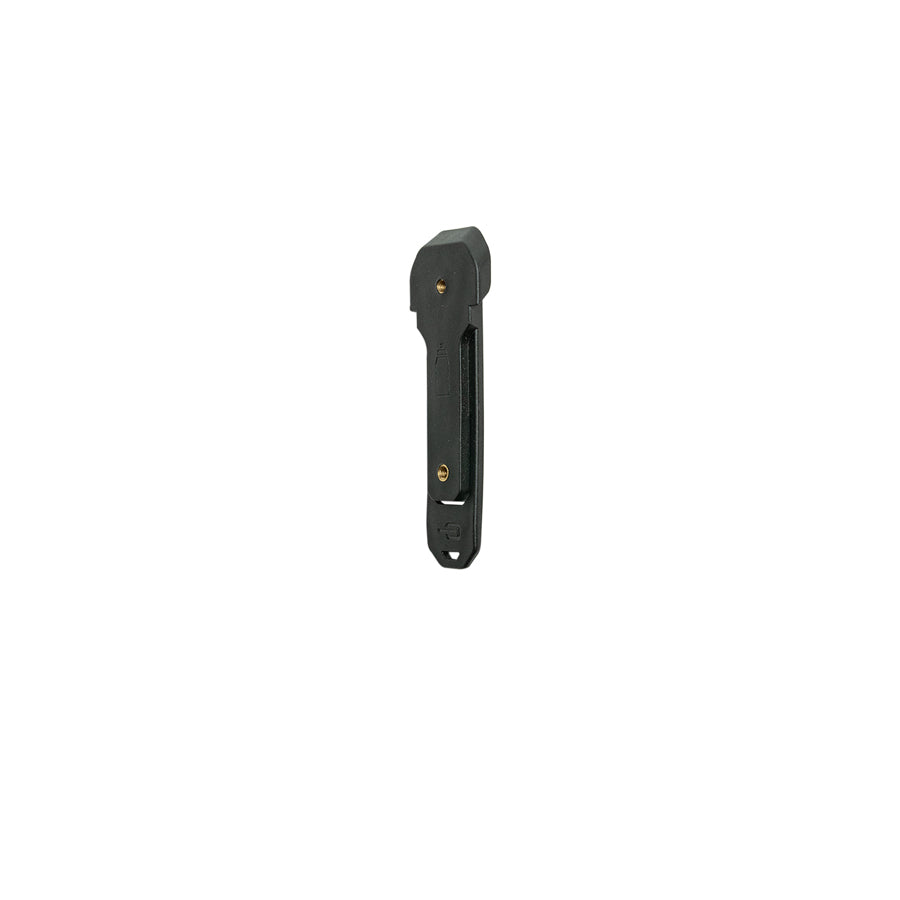
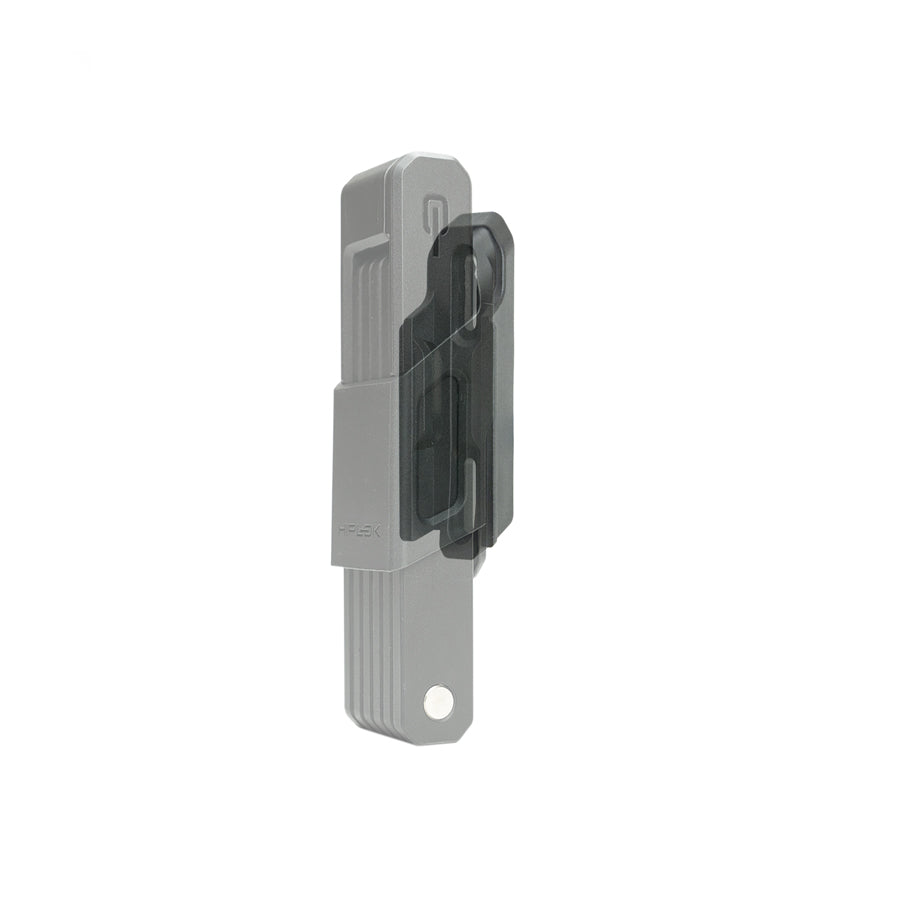
With Hiplok SWITCH, we’ve taken that idea further with the SWITCH carrying system. It uses a frame-mounted holder to keep the folding lock securely on your bicycle while you ride, so there’s no need to carry it loose in a bag.
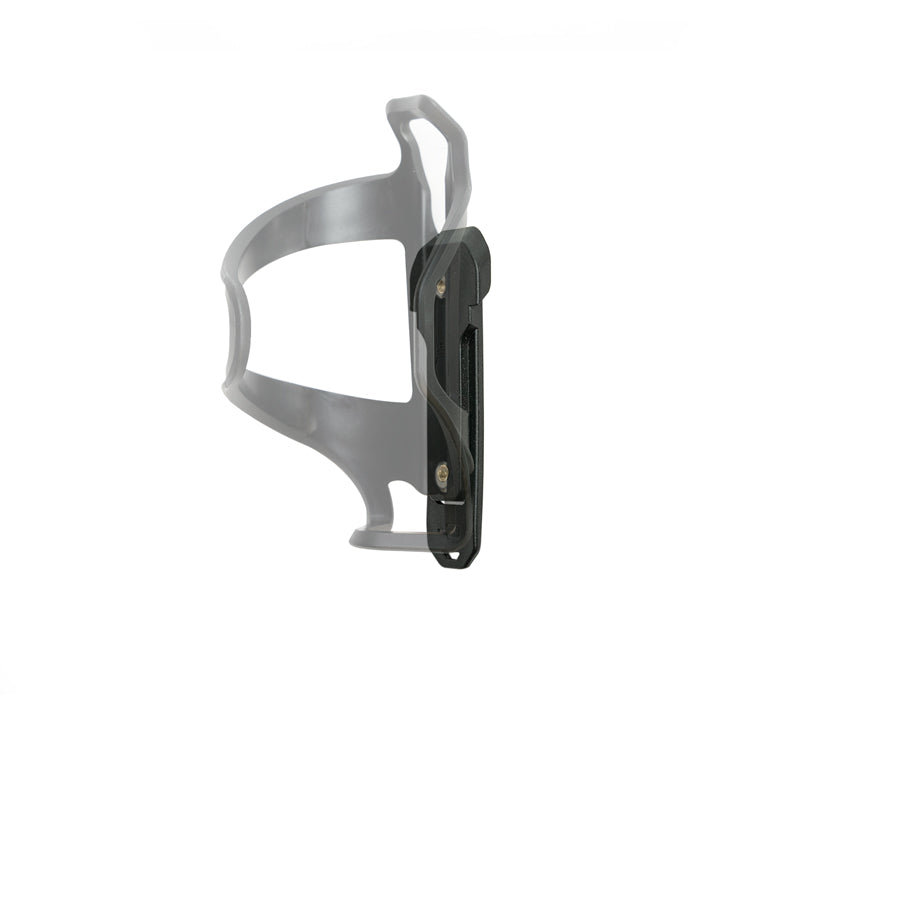
The system also gives you the flexibility to switch between carrying the lock and a water bottle. That means you’re not permanently committing that space on your frame to your lock, which is useful when your setup changes between commuting, everyday riding and longer rides.
For an e-bike, it’s still worth checking where the mount will sit in relation to your battery, cables and the available space within the frame.
Weight
A lightweight folding lock for e-bikes sounds appealing, particularly when you’re carrying it every day.
But weight shouldn’t be considered in isolation.
Your aim is to find a lock you’re comfortable carrying that also provides an appropriate level of security for your bicycle and the places you leave it.
Everyday usability
Security only works properly when you actually use the lock well.
Look at how easily the lock opens and closes, how accessible the locking mechanism is and whether you can position it cleanly around your frame and the places you normally park.
For commuters making frequent stops, those small practical details can make a big difference.
Folding lock vs D lock, chain lock and retractable bike lock

There’s no single lock format that does everything perfectly.
Different designs make different trade-offs between security, weight, flexibility and portability.
| Lock type | Carrying | Locking flexibility | Commuter consideration |
|---|---|---|---|
| Folding lock | Compact and often frame mounted | Good | Useful balance of portability and locking reach |
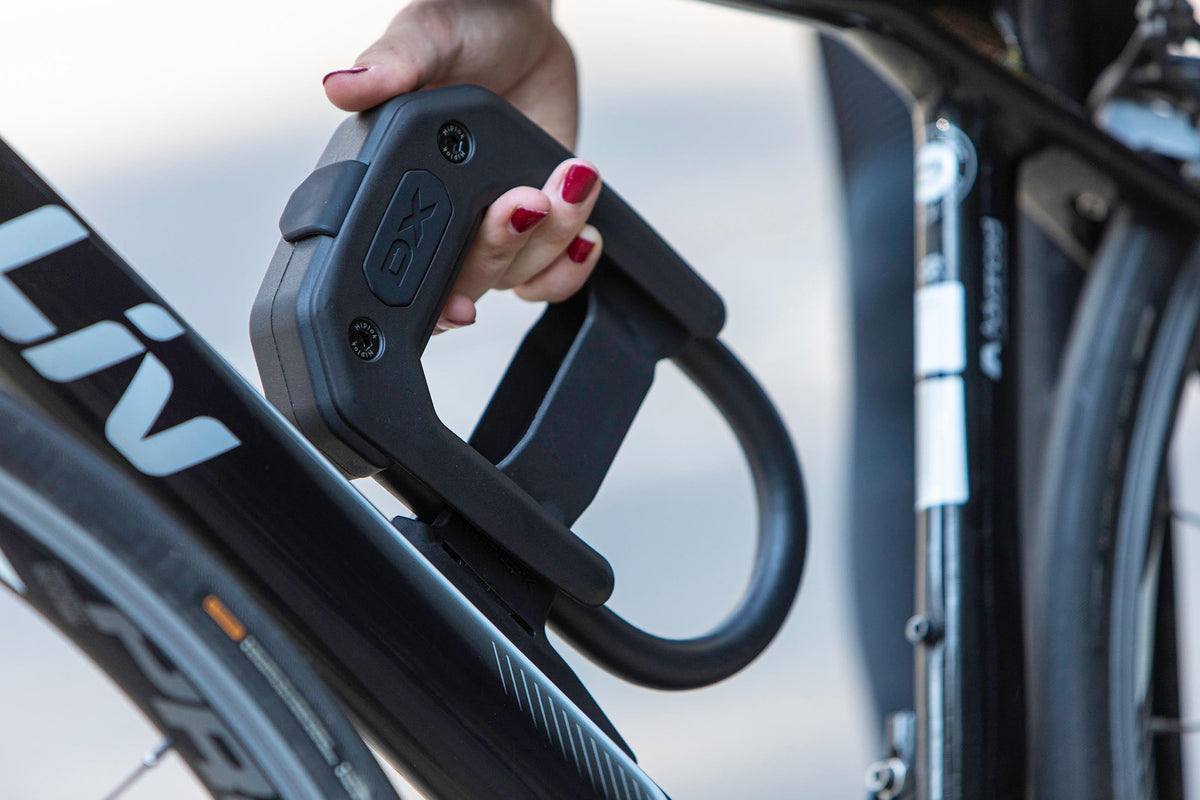
| D lock | Depends on lock and mounting system | More limited by its rigid shape | Simple, strong format, but dimensions matter |
| Chain lock | Can become bulky at higher security levels | Very good | Flexible around different fixtures, but weight can increase |
| Retractable bike lock | Very compact | Good | Generally chosen for convenience rather than as a direct replacement for a higher-security primary lock |
If you’re comparing folding locks with the best D locks or chain locks, don’t focus on the format alone.
A lock’s independent security rating gives you a better indication of its security level. From there, think about how you’ll carry it and whether its shape works with the places you normally secure your bicycle.
How to choose the best folding bike lock for your commute
When you’re comparing the top folding bike locks for commuters and e-bikes, put each option through the same practical test.
-
Check the security rating. This gives you a clearer indication of the lock’s security level and helps you check it against any insurance requirements.
-
Check the locking length. Think about the secure fixed points you use most often.
-
Look at the carrying system. Make sure the mount works with your bicycle and e-bike battery layout.
-
Consider the weight. Choose something you’ll be happy carrying every day.
-
Think about repeated use. A commuter lock should be straightforward to secure and pack away several times a day.
-
Consider how it fits into your wider security setup. For a more expensive bicycle or e-bike, a folding lock can make a practical secondary lock alongside a higher-security primary lock.
That gives you a much more useful comparison than simply choosing whichever lock is smallest, lightest or has the longest specification list.
Where does Hiplok SWITCH fit?
SWITCH is Hiplok’s first folding bike lock.
We developed it around the reasons riders choose a folding lock in the first place: compact carrying, frame-mounted convenience and the flexibility to work with the different locking situations you encounter during everyday rides.
Its compact format also makes SWITCH a practical option when you want a secondary lock that’s easy to keep on your bicycle alongside your primary security.
You can explore our best folding bike lock options or read Hiplok’s First Folding Bike Lock: The Story Behind SWITCH to find out more about the thinking behind the design.
The important question isn’t simply whether a folding lock is convenient. It’s how its security rating, dimensions and carrying system fit the way you actually ride and park.
Are folding locks secure enough for expensive e-bikes?
A lock’s security level should be judged by its independent security rating rather than its type alone. However, for expensive bicycles and e-bikes, we’d normally recommend using a folding lock as a secondary lock alongside a higher-security primary lock.
That’s where the folding format really makes sense. Its compact size makes it easy to carry alongside your primary lock, while its articulated design gives you the flexibility to secure another part of the bicycle or add a second locking point.
Why use a folding lock as a secondary lock?

For commuters riding expensive bicycles or e-bikes, a folding lock can be a really practical second layer of security.
Its compact folded shape makes it relatively easy to carry alongside a higher-security primary lock without adding another bulky lock to your bag. A frame-mounted folding lock can simply stay on the bicycle until you need it.
Once opened, the articulated design also gives you useful flexibility for securing another part of the bicycle.
For example, you might use your primary lock to secure the frame to a solid fixed point, then use your folding lock to secure a wheel or create another locking point between the bicycle and the stand.
Using two locks gives a thief more to deal with. It adds another point of resistance and can increase the time and effort required to attack the bicycle. Securing different parts of the bicycle can also make individual components harder to remove.
For an e-bike you rely on every day, that extra layer can be well worth carrying. A folding lock gives you a practical way to add it while keeping your everyday setup relatively compact.
Folding bike lock commuter checklist
Before choosing your lock, ask yourself:
-
Does it have the security rating I need?
-
Does it meet the requirements of my bicycle insurance policy?
-
Is it long enough for the bicycle stands and fixed points I normally use?
-
Does the mount fit my bicycle without interfering with the battery, cables or other components?
-
Am I comfortable carrying its weight every day?
-
Can I use it quickly when I’m making several stops?
-
Will I use it as my primary lock, or would it work better as part of a two-lock setup?
The best portable bike locks for urban cyclists and e-bikes are the ones that make sense when you apply them to your real riding routine.
Choosing the right folding lock for your commute
A folding lock earns its place on a commuter bicycle by being there when you need it without getting in the way when you don’t.
That balance is especially useful when your bicycle is part of your everyday life. When you’ve chosen your e-bike carefully, rely on it to get around and probably added a few upgrades along the way, protecting it properly is worth thinking about.
Look beyond portability alone.
Consider the lock’s security rating, usable length, mounting system and weight, then think about where you actually park and whether you want the folding lock to work alone or alongside another lock.
For more expensive bicycles and e-bikes, that second role is particularly useful. A compact folding lock can complement a higher-security primary lock without making your everyday carrying setup unnecessarily awkward.
Find the right lock for your bike.
FAQs
What is the safest bike lock for an e-bike?
Lock type alone doesn’t determine security. Look at the lock’s independent security rating to understand the level of security it provides. For expensive e-bikes, we’d normally recommend a higher-security primary lock, with a folding lock providing a practical second layer of security.
What is the best portable bicycle lock for commuters?
Folding locks are a useful option for commuters because they pack down neatly and can often be carried using a frame mount. The best choice depends on its security rating, locking length, weight and how you intend to use it within your locking setup.
Are folding bike locks insurance-approved?
Some folding locks carry independent security ratings that may meet the requirements of particular bicycle insurers. Always check the exact lock model against your own policy before relying on it for insurance compliance.
Can I use a folding lock as a secondary bike lock?
Yes. A folding lock’s compact carrying size and flexible shape can make it particularly useful as a secondary lock. You can use your primary lock to secure the frame and use the folding lock to secure another part of the bicycle or add another locking point.
Can I use a folding bike lock on a normal bicycle?
Yes. Folding locks aren’t only for e-bikes or folding bicycles. They can be used with different types of bicycles as long as the lock’s dimensions, security level and mounting system suit the bicycle and the way you park it.



Share:
D Locks vs U Locks: Are They the Same?