

When you commute by e-bike every day, your lock becomes part of your riding setup. You carry it to work, use it when you're out in the city and rely on it whenever you have to leave your bike behind.
And when you’ve spent time choosing your e-bike, getting the fit right and adding the kit that makes it yours, you want a security setup that reflects how much that bike matters to you.
The best D lock setup for e-bike commuting needs to balance security with everyday practicality. That might mean a lightweight D lock that's easy to carry, a D lock paired with a secondary lock to protect more of the bike, or two high-security D locks for longer stays in higher-risk locations.
Here’s how we’d approach those setups for everyday city riding.
What is the best D lock setup for a commuter?
For most urban commuters, a good setup starts with a D lock that secures the frame to a strong, immovable object.
From there, you can adapt your setup according to where you're parking, how long you're leaving the bike and how much security you're prepared to carry.
A simple way to think about it is:
-
Everyday commuting: a lightweight D lock that's easy to carry on the bike.
-
More complete bike security: a D lock paired with a secondary cable, Z LOK or folding lock.
-
Longer or higher-risk parking: two high-security D locks protecting different parts of the bike.
There isn't one perfect configuration for every commute. Someone riding straight to secure workplace cycle parking has different requirements from a parent dropping children off on the way to work, or a rider leaving an e-bike outside a railway station for the full day.
The best setup is the one that gives you appropriate security for your parking situation while still being practical enough to carry and use every day.
Setup 1: A lightweight D lock for everyday commuting
All D locks are portable, but if you're carrying yours on every commute, weight and transport become much more important.
A lightweight D lock can give you a good balance between everyday security and something you won't resent carrying to and from work. Hiplok bike locks are designed with portability in mind, so they're easy to transport whether you're carrying the lock on your bike or with the rest of your riding kit.
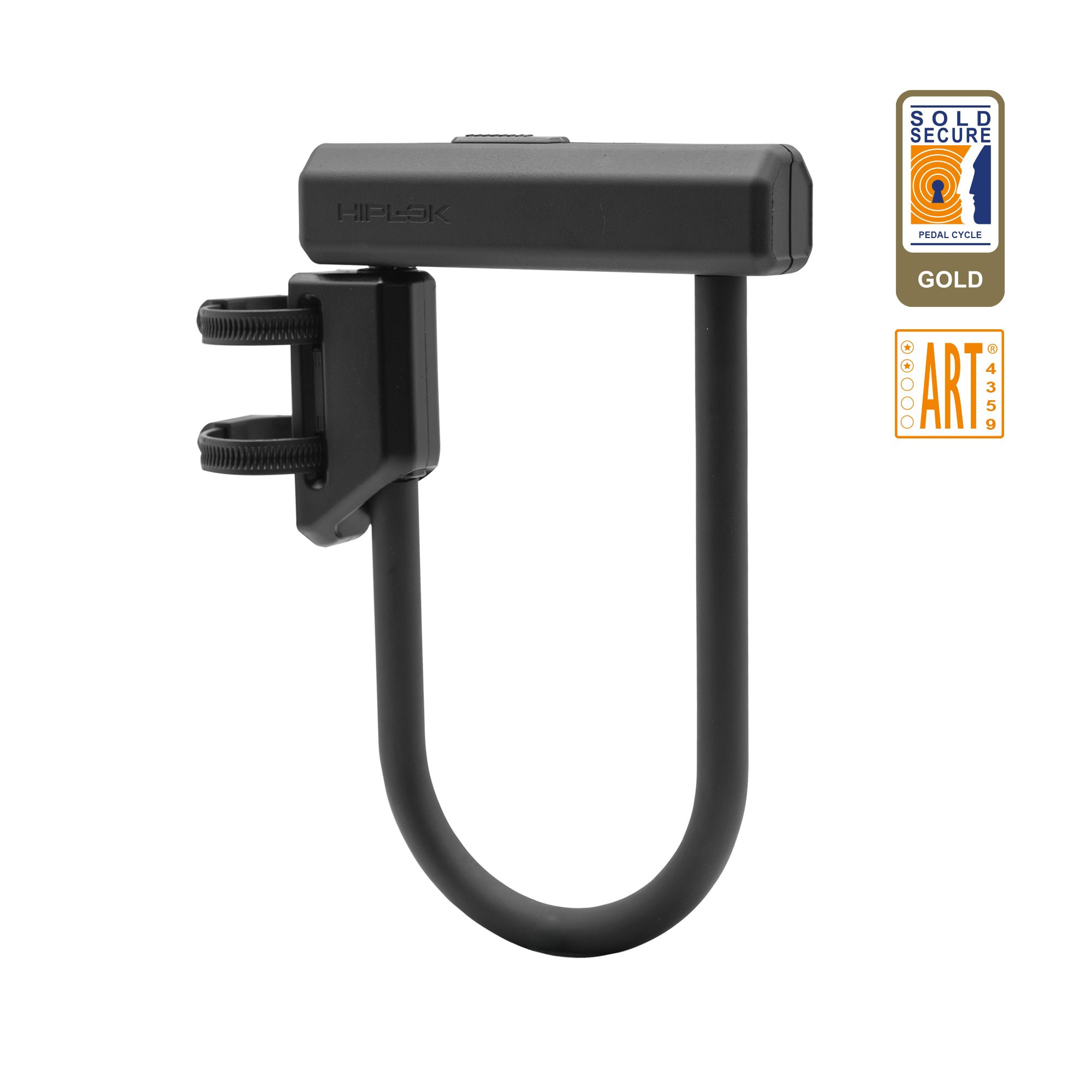
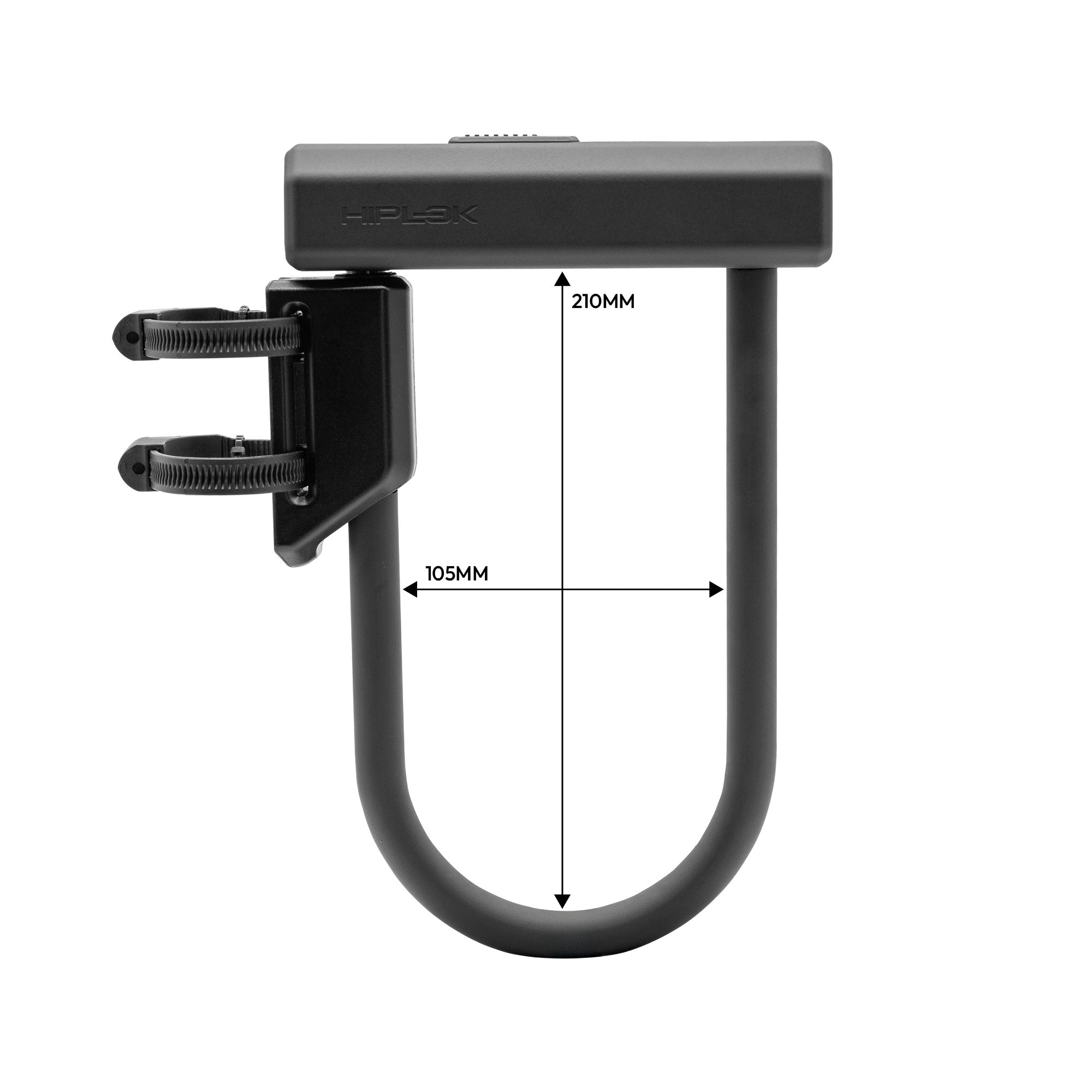
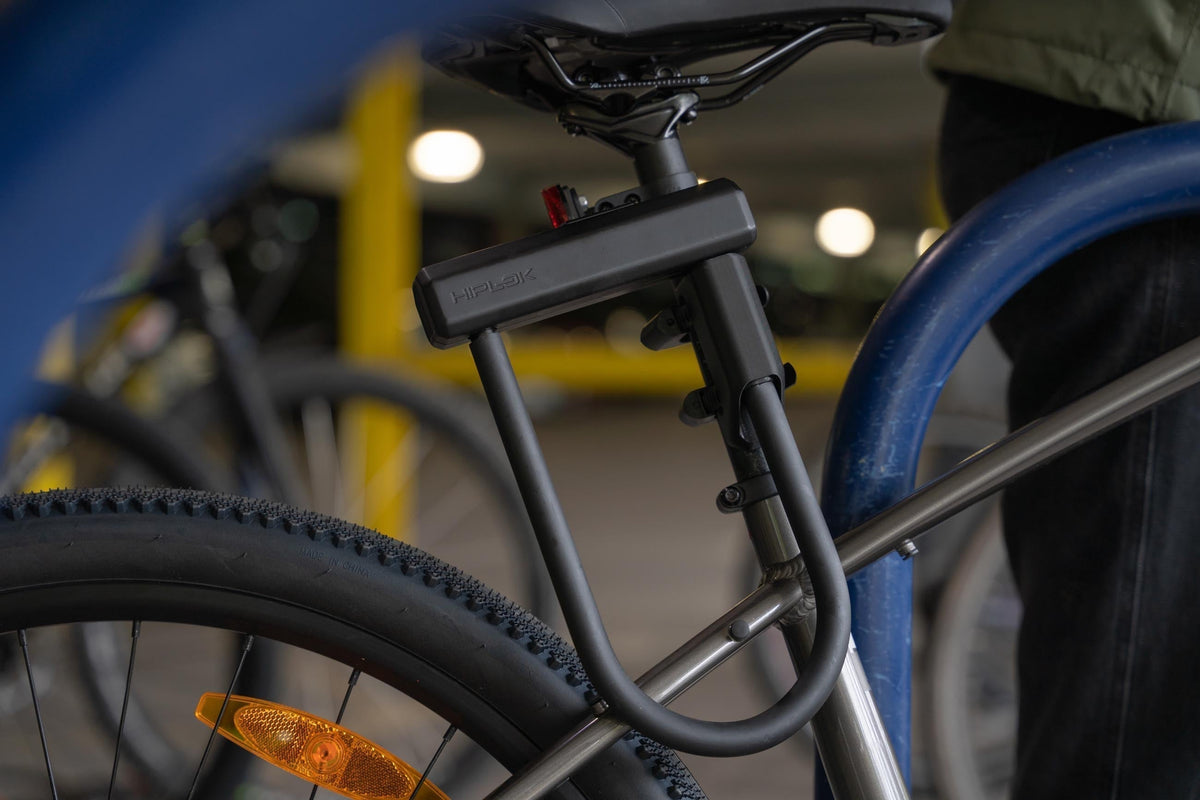
The Hiplok URBAN D is a good example for everyday city riding. It's a lightweight D lock designed for riders who want solid security without unnecessary bulk, and it comes with a frame mount so you can carry it on the bike rather than putting it in a bag.
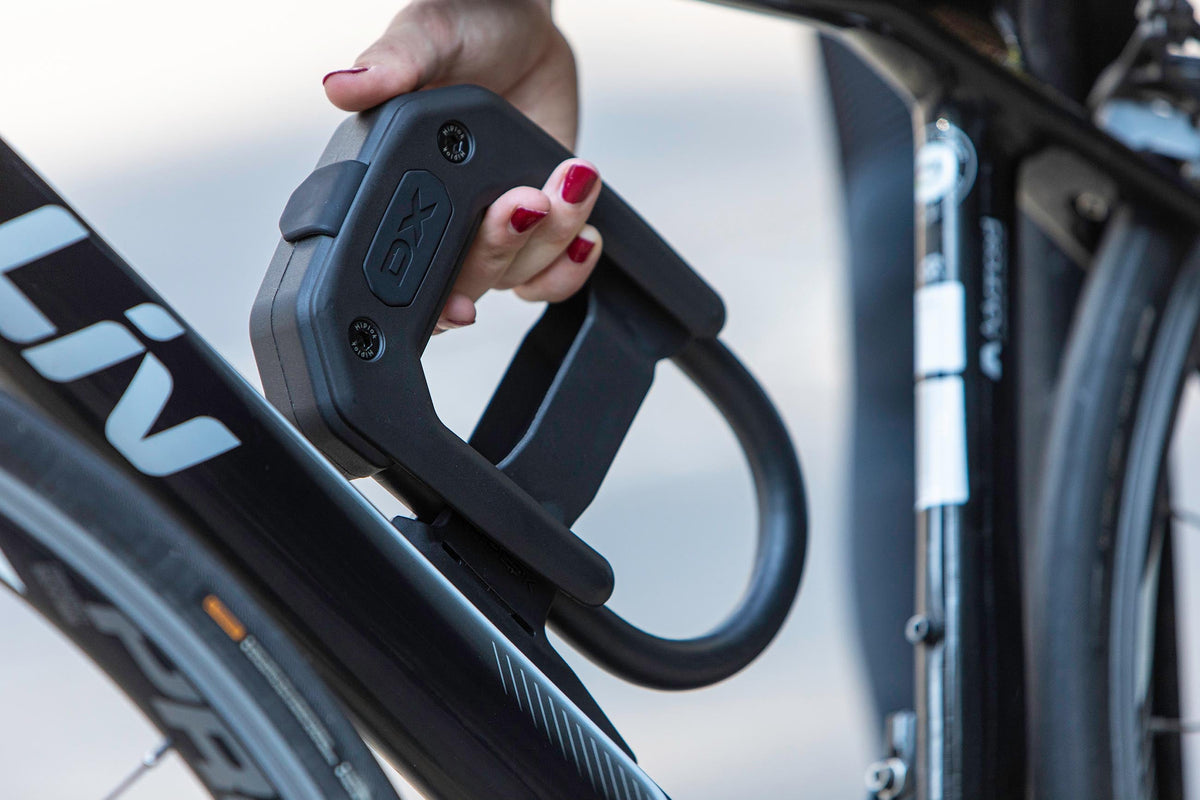
For other Hiplok D locks, adding a bike mount can make the daily commute easier. Options such as the BR1000 or DX Frame Bracket give your lock a dedicated place on the bike, making it quick to clip on before you ride and remove when it's time to lock up.
When choosing a lightweight D lock setup, look for:
-
A security level appropriate for your e-bike and where you park
-
A size that works with your frame and usual locking points
-
A weight you're happy carrying every day
-
A secure, convenient way to mount the lock to your bike
-
Independent security ratings where required
Lightweight doesn't have to mean treating security as an afterthought. The aim is to find the right balance between resistance and a lock that's easy to live with on the commute.
Setup 2: A D lock with a secondary lock
A D lock doesn't have to work alone.
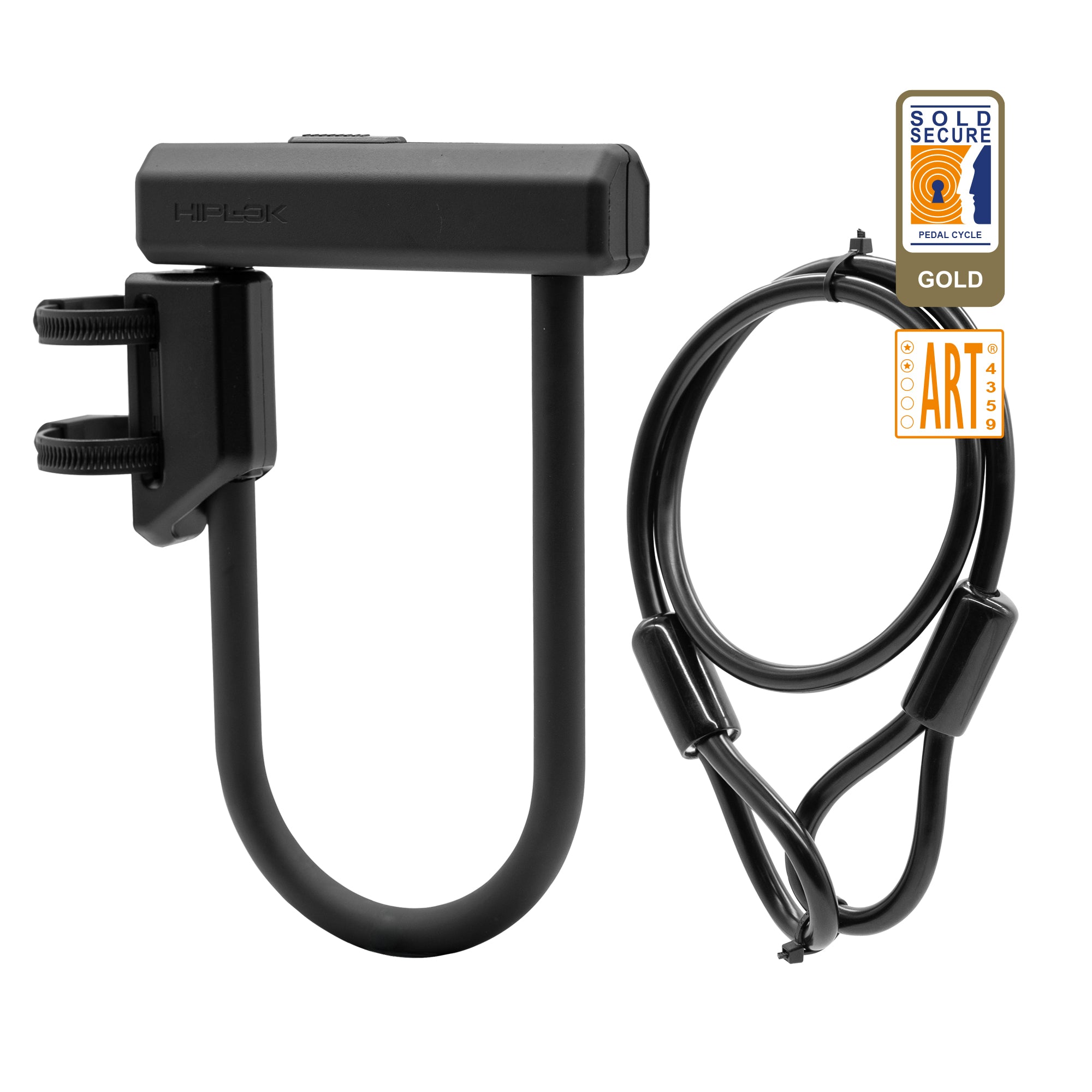
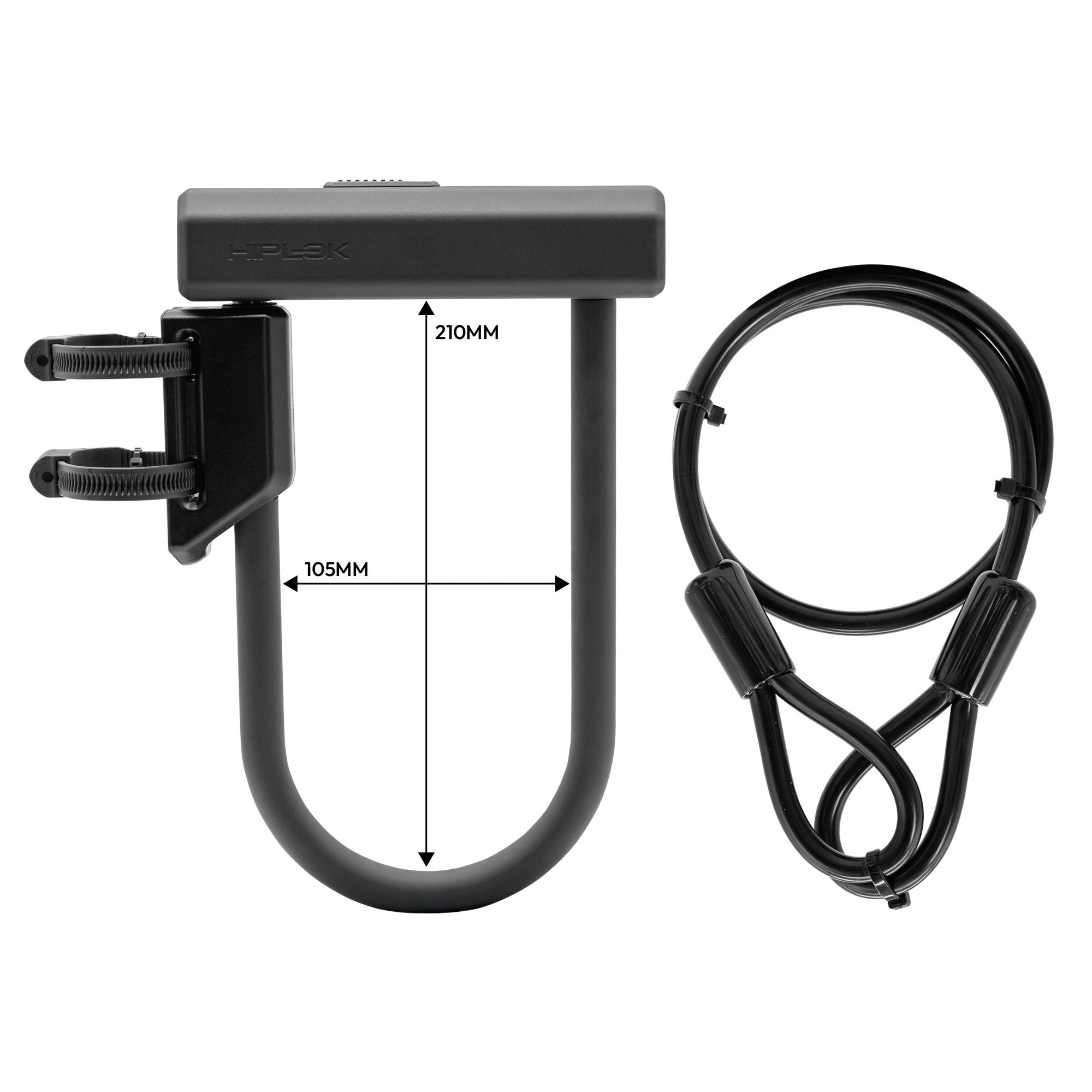
Adding a secondary lock can give you more options for securing different parts of your e-bike. Your D lock should secure the frame to a strong, immovable object, while the second lock can add another barrier or help protect components that aren't captured by the D lock.
That secondary lock could be:
-
A cable lock
-
A Z LOK
-
A folding lock
-
Another D lock
Which combination works best depends on what you're trying to secure.
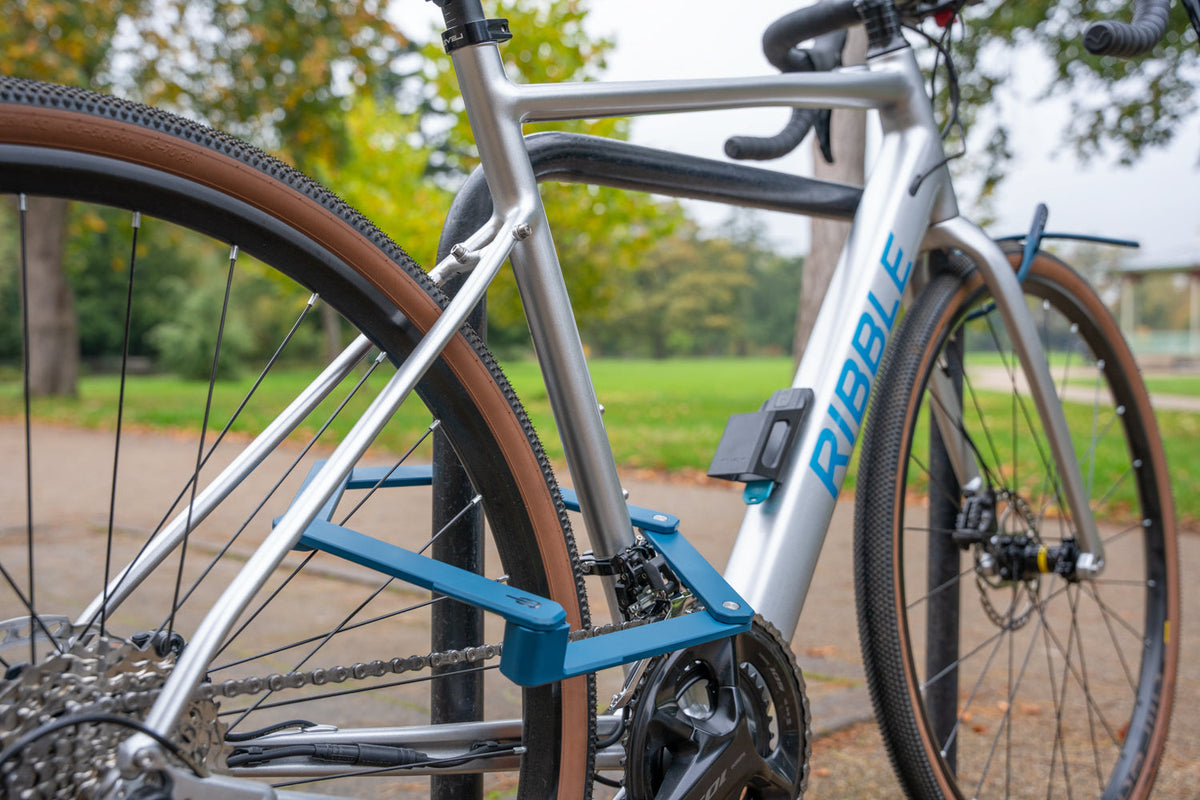
A cable or Z LOK can be a lightweight way to add security around components such as a wheel. A folding lock can offer more flexibility around different parts of the bike and awkward locking points. A second D lock steps the setup up again when you want another substantial barrier.
The important point is that not every secondary lock offers the same level of resistance as your primary D lock. Think about the role each lock is performing rather than assuming that adding any second lock automatically doubles your security.
For commuters, this type of setup can work particularly well when you want broader coverage without carrying two high-security D locks every day.
Setup 3: Two high-security D locks for higher-risk parking![]()

If you regularly leave your e-bike in a public location for several hours, using two high-security D locks can significantly increase the amount of work required to attack your setup.
Rather than positioning both locks together, use them to protect different areas of the bike. One can secure the frame to an immovable object while the second creates another substantial barrier around the bike.
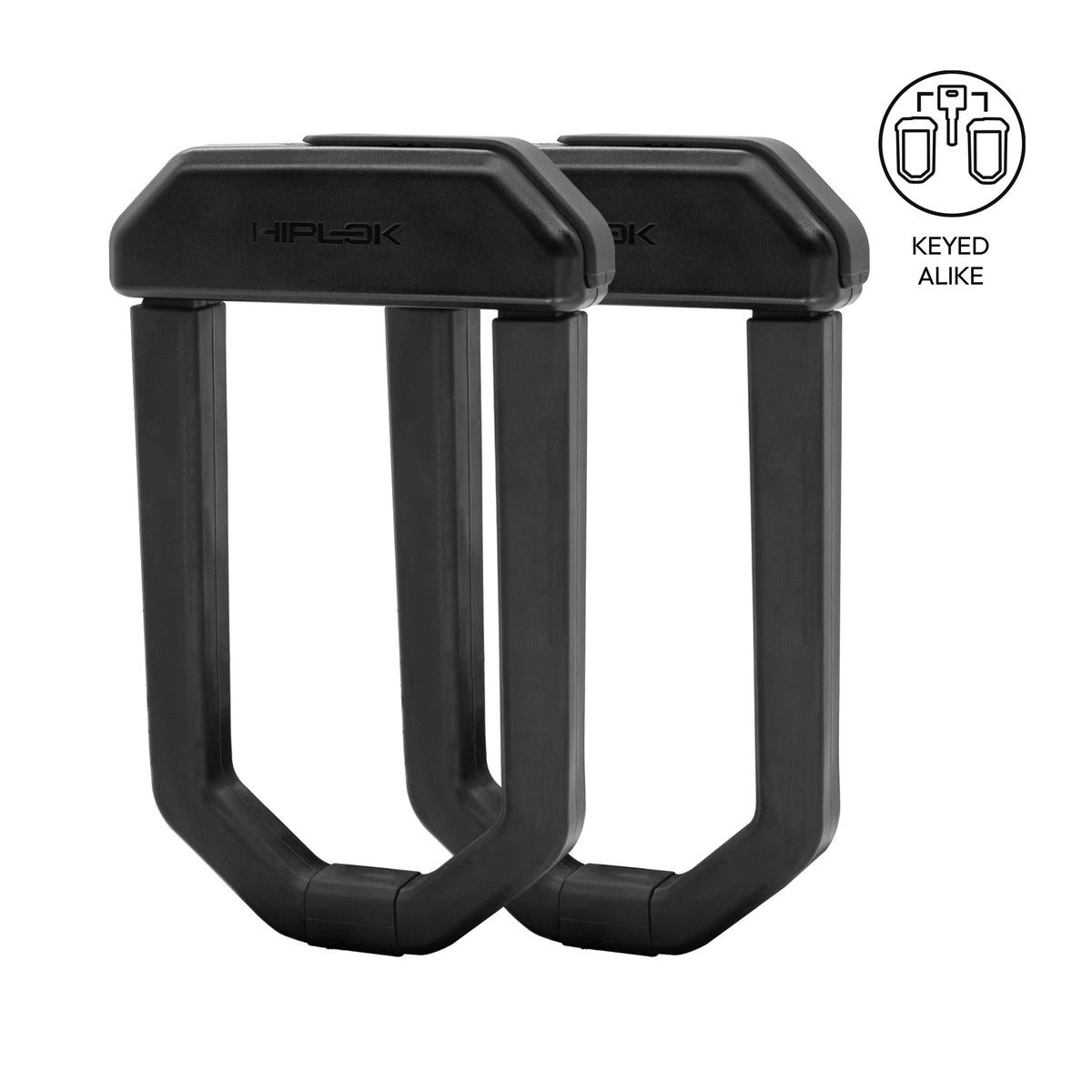
For riders who want particularly high resistance to angle grinder attacks, Hiplok offers a keyed-alike anti-angle grinder DUO pack.
These locks are already designed to make angle grinder attacks take significantly more time and effort. Using two creates two separate high-security barriers for a thief to overcome.
The keyed-alike option also removes some of the everyday faff. Both locks work with the same key, so you get the additional protection of a two-lock setup without having to carry and keep track of separate keys.
No lock is completely resistant to an angle grinder given enough time and the right equipment. What matters is resistance time. When a thief has to attack two high-security locks rather than one, you're increasing the amount of time, effort and equipment potentially required.
There's a weight trade-off with a setup like this, so it won't be necessary for every commute. But if you're leaving a valuable e-bike at a station or in another higher-risk location for most of the working day, two high-security D locks can make sense.
Which setup suits your commute?
The easiest way to choose is to think about what happens at the other end of your ride.
| Your typical situation | D lock setup to consider | Main priority |
|---|---|---|
| Everyday ride to work | Lightweight D lock with bike mount | Portability and security |
| Commute with stops along the way | Lightweight D lock | Quick, practical locking |
| Want to secure wheels or components too | D lock + secondary lock | Broader coverage |
| Long periods in public places | Two high-security D locks | Layered security |
| Higher-risk urban parking | Anti-angle grinder D lock setup | Increased attack resistance |
You can adapt your security as your riding changes too.
If you normally commute to secure workplace parking but occasionally leave your bike at a station for the day, for example, you don't necessarily need exactly the same setup for both situations.
How to choose a D lock for city riding
Once you've decided on the setup, look more closely at the D lock itself.
Get the right security level
Start with where you park and for how long.
Higher-value e-bikes and longer stays in exposed public places can justify choosing a higher level of security. If you're concerned about particular attack methods, look for a lock specifically designed and tested with those attacks in mind.
Don't assume that all D locks provide the same resistance simply because they have the same basic shape.
Check the security rating
Independent security ratings give you another useful point of comparison when you're choosing between locks.
In the UK, some insurers require a Sold Secure Gold Bicycle rated lock to validate bicycle insurance. The exact requirement can depend on your insurer, policy and the value of the bike, so always check the terms of your own cover.
That makes the security rating worth checking before you buy rather than after you've already chosen your lock.
Think about size
A bigger D lock gives you more space to work with, which can be useful when you're locking an e-bike with a larger frame or using varied street furniture.
But bigger isn't automatically better.
Extra internal space can give an attacker more room to position tools. A more compact lock can reduce that space, provided it still fits your bike and the places where you normally lock it.
Look at your own e-bike's frame geometry and the locking points you encounter on your commute.
Decide how you'll carry it
Portability isn't just about weight.
Think about where the lock will go when you're riding. Mounting your D lock directly to the bike can be one of the easiest options for commuting because the lock has a secure, consistent place every time you ride.
Depending on the lock, that might mean using a supplied mount or adding an option such as the BR1000 or DX Frame Bracket.
For daily commuting, carrying method is part of the buying decision rather than an afterthought.
How should you lock an e-bike in the city?
Good hardware works best when you use it well.
Start by choosing a solid locking point. Proper cycle stands are usually preferable to objects that could be cut, unscrewed or lifted out of the ground.
Secure the frame rather than relying on a wheel alone. If possible, position your D lock so there's relatively little empty space within the shackle.
For longer stops, think about vulnerable components too. Depending on your bike, that might mean adding a Z LOK, cable, folding lock or second D lock to your setup.
Location matters as well. A well-used, visible cycle parking area can be preferable to somewhere hidden away where an attacker has more privacy.
The routine doesn't need to be complicated. Once you've found a setup that works, locking your bike properly quickly becomes another part of the commute.
Common D lock mistakes commuters can avoid
A good D lock can only do its job when the way you use it makes sense.
One common mistake is locking only the front wheel to a stand. If the wheel can be removed, the rest of the bike isn't properly secured.
Another is choosing a weak locking point. A strong lock attached to something that can easily be cut or dismantled doesn't create a strong overall setup.
Leaving lots of empty space inside a D lock can also give an attacker more room to work.
And don't overlook convenience when buying. Choosing a lock that's unnecessarily awkward to transport can make everyday commuting more difficult. Think about the lock and how you're going to carry it as one setup.
D locks compared with other commuter locks
D locks are popular for urban riding because their rigid construction can provide high levels of security in a relatively compact package.
Other lock types have different strengths.
Chains can offer more flexibility around awkward locking points, for example, while cables and Z LOKs are lightweight options for secondary security. Folding locks offer another approach to portability and flexibility.
For this guide, however, the important question isn't whether one lock format is universally better than another. It's how to build a practical setup around a D lock for regular city riding.
If you've also seen the term U lock while shopping, it's worth knowing that it refers to the same basic lock format. Our guide to D Locks vs U Locks: Is There a Difference? explains the terminology in more detail.
What about insurance-approved D locks?
If your e-bike is insured, check the locking requirements in your policy.
In the UK, some insurers require you to use a Sold Secure Gold Bicycle rated lock for your insurance to be valid. Requirements can vary according to the insurer, policy and value of your e-bike, so check exactly what applies to your cover.
And remember that using the required lock may only be one condition of your policy. Your insurer may also specify how and where the e-bike needs to be secured.
It's worth checking those details before choosing your setup, particularly if you've invested significantly in your e-bike.
Choosing the right D lock setup for your commute
The best D lock for e-bike commuting isn't necessarily one individual lock. It's the setup that works for the way you ride and park.
For a straightforward everyday commute, a lightweight D lock that's easy to mount to your bike could be all you need.
If you want more coverage, pair your D lock with a Z LOK, cable, folding lock or another suitable secondary lock.
And if your e-bike spends hours parked in a higher-risk location, two high-security D locks can create a much tougher setup. A keyed-alike anti-angle grinder DUO pack can make that approach easier to live with every day too.
Think about the bike you're protecting, where you're leaving it and what you're comfortable carrying. Then build your security around the reality of your commute.
Find the right lock for your bike.
FAQs
What is the best D lock setup for urban e-bike commuters?
It depends on where you leave your e-bike and for how long. A lightweight D lock can work well for everyday commuting, while longer or higher-risk parking may justify adding a secondary lock or using two high-security D locks.
What features should I look for in a D lock for city riding?
Look at security level, independent ratings, lock size, weight and how you'll transport it. A frame mount can make a significant difference when you're carrying the lock on every commute.
What can I pair with a D lock for additional security?
You could pair your primary D lock with a Z LOK, cable, folding lock or second D lock. The right option depends on whether you're adding component security, flexibility or another high-security barrier.
Are there insurance-approved D locks for e-bike owners?
Yes. In the UK, some insurers require a Sold Secure Gold Bicycle rated lock for cover to be valid. Always check your own insurance policy because requirements can vary according to the insurer and value of the bike.
How can I improve my e-bike security in a high-theft area?
Start with a strong locking point and a D lock with an appropriate security rating. For longer stays or higher-risk locations, consider an anti-angle grinder D lock or two high-security locks securing different parts of the bike.


Share:
The Ultimate Guide to the Best Folding Bike Locks for Commuters and E-Bikes