

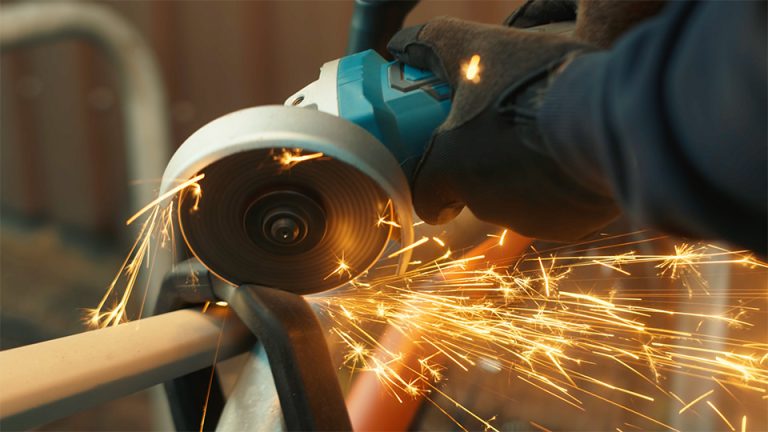
If you own a high-value bike or e-bike and regularly park in higher-risk areas, standard bike locks may no longer feel like enough. Battery-powered angle grinders have changed how theft happens, making cutting attacks faster and more common.
This buyer's guide is for riders actively shopping for serious protection. We'll explain what really matters when choosing an anti-angle grinder bike lock, compare the main lock types, and help you decide what level of security makes sense for your bike and where you ride.
What "anti-angle grinder" really means

No portable bike lock is completely immune to being cut by an angle grinder. Anti-angle grinder or angle grinder resistant bike locks, are designed to:
- Significantly increase attack time, noise, effort.
- Increasing the number of cutting discs
That extra resistance matters. The longer a lock takes to cut, the more likely a thief is to:
- Move on or get noticed
- Run out of cutting discs
- Run out of charge on their angle-grinder
Anti-grinder locks focus on slowing attacks down rather than claiming to be unbreakable.
Why standard bike locks struggle against grinders
Traditional D locks and chains are normally made with materials such as hardened steel. They are designed to resist hand tools like bolt cutters and resist leverage attacks.
However, the cutting discs from angle-grinders can slice through hardened steel in seconds.
Anti-angle grinder bike locks address this by using:
- Much thicker hardened steel
- Special alloys or composite materials that wear down angle grinder discs
- Shackle designs that are harder to hold and cut
- Protective layers that destroy cutting discs
Key things to look for when buying an anti-grinder bike lock
When buying an anti-angle grinder lock, pay attention to:
1. Resistance time, not resistance claims
Longer resistance time increases deterrence. Independent tests and published attack results are great at showing how long locks can withstand sustained angle-grinder attacks.
2. Materials and construction
More material generally means more resistance, but also more weight.
3. Lock geometry
Tight internal dimensions reduce leverage attacks and make positioning a grinder more difficult. We advise to buy the smallest 1000 Series lock you can use and to position it in an awkward position when locking your bike – one that makes it tough for attackers to reach the lock with bulky angle-grinders.
4. Weight and portability
5. Usability in daily riding
Consider:
- Locking speed
- Key or combination access
- How easily it fits around frames and anchors
- Whether you'll actually carry it every ride
Comparing anti-angle grinder bike lock types
Currently there are anti-angle grinder D locks and disc locks – each protect your bike in different ways. Here's what each type can offer.
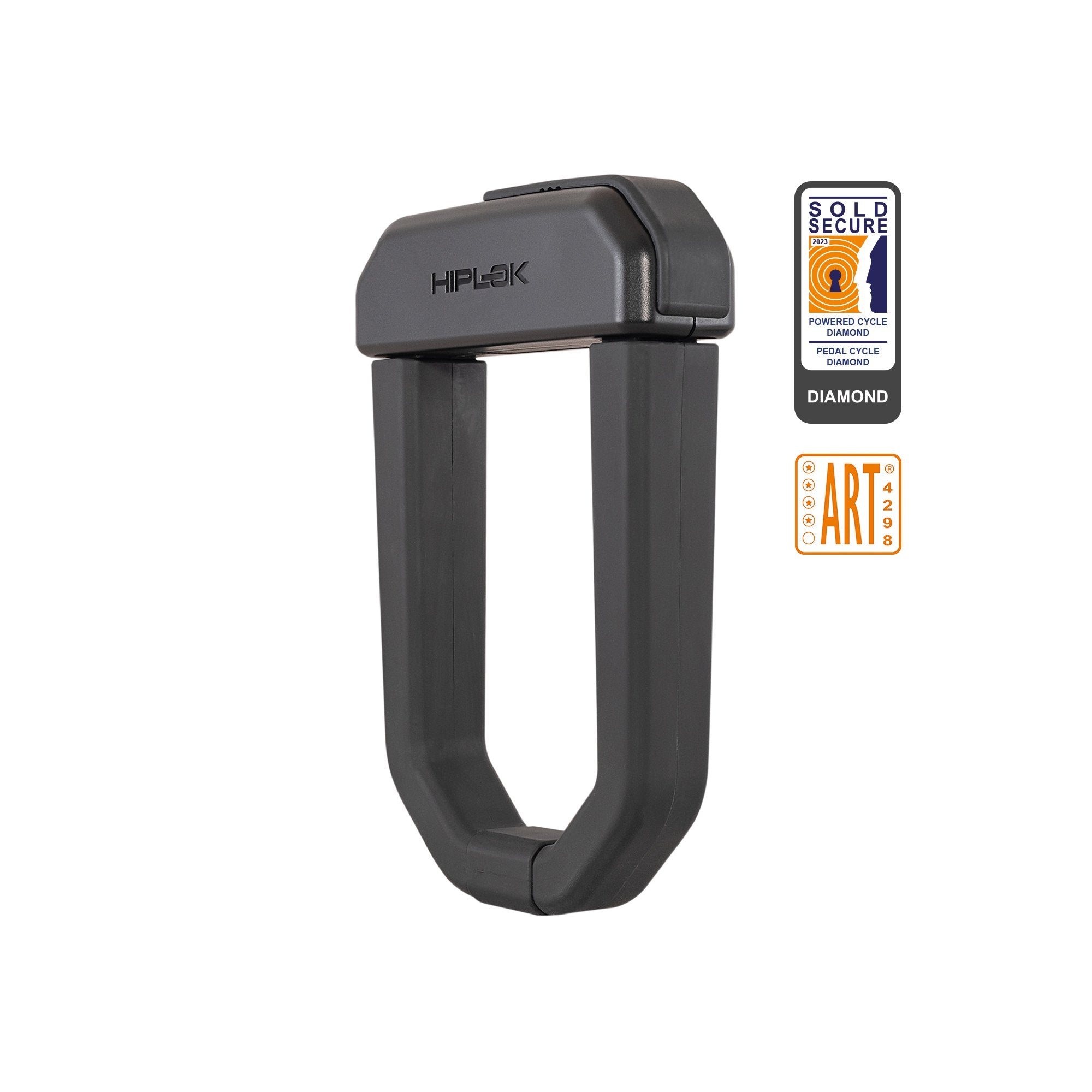
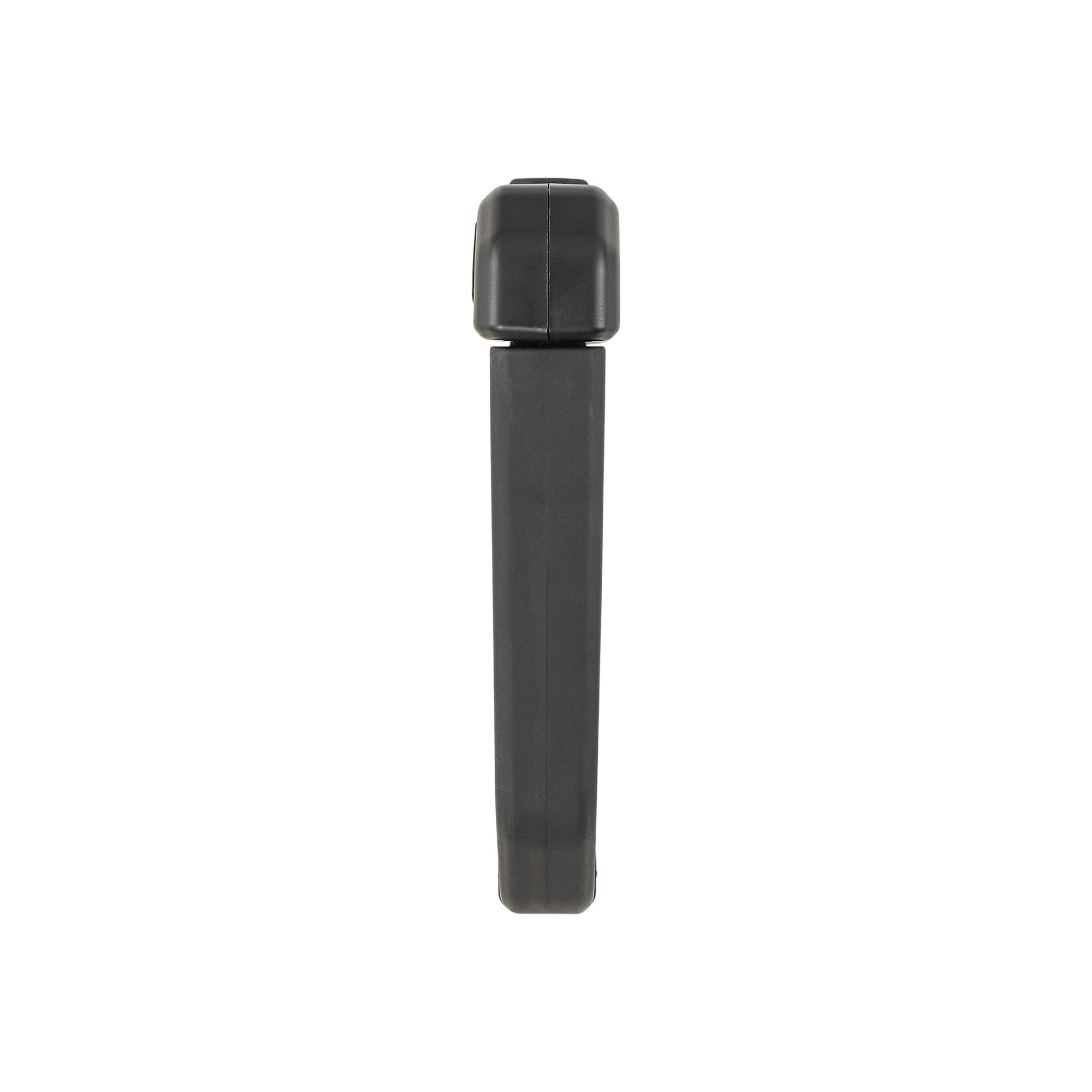
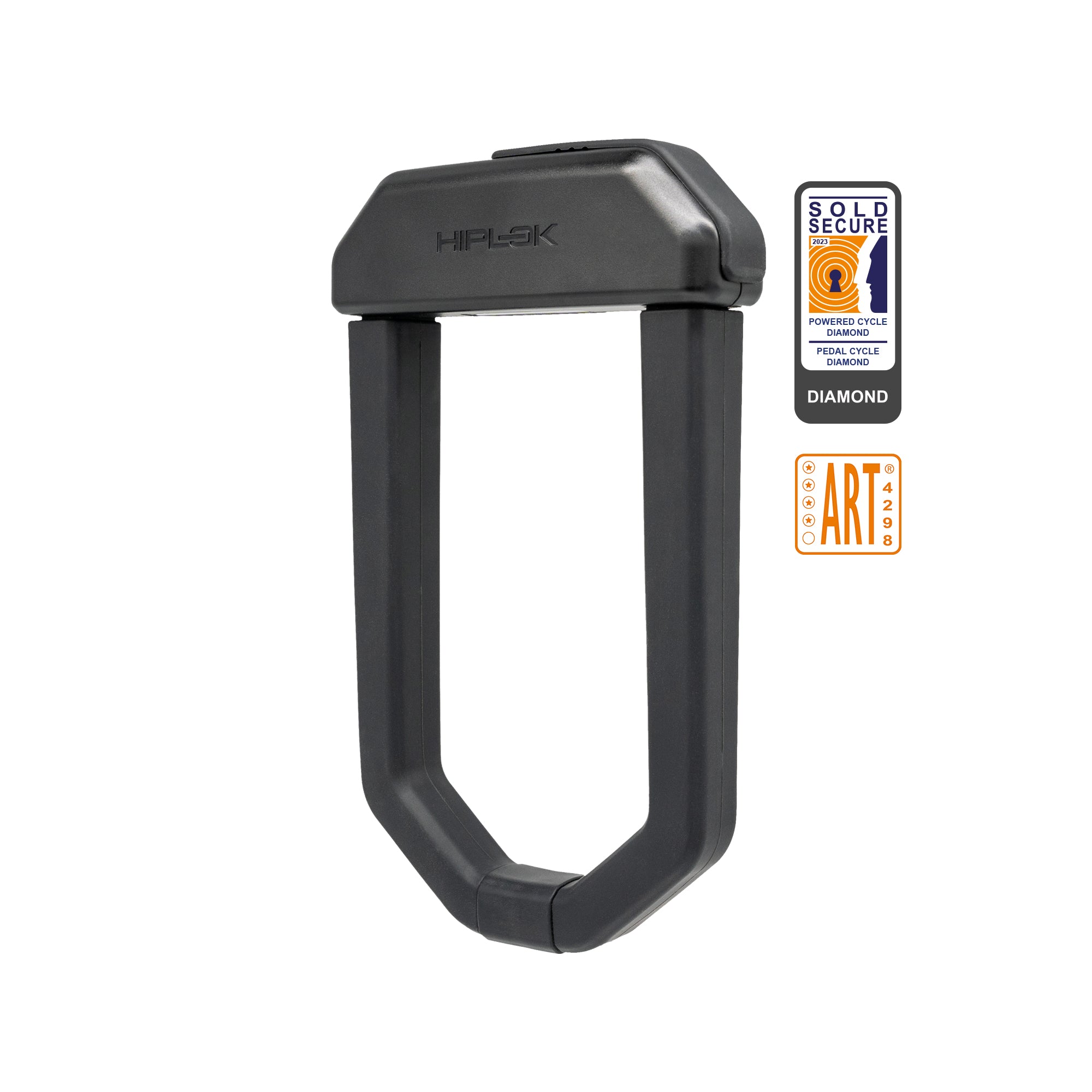
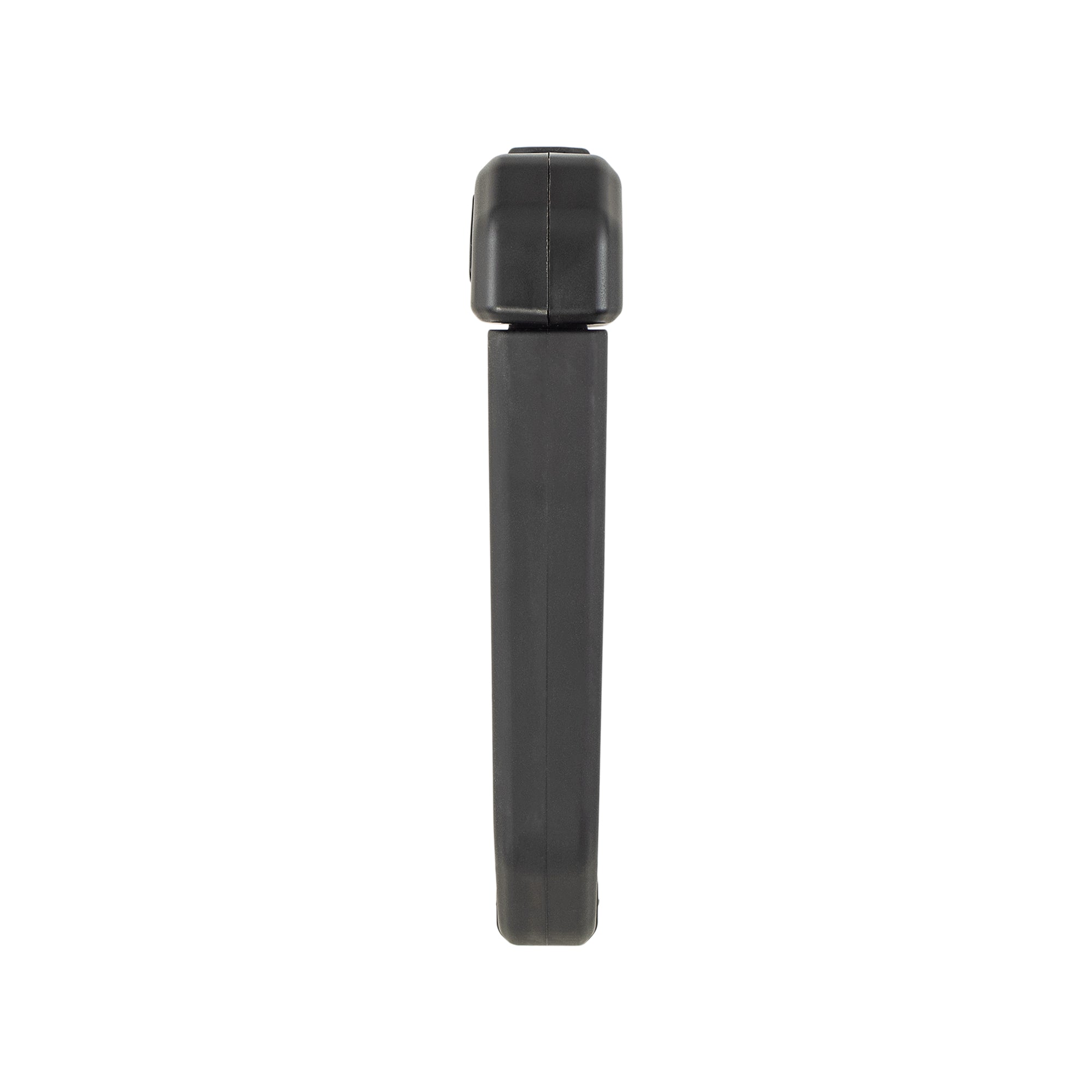
Anti-angle grinder D-locks

D locks are the most common
anti-grinder option.
Their rigid shape allows for very thick shackles, which increases cutting time. High-end models use hardened steel and composite layers to destroy cutting discs.
Pros
- Excellent grinder resistance for the size
- Compact and simple to use
- Strong performance in independent testing
Anti-angle grinder disc locks

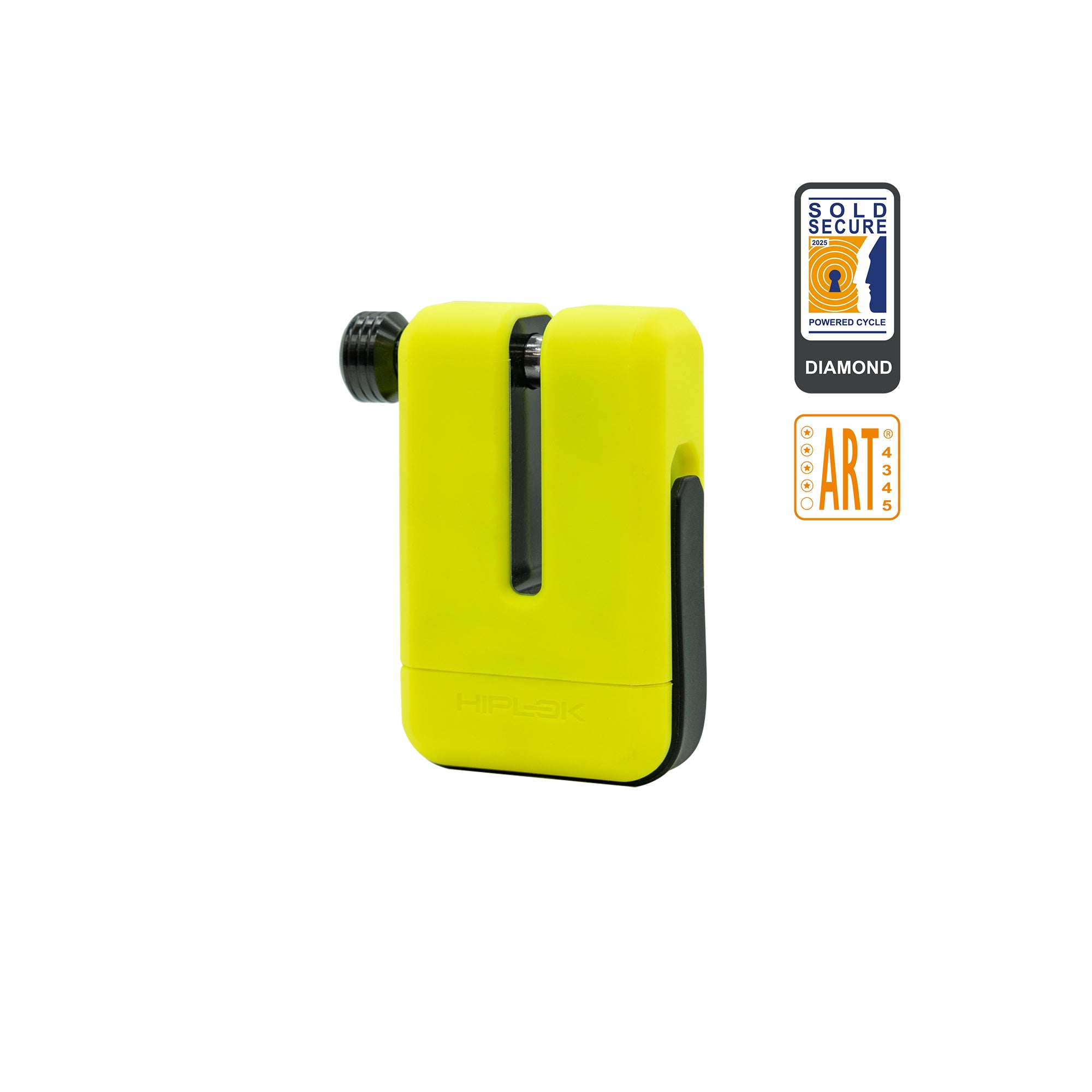
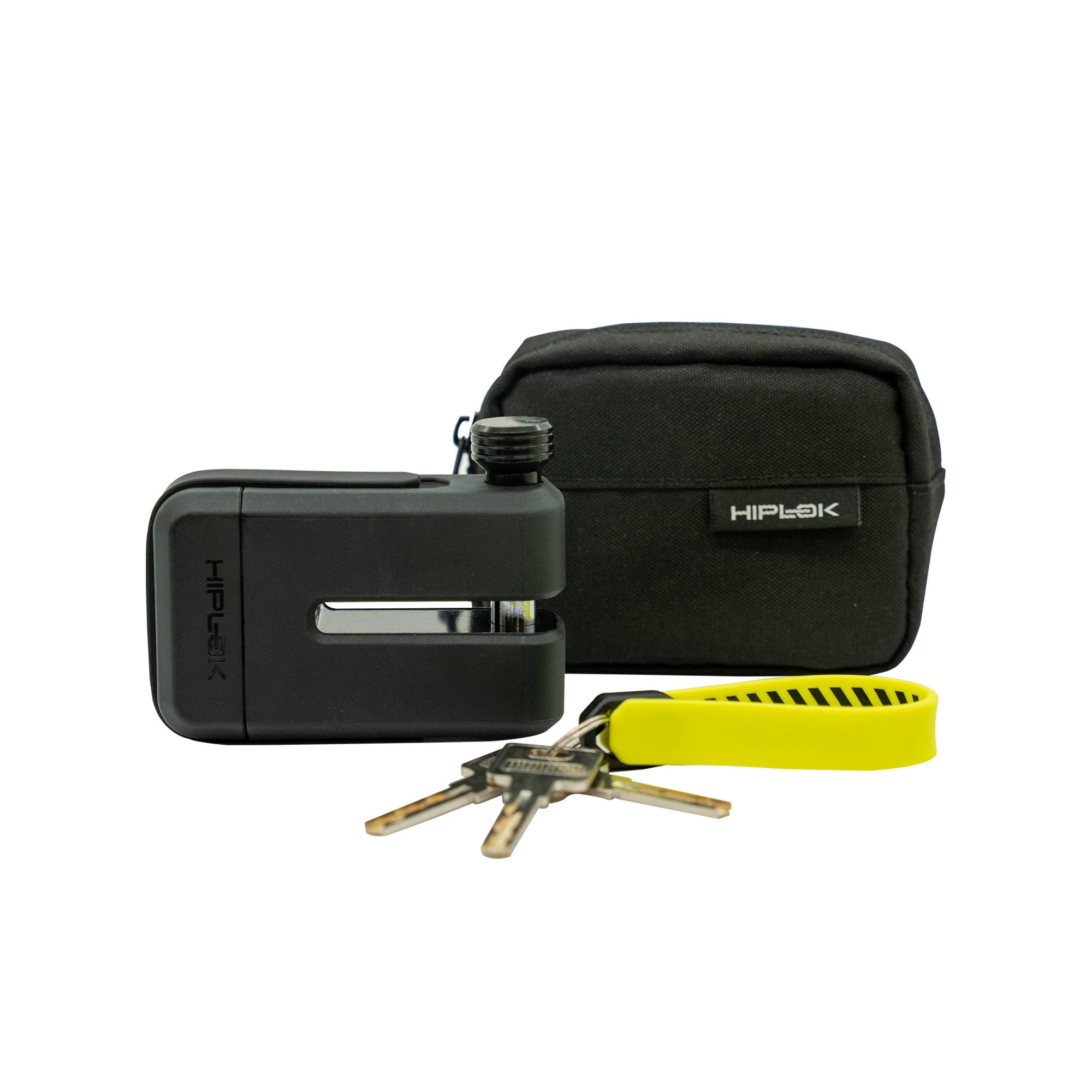
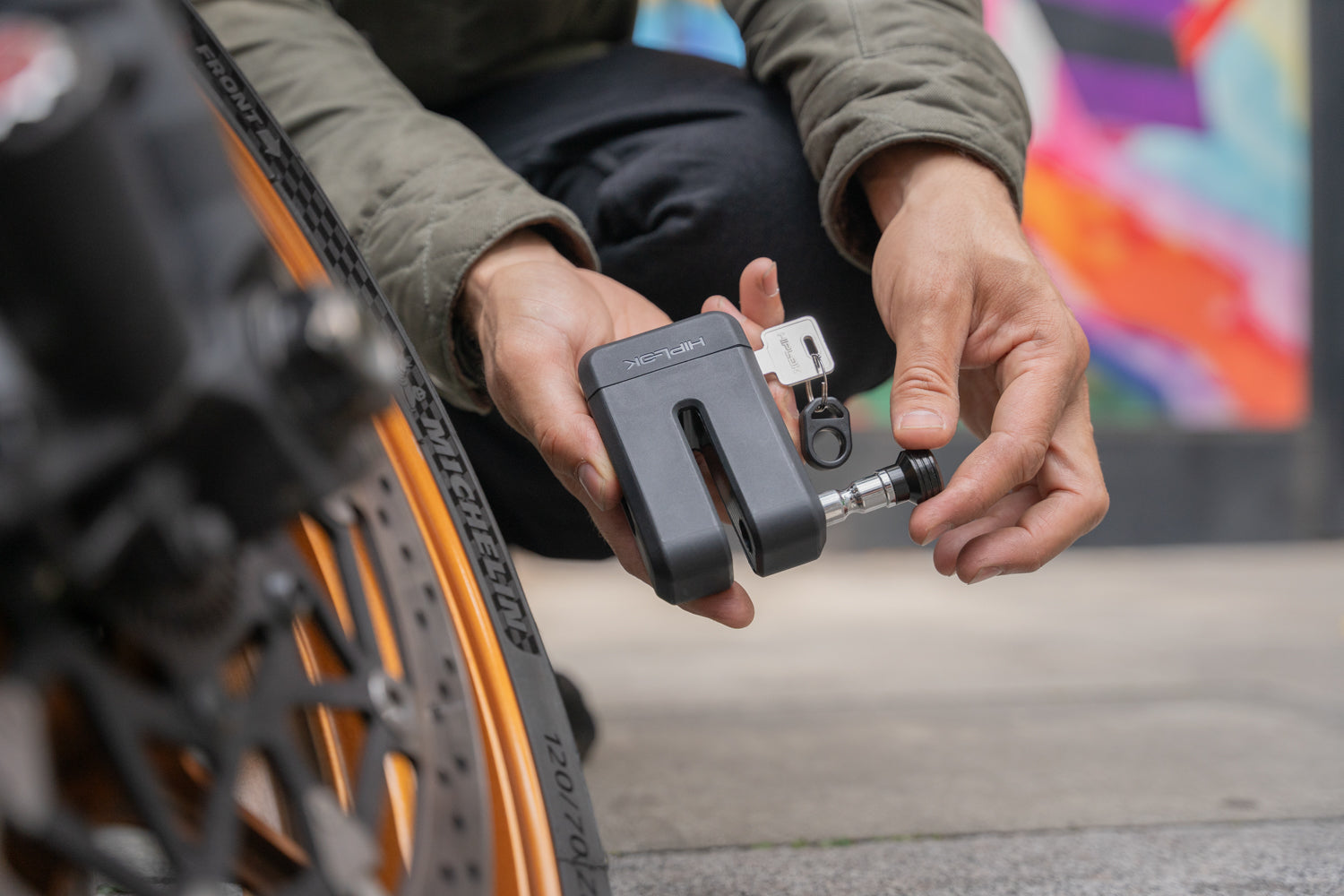
Disc locks are designed primarily for motorcycles, but a small number of high-security disc locks have been developed to resist angle grinder attacks.
Instead of securing the bike frame to an external object, disc locks attach directly to a motorcycle brake disc or rotor.
The benefit of this is that you have anti-angle grinder protection on the move without an anchor point.
Pros
- Very compact and easy to carry
- Quick to fit and remove
- Strong visual deterrent – anti-angle grinder protection without an anchor point
Cons
- Does not secure the bike to a fixed object
- Limited suitability for bicycles compared to frame locks
Anti-angle grinder anchors: an often-overlooked weak point
Even the best anti-angle grinder bike lock is only as strong as what it's locked to. In higher-risk locations, the anchor can be the deciding factor in how long a theft attempt takes.
Anti-angle grinder anchors are designed to resist the same cutting attacks as high-security locks, using thick hardened steel and reinforced mounting points.
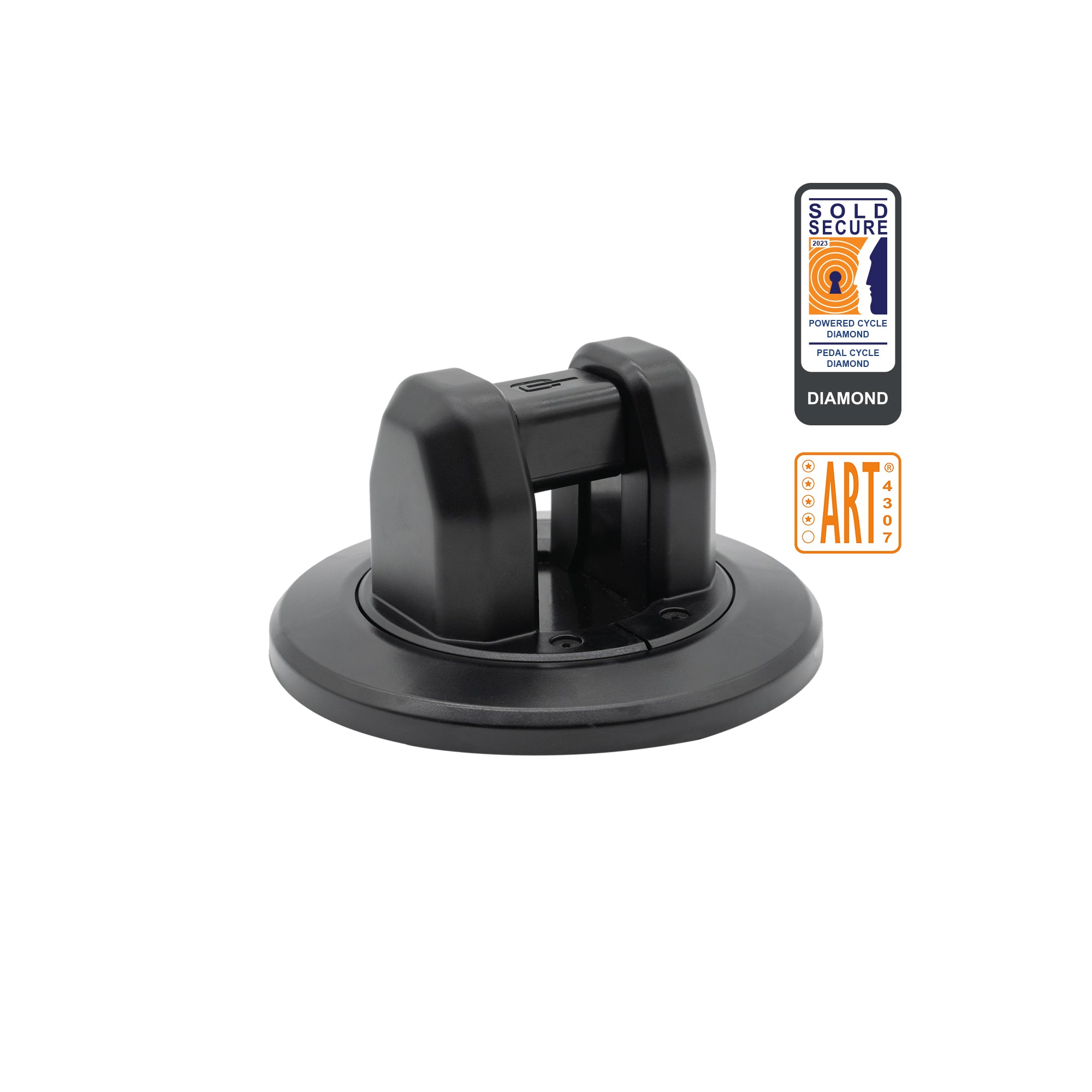
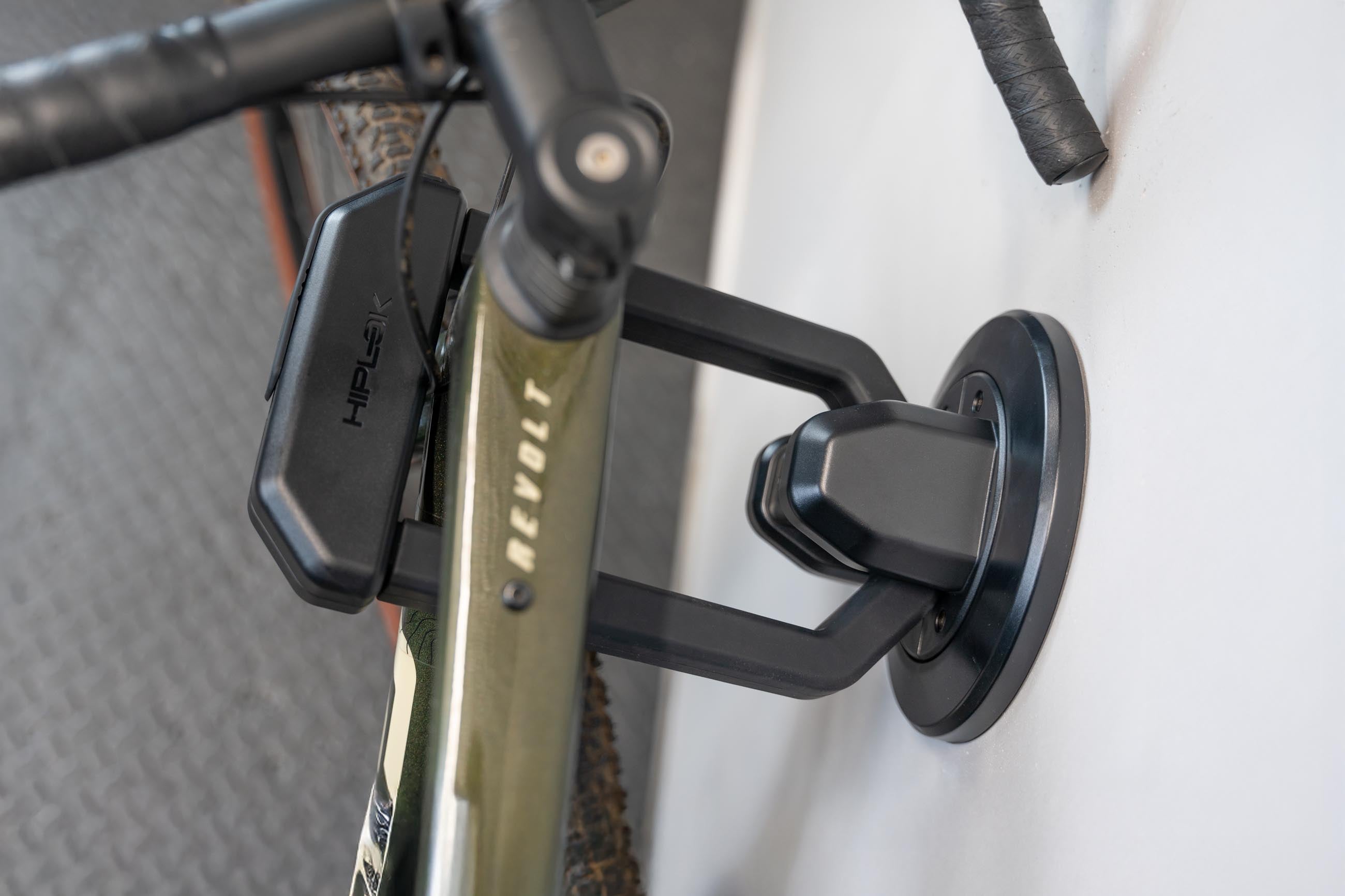
Most bike thefts occur at home, so it's easy to install an anti-angle grinder anchor like the A1000 or AX1000 for a complete anti-angle grinder set up with no weak points.
Hiplok A1000

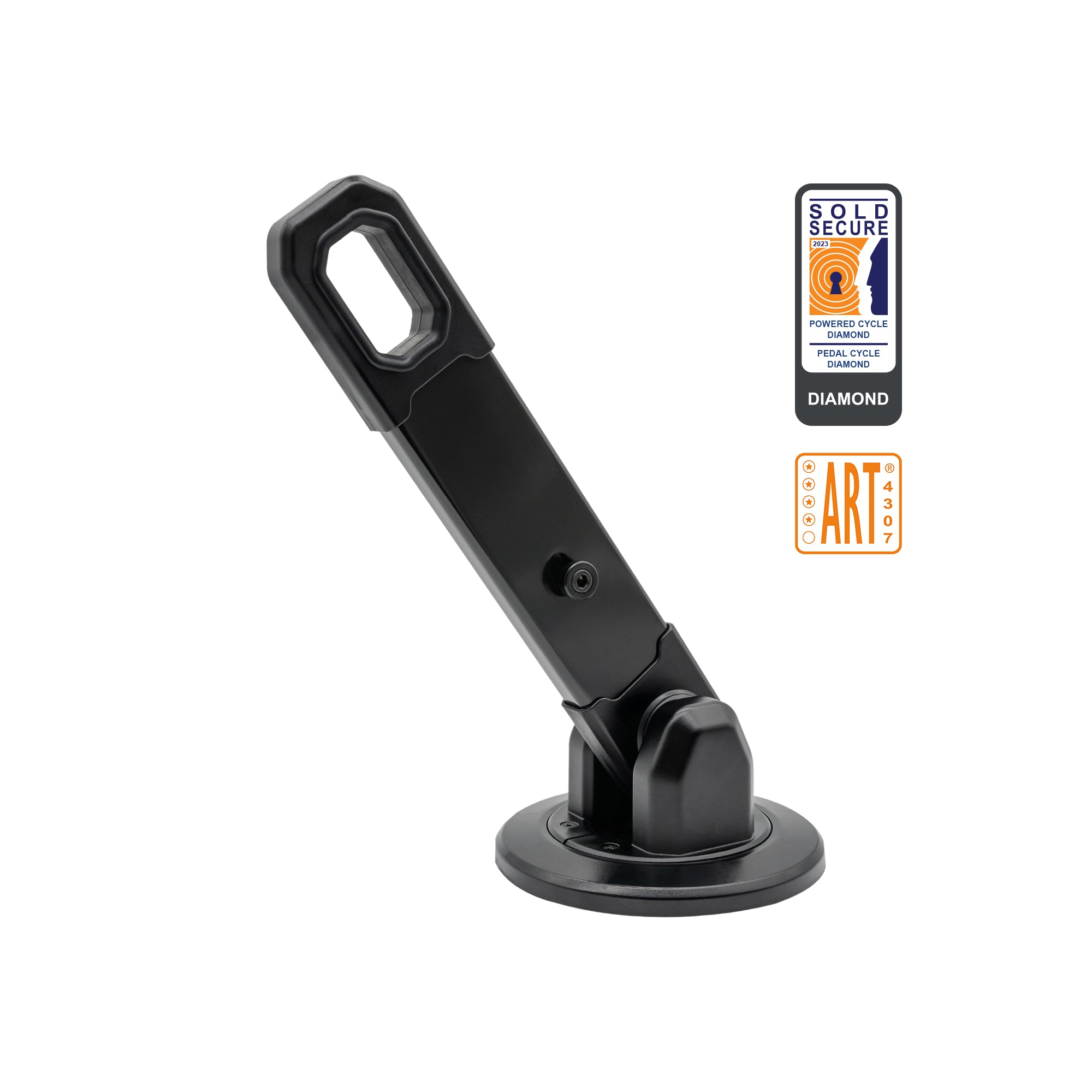
Designed primarily for bicycles, the A1000 uses 1000 Series anti-angle grinder technology. It has a 360 degree rotating base, making it easier to fix your D lock to it.
Hiplok AX1000

The AX1000 is similar but has a long reach form, making it suitable for larger bikes, motorcycles and multi-bike set ups.
Certifications and testing: what really matters
Independent testing provides useful benchmarks, but it's important to understand what tests represent.
Certifications often focus on hand-tool resistance first. Grinder testing is newer and less standardised.
Look for brands that:
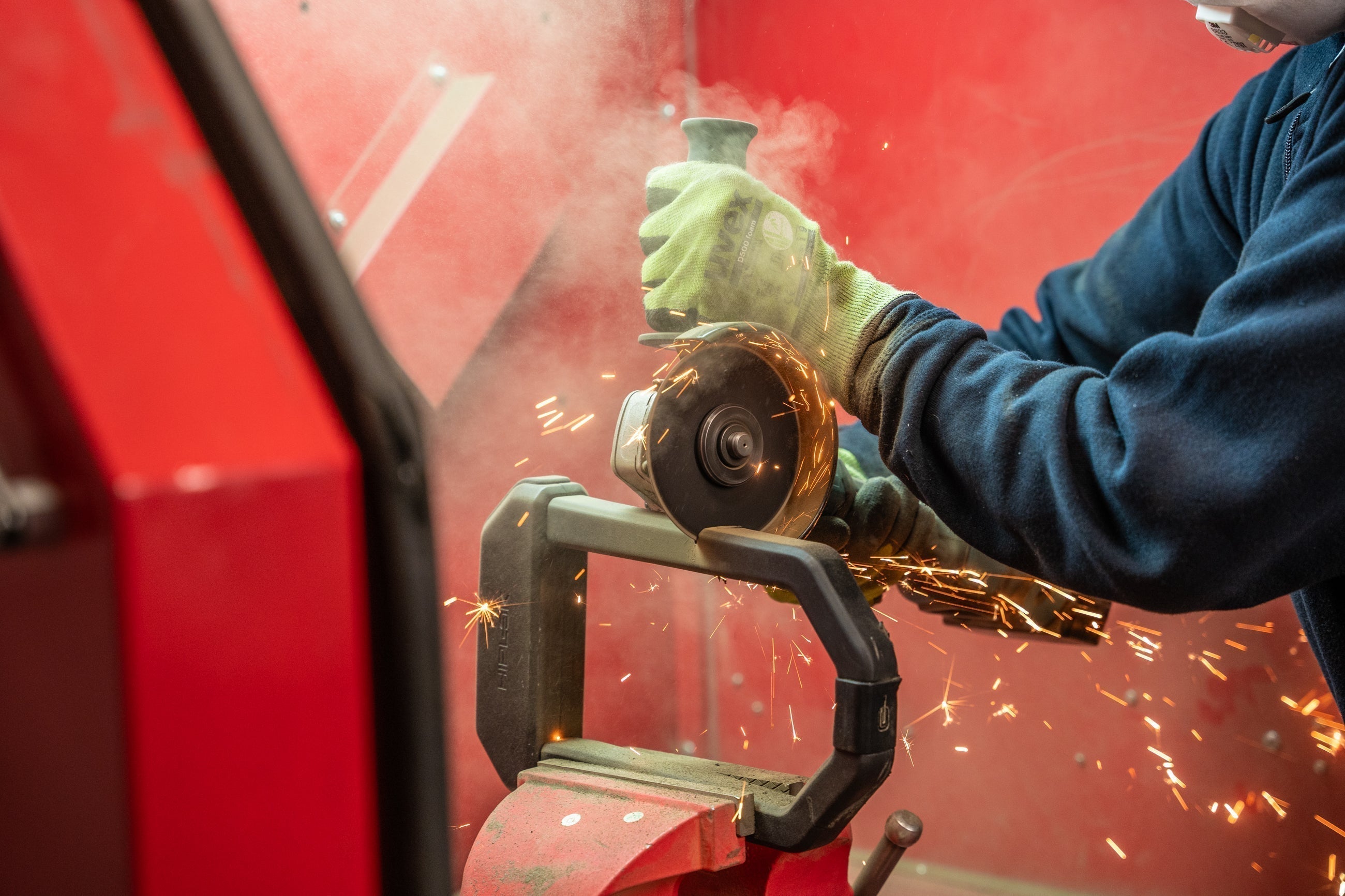
- Publish real-world grinder attack results
- Explain materials and construction clearly
- Show full-cut demonstrations rather than short clips
When using two locks makes sense
A primary anti-angle grinder lock combined with a lighter secondary lock can:
- Increase total attack time
- Protect multiple components
- Make your bike less attractive than nearby targets
If you go for an anti-angle grinder secondary lock you could even double the attack time.
A practical buying checklist
Before you buy, check that your chosen lock:
- Offers published grinder resistance data
- Uses thick, hardened materials
- Fits your frame and typical anchors
- Is realistic for you to carry or store
- Matches your bike's value and parking risk
For broader guidance, see our guide to Choosing the right bike lock for your needs.
If you're looking specifically for maximum resistance, explore our 1000 Series bike locks, designed to prioritise grinder attack resistance.
Conclusion
Angle grinders have raised the bar for bike security, but the right lock choice can still make a meaningful difference.
Focus on resistance time, real-world testing, and how you actually use your bike. A well-chosen anti-angle grinder bike lock won't make theft impossible, but it can make your bike a far less appealing target.
Compare anti-angle grinder bike locks and choose the level of protection that fits your bike and your riding.
FAQs
How do anti-angle grinder bike locks compare to standard D locks?
Anti-grinder locks use thicker materials and specialised construction to significantly increase cutting time compared to standard D locks.
Are heavier anti-angle grinder locks more secure?
It depends. Weight can indicate more materials, which indicates higher security. However, larger anti-angle locks are also heavier – so weight can simply be an indication of size.
Do chain locks or D locks perform better against angle grinders?
High-end D locks typically offer better grinder resistance for their weight, while chains provide flexibility at a significant weight cost.
Is it better to use one anti-grinder lock or two different locks?
Using two different locks can increase deterrence by forcing multiple attack methods, especially for overnight or high-risk parking.
Is any bike lock truly angle grinder proof?
No. Portable locks focus on slowing attacks and increasing deterrence, not complete immunity.



Deel:
Haakse slijperbestendige fietssloten: wat 'slijperbestendig' werkelijk betekent
Hiplok D1000 vs DX1000: Which Angle Grinder Resistant Bike Lock Is Right for You?